
Nepal
A plan for Kathmandu
Not a list of things to see in Kathmandu — a day-by-day plan somebody could actually follow, built from places we can point to a source for. Make your own in about a minute.
- 2 nights
- Couple
- Balanced pace
- Mid-range budget
Every place here was checked on 2026-10-30 or later, and each one says where it came from.
The plan, day by day
Day 1
09:30
You arrive
13:00
Irish pub
Suggested because you chose food
- 1h
- Meal
14:30
Chhauni Museum
Picked because you chose culture & museums + balanced energy
- 2h 30m
- Culture & museums
2h open
Nothing planned here. That was on purpose.
19:00
Czech Pub
Suggested because you chose food
- 1h 30m
- Meal
20:30
Everest Irish Pub
Picked because you chose local experiences + balanced energy
- 1h 30m
- Local experiences
Day 2
08:00
New Orleans
Suggested because you chose food
- 45m
- Meal
45m open
Nothing planned here. That was on purpose.
09:30
Royal Mahendra Museum
Picked because you chose culture & museums + balanced energy
- 2h 30m
- Culture & museums
1h open
Nothing planned here. That was on purpose.
13:00
Roadhouse Cafe / Hotel Roadhouse
Suggested because you chose food
- 1h
- Meal
14:30
Children's Art Museum of Nepal
Picked because you chose culture & museums + balanced energy
- 2h 30m
- Culture & museums
2h open
Nothing planned here. That was on purpose.
19:00
Krua Thai Restaurant
Suggested because you chose food
- 1h 30m
- Meal
20:30
English Pub
Picked because you chose food and local experiences + balanced energy
- 1h 30m
- Food
Day 3
08:00
Utpala Cafe
Suggested because it fits a mid-range budget
- 45m
- Meal
45m open
Nothing planned here. That was on purpose.
09:30
National Museum
Picked because you chose culture & museums + balanced energy
- 2h 30m
- Culture & museums
1h open
Nothing planned here. That was on purpose.
13:00
Tamas Restaurant
Suggested because you chose food
- 1h
- Meal
14:30
You leave
Weather through the year
Monthly averages from NASA's 25-year climate record, day and night together.
Best months: March, April, October, and November
| January | Cool and dry: 11°C, 10 mm |
|---|---|
| February | Cool and dry: 14°C, 17 mm |
| March | Mild and dry: 18°C, 21 mm |
| April | Mild and dry: 22°C, 37 mm |
| May | Mild, some rain: 24°C, 89 mm |
| June | Rainy: 25°C, 170 mm |
| July | Wet season: 23°C, 280 mm |
| August | Wet season: 23°C, 238 mm |
| September | Rainy: 22°C, 169 mm |
| October | Mild, some rain: 19°C, 45 mm |
| November | Cool and dry: 16°C, 3 mm |
| December | Cool and dry: 12°C, 5 mm |
From the Wikivoyage guide
Quoted from the travel guide anyone can edit, as it read on the day we took it.
Understand
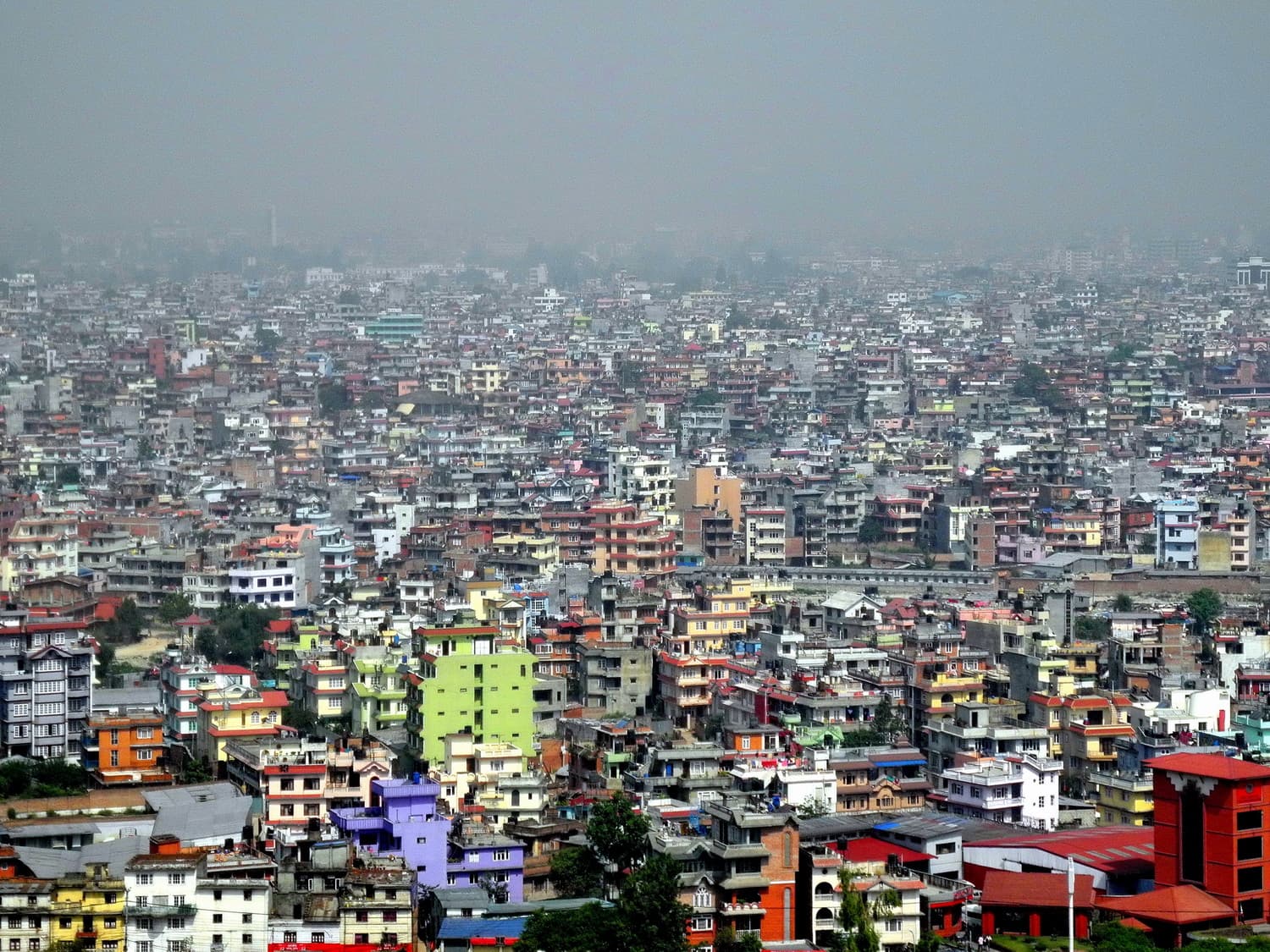
According to a census conducted in 2011, Kathmandu metropolis has 2.5 million inhabitants, and the agglomeration has a population of more than 3 million inhabitants. The metropolitan city area is 50.67 km² (19.56 sq mi) and has a population density of 3000 per km² and 17,000 per km square in the city proper.
The city stands at an elevation of approximately 1,400 metres (4,600 ft) in the bowl-shaped Kathmandu Valley of central Nepal. It is surrounded by four major mountains: Shivapuri, Phulchoki, Nagarjun, and Chandragiri. Kathmandu Valley is part of three districts (Kathmandu, Lalitpur, and Bhaktapur), has the highest population density in the country, and is home to about a twelfth of Nepal's population.
Historically, the Kathmandu Valley and adjoining areas were known as Nepal Mandala. Until the 15th century, Bhaktapur was its capital when two other capitals, Kathmandu and Lalitpur, were established. During the Rana and Shah eras, British historians called the valley "Nepal Proper". Today, Kathmandu is the capital of the Federal Democratic Republic of Nepal, and also the headquarters of the Central Development Region of Nepal. The Central Region comprises three zones: Bagmati, Narayani, and Janakpur. Kathmandu is located in the Bagmati Zone.
Kathmandu is the gateway to tourism in Nepal. It is also the nerve center of the country's economy. It has the most advanced infrastructure of any urban area in Nepal, and its economy is focused on tourism, which accounted for around 7% of Nepal's GDP in 2023. Tourism in Kathmandu declined thereafter during a period of political unrest, but since then has improved. In 2013, Kathmandu was ranked third among the top 10 travel destinations on the rise in the world by TripAdvisor, and ranked first in Asia.
See
Kathmandu has several excellent museums and galleries, which are mostly located in the central area of the city. The city is also home to a large number of Buddhist and Hindu temples, monasteries, and sacred sites. In particular, Boudha and Swayambu are famous for Buddhist monasteries, while Durbar Square is the center of Hindu culture.
Do
Kathmandu city itself has limited activities for visitors beyond the amazing sightseeing and general experience of being there.
Flightseeing
Mountain Flights. Most local airlines offer one hour flights over the Himalayas departing 06:30-09:00 from Kathmandu airport, costing US$197. Book in advance during the popular tourist season.
Connecting with locals
Future Nepal, Kathmandu, ☏ +977 9849056230, contact@futurenepal.org. Future Nepal is a volunteer organization in Nepal established in 2002 and registered with social welfare council of Nepal. It is a non—governmental and extremely non-profitable organization working under the principle of “change society by Volunteering”. It established with the objective of changing and promoting the status of the country through “Volunteering in Nepal”. The members of its group have collected enough experiences in volunteering works and are familiar with every problems of the society. Volunteers can involve in teaching English in rural schools and monastery, women empowerment, healthpost volunteering, cultural exchange, organic farming, animal caring, work with orphans, etc. (updated Nov 2022)
Hidden Journeys Nepal, ☏ +977 981 803 9645, info@hiddenjourneysnepal.com. Organizes tours that take guests to visit and learn from Nepal's change makers, e.g., social entrepreneurs, artists, activists and other innovators. There are prearranged tours (usually 2 days including a networking session in the evening) on specific issues - or you can design your own.
Volunteer Society Nepal (VSN), Kathmandu, ☏ +977 9841179335, contact@volunteersocietynepal.org. Based in an off-the-beaten-track neighbourhood in southeast Kathmandu, all volunteers are placed in local homestays and have the opportunity to use their skills to give back to the community. Volunteer work is personalised according to your ability, and you’ll be living as a part of the community you are helping. Learn to make momos, speak Nepali, dance, and all about modern Nepali culture from your host family, and give something back. (updated Mar 2017)
Festivals
Kathmandu and Dubar Square is the centre for many of Nepal's festivals. Note that many businesses are closed for all of these holidays—and often a few days before and after. Dasain in particular tend to shut down much of the city for October.
Eat
The most important food in Kathmandu could be the indigenous Newa food. There are hundreds of traditional Newa delicacies, which can be found in bhatti (local restaurants) or cafes.
The most popular food in Kathmandu could be the momo, a dumpling which has its roots in Tibet and China. They are available fried or steamed and stuffed with buffalo, chicken, or veggies. Prices can vary depending on the location and what they are filled with, but expect to pay between Rs150-250 for a dozen. Kathmandu is also a good place to sample traditional Newari and Tibetan dishes.
A Nepali set meal will usually include rice, daal, vegetable/meat curry, a vegetable dish, pickle (achar) and curd. Expect to pay around NPR140-280 at a tourist place, much less at local places. Chiya, a milky spiced tea similar to the Indian chai, is ubiquitous and good for a break to calm one's nerves.
Note that most restaurants that cater to tourists will add a 10% service charge and then a 13% VAT charge (total of 24.5%) to the prices stated on the menu. These additional charges must be clearly stated on the menu.
There are dozens of tourist restaurants clustered in Thamel serving everything from Middle Eastern to Mexican food. Indian and Nepali dishes are always the most authentic and economically priced.
Drink
Coffee
In recent times, coffee culture has made major inroads into Kathmandu and cafes offering espresso based coffees are no longer limited to tourist areas, but can be found throughout the city. Himalayan Java is a major player in the coffee world in Nepal, and their chic cafes are popular with tourists and locals alike.
Alcohol
The indigenous Newa rice wine 'thon' and alcohol 'ayelaa' is available in local restro. Beer and mixed drinks are available at almost every bar and restaurant. For a quick drink and cheap cultural experience, try the local 'Nepali wine' (raksi) or 'Nepali Beer' (chang) neither of which taste anything like their namesakes. Gorkha Beer, Everest Beer, Nepal Ice, San Miguel, Carlsberg, and Tuborg beer are the principal conventional beers served in Kathmandu. Local beers tend to be more reliable than the imports.
Get around
If you fly in, be sure to pick up a free Kathmandu Valley map at the airport. The first thing some visitors notice about Kathmandu is the general lack of house numbers and street names except for major roads such as Tri Devi & Ring Road (loops around the city). In most cases directions are given relative to the nearest chowk or tole (an intersection or square, often with a market) or a noteworthy location or building (such as a temple or restaurant). In the tourist district of Thamel, the Kathmandu Guest House is the main landmark.
Most of the sites of interest are near the stupa and can easily be reached on foot. Taxis are available on the main road by the main stupa gate, until around 9PM.
The alleys around the stupa are packed with small shops and cafes, and the best way to explore them is on foot. However, be aware of two-wheelers. Like every other city in South Asia, the two-wheelers in Kathmandu not only destroys an enjoyable stroll but also creates a dangerous situation for pedestrians. So, always stay close to the edge of the roads and check for two-wheelers before crossing to the other side.
2 Bagamati Tripureswor Bridge. Over Bagmati River
3 Bagamati Bridge, Kupondole Rd. Over Bagmati River
4 Bijeshwori Bridge (Bishnumati Dhalko Bhagawoti Bridge) (NW part of the city). Over Bishnumati River
5 Bhimsen paakhaa Bishnumati Bridge, Bishnumati Track Rd. Over Bishnumati River
6 Shankhadhar Bridge. Footbridge over Bishnumati River.
7 Shova Bhagawati Bridge, Between Camati Bisnumati Left (चमती विष्णुमती किनार बायाँ) and Bishnumati Kinar Right (north of Bijeshwori Bridge). A suspension bridge over Bishnumati River
8 Park Ln Bridge. Over Bagmati River
9 Sankhamul Bridge.
10 Teku Bagamati Bridge, Between Bagmati Marg and By Pass Rd. Over Bagmati River
11 Tripura Marg Bridge, Tripura Marg. Over Tukucha River
12 Vishnumati Bridge (Between Teku Dovan Marg and Kuleshwor Marg). Over Bishnumati River
On foot
It is possible to get around Kathmandu by foot, but walking around town is not always pleasant. It's worth considering, however, whether any form of public transport would be easier or more convenient than walking when you consider the crowds, the narrow streets and lanes, the traffic and everything you might want to see.
Stay safe
Canadian Consular Affairs, the UK Foreign and Commonwealth office, and the US State Department provide travel advice. Nepal is safe to visit but caution must be taken. After the Maoists joined the government in about 2006, Nepal become relatively peaceful and more stable. However, visitors should avoid public demonstrations and may want to register with their consulate on arrival. Although tourists haven't been directly targeted by politically motivated violence, it is possible to be in the wrong place at the wrong time. The frequent strikes, locally known as bandh or banda, that are still held on occasion, are a major inconvenience for most tourists as all transportation stops, and many shops and restaurants close. In the 10-day period leading up to the Constituent Assembly Elections in November 2013. During most of that time, very few public buses were operating so getting to the beginning of a trekking route immediately became very difficult.
Following the news and government warnings is important. Be sure to check on current road conditions before leaving Kathmandu. As of April 2010, long-haul bus trips through the Eastern Terai were to be avoided as there was a risk of Maoist activity in this area. That seems to have improved but there were problems before and after the elections in November 2013 that could indicate a return to some degree of instability. Time will tell. There used to be reports of Maoists stopping buses and setting them alight, although allowing passengers to disembark first. Check daily newspapers for advance warning of planned strikes (bandh) when it may be better to stay away from the main roads in town.
While in Kathmandu, always keep an eye on belongings. Violent crime is rare; pickpockets are not, especially in crowded places. If your hotel room door doesn't have a good lock or safe windows, store valuables on your person or in a hotel safety deposit box at all times. As with any large city, avoid walking alone in unlit areas.
Respect
In the vicinity of sacred sites:
Wear clothing that expresses respect for the sacred nature of the site.
Take your shoes off before entering temple buildings and some shops. Follow the lead of the locals.
Circumambulate the stupa & other sacred objects in a clock-wise direction.
Preserve the peace and tranquility.
Do not climb onto statues or other sacred objects.
Practical facts for Nepal
Taken from open data. Rules and numbers change, so check locally before you rely on them.
- Currency
- Nepalese Rupee (NPR)
- Languages
- Nepali and English
- Plugs and power
- Types C and D, 230 V at 50 Hz
- Traffic drives
- On the left
- Country calling code
- +977
- Time zone
- Asia/Kathmandu
Official travel advice
Quoted from each government as published, with the date they last changed it. We do not add a verdict of our own.
UK Foreign, Commonwealth & Development Office
- No areas listed that it advises against travelling to
Read the full adviceFlash flood in the Rasuwa district and the Nepal-China border area
On 26 August 2026, major flooding in Rasuwa district and the Nepal-China border area caused widespread damage. Buildings, roads, other transport and communications infrastructure have been severely damaged. Other areas in Nepal, including Gorkha, Nuwakot and Dhading, have also been affected.
The Nepalese authorities and emergency services are responding. The authorities have warned of the risk of further flooding. Areas affected by flooding and landslides may remain unstable. Further heavy rainfall or an earthquake could trigger additional landslides, rockfalls and other hazards, particularly in mountainous areas. The situation may change rapidly.
If you are travelling in the region, follow the advice of the Nepalese government and local authorities, be alert to the changing situation and monitor local media for updates. The Nepalese government has established a toll-free emergency Nepalese language number, 1234, and a dedicated hotline 1144 accessible in Nepal.
Consular assistance remains available 24 hours a day, 7 days a week for anyone affected who requires support from the UK Government.
If you are affected and need assistance from the UK Government call:
• from Nepal +977 (0)14237100
• from India +91 11 2419 2100
• from the UK +44 (0) 207 008 5000
Sign up to get email notifications when this travel advice is updated. See the ‘Getting Help’ page for further information.
US Department of State
Level 2 of 4: Exercise increased caution
Read the full adviceExercise increased caution in Nepal due to natural disasters. Some areas have increased risk. Read the entire Travel Advisory.
Nepal regularly experiences earthquakes, floods, and landslides. Earthquakes can happen suddenly with little warning, including in the Kathmandu Valley.
During the monsoon season from June to September, heavy rain can cause flash floods and landslides. These can block roads, damage buildings, and make it hard to get help in an emergency.
Review our information on Weather and Natural Disasters in Nepal.
Entry and visas
Entry rules depend on your passport and change without notice. Check the official pages before you book.
Sources