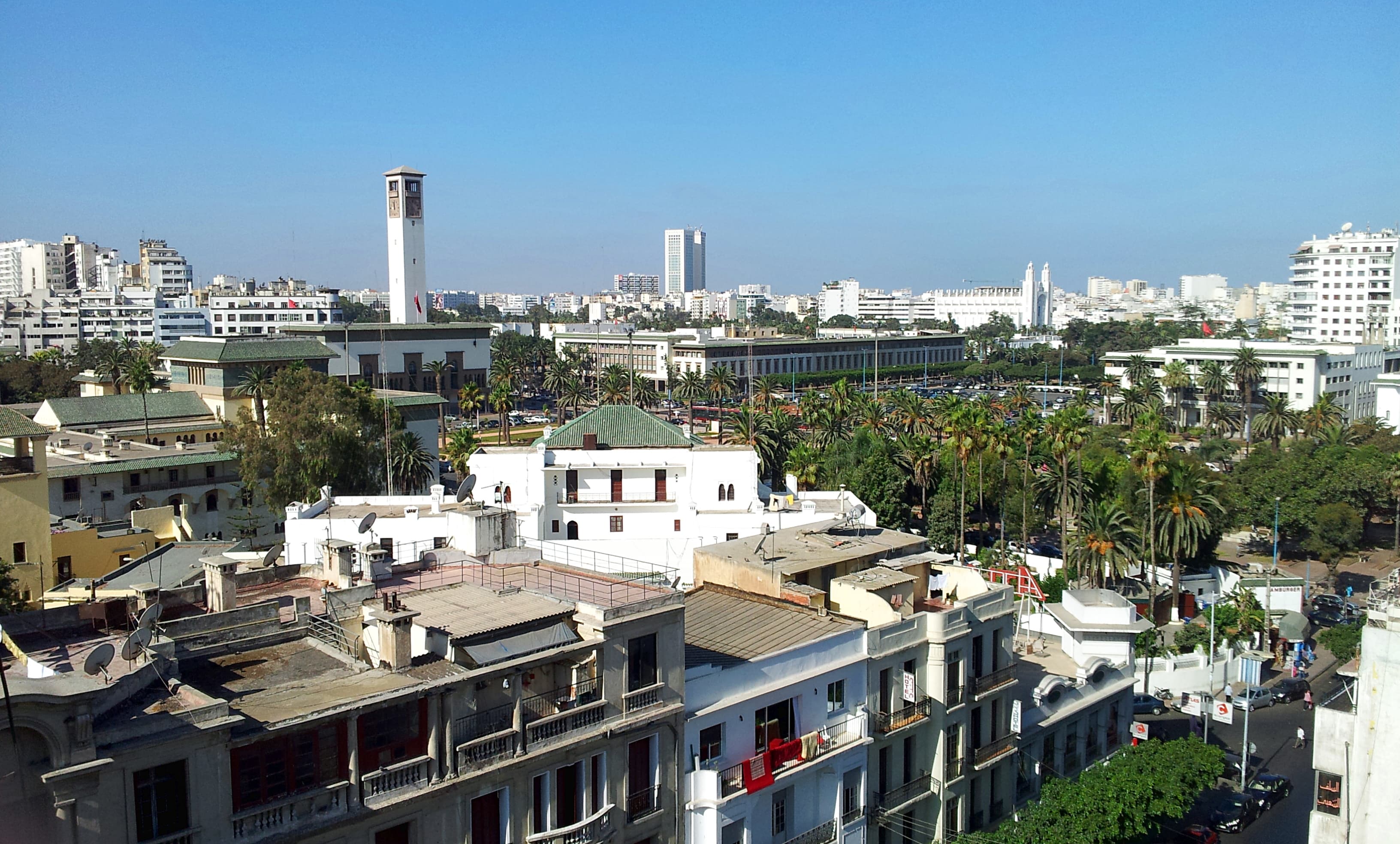

Morocco
A plan for Casablanca
Not a list of things to see in Casablanca — a day-by-day plan somebody could actually follow, built from places we can point to a source for. Make your own in about a minute.
- 2 nights
- Couple
- Balanced pace
- Mid-range budget
Every place here was checked on 2026-10-27 or later, and each one says where it came from.
The plan, day by day
Day 1
09:30
You arrive
13:00
Le Mynt
Suggested because you chose food
- 1h
- Meal
14:30
Museum of Moroccan Judaism
Picked because you chose culture & museums + balanced energy
- 2h 30m
- Culture & museums
2h open
Nothing planned here. That was on purpose.
19:00
Rick's Cafe
Suggested because you chose food
- 1h 30m
- Meal
20:30
Le Studio des Arts Vivants
Picked because you chose culture & museums + balanced energy
- 2h 30m
- Culture & museums
Day 2
08:00
Cafe Bianca
Suggested because you chose food
- 45m
- Meal
45m open
Nothing planned here. That was on purpose.
09:30
Loft Art Gallery
Picked because you chose culture & museums + balanced energy
- 1h 30m
- Culture & museums
2h open
Nothing planned here. That was on purpose.
13:00
La Bodega
Suggested because you chose food
- 1h
- Meal
14:30
Villa des Arts دار الفنون
Picked because you chose culture & museums + balanced energy
- 2h 30m
- Culture & museums
2h open
Nothing planned here. That was on purpose.
19:00
La Sqala
Suggested because you chose food
- 1h 30m
- Meal
20:30
Théâtre Mohammed VI
Picked because you chose culture & museums + balanced energy
- 2h 30m
- Culture & museums
Day 3
08:00
Bondi coffee kithcen
Suggested because it fits a mid-range budget
- 45m
- Meal
45m open
Nothing planned here. That was on purpose.
09:30
Musée de la Fondation Abderrahman slaoui
Picked because you chose culture & museums + balanced energy
- 2h 30m
- Culture & museums
1h open
Nothing planned here. That was on purpose.
13:00
Trattoria del Papa
Suggested because you chose food
- 1h
- Meal
14:30
You leave
Weather through the year
Monthly averages from NASA's 25-year climate record, day and night together.
Best months: April, May, June, and September
| January | Mild, some rain: 13°C, 56 mm |
|---|---|
| February | Mild, some rain: 13°C, 48 mm |
| March | Mild, some rain: 15°C, 54 mm |
| April | Mild and dry: 17°C, 36 mm |
| May | Mild and dry: 19°C, 21 mm |
| June | Mild and dry: 22°C, 3 mm |
| July | Mild and dry: 24°C, 3 mm |
| August | Warm and dry: 25°C, 3 mm |
| September | Mild and dry: 23°C, 40 mm |
| October | Mild, some rain: 21°C, 49 mm |
| November | Mild, some rain: 17°C, 98 mm |
| December | Mild, some rain: 14°C, 62 mm |
From the Wikivoyage guide
Quoted from the travel guide anyone can edit, as it read on the day we took it.
Understand
The modern city of Casablanca was founded by Berber fishermen in the 10th century BCE, and was used by the Phoenicians, Romans, and the Merenids as a strategic port called Anfa. The Portuguese destroyed it and rebuilt it under the name Casa Branca, only to abandon it after an earthquake in 1755. The Moroccan sultan rebuilt the city as Daru l-Badya and it was given the name Casablanca by Spanish traders who established trading bases there. The French occupied the city in 1907, establishing it as a protectorate in 1912 and starting construction of the ville nouvelle.
During World War II in Africa, Morocco became part of Vichy France, a non-belligerent puppet state of Germany. Casablanca became a haven for spies, as well as well-off Europeans who wanted to escape the war, with a prospect to flee to the New World. The 1942 film Casablanca presented the intrigues of the city in a romanticized manner.
Morocco gained independence in 1956, and Casablanca is now Morocco's largest city with a population of almost 4 million. It has the world's largest artificial port, but no ferry service of any kind. Casablanca is also the most liberal and progressive of Morocco's cities. Young men flirt brazenly with scantily-clad women, designer labels are the norm in the chic, beachfront neighbourhood of 'Ain Diab and many young Moroccans speak to each other in a mix of Arabic and French.
But not everyone is living the Casablancan dream. Tens of thousands of rural Moroccans who fled the drought-ravaged interior to find work in the city are struggling under high unemployment rates and expensive housing. Large numbers of buildings are abandoned or partially unfinished, stuck in financial limbo. The poverty, prevalent in slums on the city's outskirts, has led to high rates of crime, drug use, prostitution and the rise of Islamism.
Casablanca is a mixed bag of Moroccan extremes.
See
Almost all of the things to see in Casablanca are in the north of the city; very few maps even show the southern end of this sprawling metropolis.
1 King Hassan II Mosque, Blvd Sidi Mohammed Ben Abdallah (Half an hour walk from the closest tram stop at Place des Nations Unies, taxi from anywhere in central centre shouldn’t be more than 20 dirham), ☏ +212 5 22 48 28 86, +212 5 22 48 28 89. Tours: Sat-Thu 08:00, 09:00, 10:00, 11:00, 14:00; Fri 08:00, 09:00, 10:00 and 14:00. In summer (Mar 15-Sep 15) also at 16:00. The largest mosque in Morocco and the third largest in the world. The 210 m high minaret is the tallest in the world. It opened in 1993, after six years of construction. It is one of the two main mosques in Morocco open to non-Muslims. Beautiful interior complete with water features, a roof that opens to the sky, a huge hammam in the basement (not in use), and beautiful tile work. 130 dirham for Mosque, 30 dirham for museum, 140 for combined ticket. (updated Jan 2023)
2 Old Medina (north of the Place des Nations Unies). This is a small traditional walled town in the north of Casablanca. If you are in town it's worth a visit, but it is nothing compared to the glories of Fez or Marrakesh.
3 The Corniche. A neighborhood on the ocean, west of the Hassan II Mosque. Decades ago it was a thriving resort area - hotels line the ocean side of the Boulevard de la Corniche, and nightclubs line the other side. Most look like they've seen better days. Along the Boulevard de l'Ocean Atlantique are many newer, fancier hotels. The Corniche is also home to many western fast food chains. A new western-style movie theater can also be found here, but the best option is to walk up and down the street, resting at one of the many ocean-view cafes.
4 Shrine of Sidi Abderrahman. Built on a rock off shore, well past The Corniche, and only accessible at low tide. The shrine itself is off-limits to non-Muslims, but visitors are permitted to explore the tiny, medina-like neighborhood that has sprung up around it. A better bet is to walk to it along the beach and catch a view of the beautiful white walls before taking a cab to less remote areas.
Do
Hammam (Turkish baths): 1 Solidarité Féminine Association's Hammam, 4 rue Ahmed Chaouki, Palmier (Red taxi or Tramway station Wafasalaf), ☏ +212 5 22 99 23 94. Tue-Sun 08:00-21:00, Mon 08:00-18:00. The Association "Solidarité Féminine" has implemented an applied training program to encourage the socio-economic integration of women in single mother situations edifying employment. Therefore, making them co-founders of worthy life-plans for both themselves and their children. Entrance 40 dirham. (updated Jun 2016)
Football: 2 Stade Mohammed V (ملعب محمد الخامس), Rue Ahmed Lazrak, Maârif, ☏ +212 634 602690. This is multi-use but primarily for soccer. It's the usual stadium for the men's national team, and home ground for Wydad AC and Raja CA, both playing in Botola the top tier. The stadium was built in 1955 and last renovated in 2015, with a capacity of 45,891. In 2025/26 it hosted matches in the Africa Cup of Nations. (updated Jan 2026)
3 COSMAN ROOFTOP OBSERVATORY (COSMAN Astronomical Observatory), Tit Mellil, Casablanca-Settat, Morocco (Visits are by advance booking only. Contact the observatory before travelling to obtain the exact directions.), ☏ +212 704 283 073, cosmanastro@gmail.com. By appointment; evening sessions depend on observing conditions and availability.. COSMAN Rooftop Observatory offers guided astronomy and stargazing experiences in Tit Mellil, in the Casablanca area. Sessions introduce visitors to the night sky, including how to identify celestial objects and how telescopes work. Visitors can observe astronomical objects through telescopes, depending on the season, visibility and observing conditions. Targets may include the Moon, planets, star clusters, nebulae and galaxies. Visits must be arranged in advance. 150 MAD per person for 30 minutes; other packages available. (updated Oct 2026)
Eat
Restaurants in Morocco are like restaurants in Spain - they don't open until around 19:00 at the earliest, and most people don't eat until much later. Be sure to call first and make sure your restaurant of choice is actually open.
Budget
Around the Arab League Park
1 Brasserie La Cigale, Blvd Brahim Roudani (just south of the Rampwan de L'unite Africaine). An unassuming bar close to the Park of the Arab League, with a restaurant in front that serves only basic food (sausage or kefta sandwiches, salads, and the like.) The bar in the back is more crowded and has live music most nights. Beer is served with a plate of olives or popcorn, and it's one of the few Moroccan-style bars where women can drink in peace. Wine and spirits are available, but only when eating in the restaurant. A few phrases in Arabic to Aisha, the barkeeper, will win her heart and ensure a constant supply of olives. (updated Mar 2022)
Quartier Palmier
2 Solidarité Féminine Association's restaurant, Rue de Bethleém (Red taxi or Tramway station Wafasalaf), ☏ +212 6 19 11 11 16. Mon-Fri from 12:00 to 14:30. The Association "Solidarité Féminine" has implemented a training program to encourage the socio-economic integration single mothers. 35 dirham for the dish of the day, a salad and home made bread. Mint tea and Moroccan pastries available. (updated Apr 2022)
Mid-range
La Corrida, 59 Rue el Araar, ☏ +212 22 27 81 55. From the outside, it's easy to miss this restaurant, but look for the little sign ringed in blinking lights. It has a nice outdoor courtyard, but the inside is the main attraction. It's decorated like with memorabilia from Spanish bull fighting tournaments and has a dark, candle-lit vibe that's perfect for dates. The sangria is tasty, as is the Tapas menu (which changes daily). Seafood is the specialty, and the steamed mussels should not be missed.
Drink
Nightlife in Casablanca has mixed reviews. Women may feel uncomfortable with the mostly male crowds in many bars and nightclubs, though if you look around you'll find some excellent spots to drink, dance and people watch. The quality of venues varies considerably, so it's worth asking locals or your hotel for recommendations.
If you want a drink in your hotel room, supermarkets like Acima and Marjane carry a wide variety of liquor and wine, though the beer selection is fairly stunted. The best places to drink are either European-style restaurants, which usually have a decent selection, or hotel bars, which are inevitably safer and more relaxed. Many western-style nightclubs exist in the Maarif and Gironde neighborhoods. Pubs will cost around 100 dirham per head, it will be half if visited in the happy hours from 19:00-23:00. Pubs to visit Tiger House, La Notte.
1 Restaurant Le Kazbar, 7 Rue Najib Mahfoud, Gauthier (On a street between Blvd Anfa and Blvd Souktani.), ☏ +212 22 20 47 47. A dark and atmospheric place to grab a drink or dinner. Any kind of attire will fly, but if you want to dress up, a night at Kasbar is your chance. (updated Oct 2016)
2 La Bodega, 129 Rue Allal Ben Abdellah (Near the old downtown and Medina). A Spanish tapas bar, quite original. There can be a wait to get into the basement bar; but once you get inside, you're rewarded with bartenders who eat fire. It's pretty expensive, though, and only frequented by tourists. (updated Jan 2023)
3 Petit Poucet, 86 Boulevard Mohamed V. A bar that has been around for decades, apparently Little Prince author and aviator Antoine de Saint-Exupéry already stopped by here. Somewhat worn-down. (updated Oct 2016)
Get around
A government department puts out an exhaustive map of Casablanca in book form called Carte Guide de Casablanca that you can find in bookstores or online; in all likelihood, though, it isn't necessary.
Other than that, Casablanca is like any European city: the streets (mostly) have signs, and passersby are extremely helpful in French or Arabic and, more rarely, Spanish or English. The Medina can be hard to navigate, but it's so small that no matter how blindly you wander into it, you're never more than ten minutes from an exit.
By tram
Casablanca is one of the two Moroccan cities with a tram. The first line opened in late 2012. Service runs from 05:30 to 22:30 with frequent trains (during the day, the interval seems to be shorter than 10 minutes).
Most vending machines only take coins. One journey is 6 dirham with a rechargeable card, 8 dirham otherwise. A fee of 2 dirham will be added for the card when you buy a ticket. Tram stops are announced in Arabic and French. Further information including the network ("réseau") and schedule ("horaires") is available in French and Arabic on the Casa Tramway website.
By train
The Al Bidaoui service (i.e. airport service) also has some stops in the city, although they are spaced out much further from each other compared to the tram.
By bus
Many bus companies run through the city, the bus routes are the same for a given number, although the route remains completely unclear (Google maps has some bus stops for Casa though).
Going by bus is the cheapest way to get around (5 dirham) but some companies such as Hana Bus have vehicles in a disastrous state. It could be worth taking the chance given the cost-saving and experience of what many locals experience, but watch out for pickpockets.
Stay safe
Common sense will alleviate 99% of problems; try to look as little like a tourist as possible, do not flash large quantities of cash, and so on. Faux guides are much less of a problem here than in the rest of Morocco and are limited mainly to the area around the Old Medina. It is inadvisable to walk alone in Casablanca at night. Women, as in all Moroccan cities, should dress modestly to avoid harassment (which almost always consists of lewd comments, but nothing physical.)
Pickpocketing and moto-drive-by theft seem more to be a problem here—hide your valuables!
Practical facts for Morocco
Taken from open data. Rules and numbers change, so check locally before you rely on them.
- Currency
- Moroccan Dirham (MAD)
- Languages
- Arabic (Morocco) and French
- Plugs and power
- Types C and E, 127 or 220 V at 50 Hz
- Traffic drives
- On the right
- Country calling code
- +212
- Time zone
- Africa/Casablanca
Official travel advice
Quoted from each government as published, with the date they last changed it. We do not add a verdict of our own.
UK Foreign, Commonwealth & Development Office
- No areas listed that it advises against travelling to
US Department of State
Level 2 of 4: Exercise increased caution
Read the full adviceExercise increased caution in Morocco due to risk of terrorism. Some areas have increased risk. Read the entire Travel Advisory.
Terrorism
There is risk of terrorist violence, including terrorist attacks and other activity in Morocco.
Visit the U.S. Department of State's country reports on terrorism to learn more.
Entry and visas
Entry rules depend on your passport and change without notice. Check the official pages before you book.
Sources