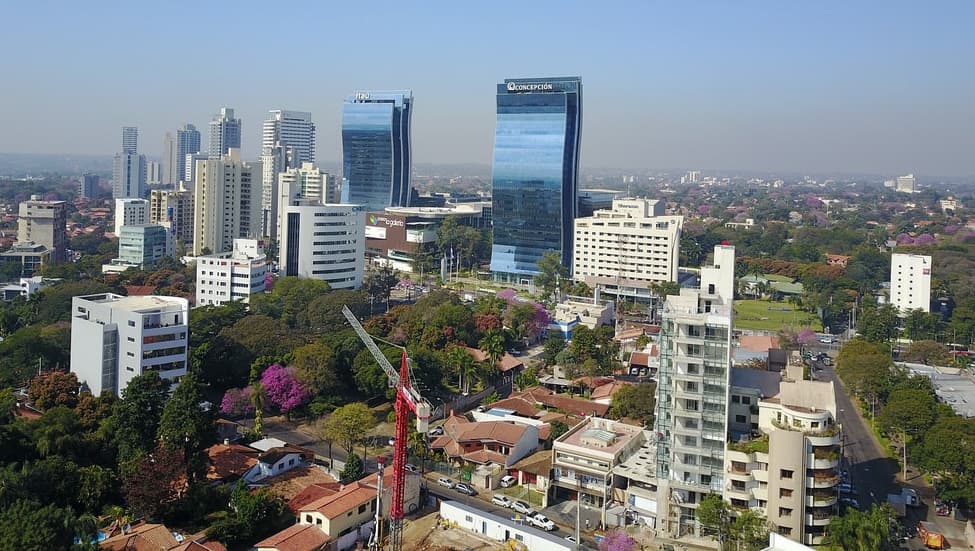

Paraguay
A plan for Asunción
Not a list of things to see in Asunción — a day-by-day plan somebody could actually follow, built from places we can point to a source for. Make your own in about a minute.
- 2 nights
- Couple
- Balanced pace
- Mid-range budget
Every place here was checked on 2026-10-30 or later, and each one says where it came from.
The plan, day by day
Day 1
09:30
You arrive
13:00
Bolsi
Suggested because you chose food
- 1h
- Meal
14:30
Manzana de la Rivera
Picked because you chose culture & museums + balanced energy
- 2h 30m
- Culture & museums
2h open
Nothing planned here. That was on purpose.
19:00
Bar San Roque
Suggested because you chose food
- 1h 30m
- Meal
20:30
Palo Santo Brewing Company
Picked because you chose food and local experiences + balanced energy
- 1h 30m
- Food
Day 2
08:00
Casa Clari Cafe-Bar
Suggested because it fits a mid-range budget
- 45m
- Meal
45m open
Nothing planned here. That was on purpose.
09:30
Museo Nacional de Bellas Artes de Asunción
Picked because you chose culture & museums + balanced energy
- 2h 30m
- Culture & museums
1h open
Nothing planned here. That was on purpose.
13:00
Shangri-La
Suggested because you chose food
- 1h
- Meal
14:30
Casa de la Independencia
Picked because you chose culture & museums + balanced energy
- 2h 30m
- Culture & museums
2h open
Nothing planned here. That was on purpose.
19:00
Acuarela
Suggested because you chose food
- 1h 30m
- Meal
20:30
Municipal Theatre Ignacio A. Pane
Picked because you chose culture & museums + balanced energy
- 2h 30m
- Culture & museums
Day 3
08:00
Heladería Paris
Suggested because it fits a mid-range budget
- 45m
- Meal
45m open
Nothing planned here. That was on purpose.
09:30
Cultural Center of the Republic
Picked because you chose culture & museums + balanced energy
- 2h 30m
- Culture & museums
1h open
Nothing planned here. That was on purpose.
13:00
Na Eustaquia
Suggested because you chose food
- 1h
- Meal
14:30
You leave
Weather through the year
Monthly averages from NASA's 25-year climate record, day and night together.
Best months: June, July, August, and September
| January | Rainy: 28°C, 126 mm |
|---|---|
| February | Rainy: 28°C, 139 mm |
| March | Rainy: 27°C, 136 mm |
| April | Rainy: 23°C, 149 mm |
| May | Rainy: 19°C, 143 mm |
| June | Mild, some rain: 17°C, 74 mm |
| July | Mild, some rain: 16°C, 63 mm |
| August | Mild and dry: 18°C, 38 mm |
| September | Mild, some rain: 21°C, 73 mm |
| October | Rainy: 24°C, 163 mm |
| November | Rainy: 25°C, 191 mm |
| December | Rainy: 27°C, 179 mm |
From the Wikivoyage guide
Quoted from the travel guide anyone can edit, as it read on the day we took it.
Understand
The Asunción metropolitan area is home to 2.2 million of Paraguay's 6.9 million inhabitants. It is a cosmopolitan and demographically young city with 65% of its residents under the age of 30.
Many landmarks and historical buildings in the old city centre have recovered their past splendour thanks to Paraguay's bicentennial independence celebrations that took place during 2011 and demanded a lot of restoration work throughout the city. In 2012, a new riverside promenade (costanera) was opened along the Bay of Asunción, adding a much-needed space for running, walking and family recreation. Around the city, tree-lined avenues, small parks and shady squares break up the rigid grid system of streets in the downtown area. From July to September, the whole city is drenched in colour with the prolific pink and yellow bloom of lapacho trees, which grow everywhere.
History
Asunción was founded in 1537 by Juan de Salazar y Espinosa, a Spaniard and member of the Pedro de Mendoza expedition which was set to colonize the Rio de la Plata basin, on 15th August the day of the feast of the Assumption of Mary, that is why is so named. It is the longest continually inhabited settlement in the Río de la Plata basin and in early colonial times it was referred to as Madre de Ciudades (mother of cities) because it was from here that numerous expeditions and missionaries set off to colonize the region founding many other settlements like Corrientes, Santa Fe, Buenos Aires and Santa Cruz de la Sierra. Asunción was established on the eastern bank of a calm bay in the river Paraguay, rendering it a good lookout post. In 1541 the first Cabildo (town council) was created transforming Asunción from a military fort to a civilian town with a local government.
See
1 National Congress of Paraguay (Palacio Legislativo), ☏ +595 21 414-5198. One of the more impressive new buildings in the city. It was built in 2002 with a US$20 million donation from the Republic of China (Taiwan) government. Paraguay is one of the few countries and also the only country in South America that recognizes the Republic of China (Taiwan) as opposed to mainland China (People's Republic of China). Most striking is its mirrored façade, which reflects the nearby slums along the bank of the river. You can ask for a tour in English, and maybe get one. Arrive by 13:00, so that you will be able to visit the small museum inside. (updated May 2026)
2 Metropolitan Cathedral (Catedral Metropolitana). The national cathedral. Next to the broad and picturesque plaza Independencia. (updated May 2017)
3 Panteón Nacional de los Héroes, Palma esquina Chile. Houses the tomb of the unknown soldier along with other national heroes from Paraguay's history, also commemorative plaques for heroes of the Triple Alliance and Chaco War. Changing of the guard occurs every other day. (updated May 2026)
4 Centro Cultural El Cabildo, Avenida República y Alberdi (at one edge of Plaza de la Independencia), ☏ +595 21 443 094, contacto@cabildoccr.gov.py. Tue-Fri 09:00-20:00; Sat Sun 10:00-17:00. One of the few museums that open on weekends it's in an old colonial building that was the Congress Palace until 2003. Near the riverside costanera it has various exhibition spaces. The Sala Museo del Barro is one of the sections which presents pieces of indigenous art from native groups of Paraguay and Latin America. Another permanent exhibition space is the Sala Agustín Pío Barrios - Mangoré, which treasures the life and work of the great composer of the Paraguayan guitar. Another section is the Sala de la Escena Paraguaya - Edda de los Ríos which aims to disseminate everything related to the performing arts in Paraguay. There are also works from potter artist Julia Isídrez exhibiting a variety of clay works, in dark tone, with designs of faces, animals and nature figures. The Cabildo also incorporates works from traditional Christmas cribs by local artists such as Lucy Yegros, Gabriela Zuccolillo and Carlo Spatuzza. Free. (updated Apr 2018)
Do
Trade fair. Every July. An exhibition booths, food, music and liquor. This is a good way to learn about what goes on in the country, the exhibitors range from agricultural suppliers to liquor manufacturers. Keep an eye out for the many free samples of food, soap, drinks, etc. (updated Jun 2018)
1 Ñu Guazu. Spend the day or enjoy a picnic at Ñu Guazu, Asunción's biggest park. Full of ponds, and people playing sports.
2 Running, Parque Ñu Guazú. Lots of elite Asunceños work off the stresses of their days at Parque Ñu Guazú, just outside Asunción in the city of Luque, on the way to the airport. There's a great paved 9-km loop for jogging or walking.
3 Jardín Botánico y Zoológico, Av Primer Presidente, ☏ +595 21 281 389. Visit the botanical garden and zoo - it's a very peaceful place filled with trees and nice paths. Find a nice shady spot and enjoy a picnic lunch. Inside the park you can visit Madame Lynch's house, very beautiful example of Paraguayan colonial architecture. (updated May 2017)
Dusk walk. Walk the main roads of the center in Asunción between 15-17:00 for beautifully illuminated alleys and colored buildings for some great pictures. (updated Jun 2018)
Soccer
Watch a soccer match at one of Asunción's stadiums. The classic rivals are Cerro Porteno and Olimpia.
4 Estadio Defensores del Chaco, Sajonia. 42,354 capacity stadium which is home of the Paraguay national football team, Club Guaraní and Club Olimpia. (updated Sep 2023)
5 Estadio General Pablo Rojas. 45,000 capacity stadium home to Cerro Porteño. (updated Sep 2023)
Eat
At lunchtime there is no shortage of cheap restaurants to dine in or take away – you can't miss them. The places where you help yourself and pay by weight are usually very cheap and a decent option besides the slightly more expensive restaurants with their daily menu. At dinner time only very few eating places are still open and finding a good deal – especially if you are budget-conscious – is a lot harder.
Budget
Most shopping malls have decent food courts with a variety of restaurants, however, they are away from the centre. Bigger supermarkets often have cheap self-service restaurants inside.
Eat a streetside lomito- these vendors are found throughout the city, with high concentrations near Casa Rica and the Ñu Guazu. It is a sandwich, with mayo, veggies, cheese and a fried egg. You can choose between beef or chicken. Some also offer lomito arabe (shawarma), hamburgers and chorizo. It is a popular hang out place at nights and after a night of heavy drinking.
Don Vito is Paraguayan fast food at its best. Home of the Paraguayan empanada, they have been in business for over 30 years. The original spot is just behind the Iglesia de San Jose, and if you are lucky enough to be in Paraguay around May–June, you can order a pastel mandi'o, which is made of mandioca and beef. Best enjoyed with a cold pulp, a Paraguayan soft drink made with natural fruit juice.
1 Burger King, Palma between 14 de Mayo and 15 de Agosto. If you fancy something you know. Also, open in the evening.
2 Ña Eustaquia, 421 Palma, past Lido's and the hall of martyrs, near Burger King. Very busy for lunch, you may need to wait for a table. Main lunches cost GS.15,000–GS.25,000. Great juice bar there too.
3 Seoul, Chile, near the intersection with Oliva (Plaza de los Heroes) and opposite an Esso petrol station. Open for lunch and dinner (19:30). Korean buffet, with many vegetarian options where you fill your plate and pay per weight.
Drink
Bars and clubs
1 Britannia Pub, Cerro Corá 851 (next to Hotel Crowne Plaza), ☏ +595 21 443 990, britpub@rieder.net.py. Tue-Fri from 19:30, Sat-Sun from 20:00. Popular hangout for locals and foreigners. Try their microbrewed Britannia Beer and the chicken platter.
2 904 Bar, Cerro Corá 904 (in front of Hotel Crowne Plaza), ☏ +595 986 230963. Mon-Thu from 18:00, Fri from 17:00, Sat from 19:00. A lot like Britannia: similar food, similar drinks, similar prices. Has a pool table, and occasionally puts on live-music shows.
3 Coyote, Sucre 1655 (100m from Avenida San Martín), ☏ +595 21 414 111. Dance club, fashionable but loud (updated Oct 2017)
4 Hollywood Dance, Independencia Nacional and Teniente Fariña (One block away from Mall Excelsior), ☏ +595 981 906494. Fri and Sat from around midnight. Dance venue for mostly gay people.
5 Paseo Carmelitas, ☏ +595 21 608226. from morning till late. Food plaza with a selection of bars and restaurants to go at noon for lunch and after office until late at night. One of the most popular places in Asuncion during the night and on weekends.
6 La Tabernita, Chila 1179 between Avenida Ygatimí and Jejuí (near Plaza Italia), ☏ +595 21 453620, latabernacafe97@gmail.com. 07:00-15:00 and 18:30-late. A cafe bar with good atmosphere, good music, drinks and very friendly staff (if you like 1970s, 80s, 90s rock & pop).
7 Casa Clari, Ayolas and Benjamin Constant (inside Manzana de la Rivera complex in front to Palacio de López), ☏ +595 21 496 476. Really nice views of the López Palace. Good food/drink menu, but slightly pricier than other bars in the centre.
Get around
The historic centre of Asunción is small enough to be explored by foot. However, some of the attractions, such as the Jardín Botánico (Botanical Garden) are a bit outside. In addition to the city's historical core - which is essentially between the streets Colón and Antequera - the Carmelitas area has become a hub for retail and entertainment, containing several large shopping centres and North American-style bars and restaurants. East-west street names change at Independencia Nacional, and North-South ones at Avenida Mariscal López.
By bus
Buses are ubiquitous, cheap and an experience in themselves (be careful while exiting, since many only slow down rather than stop for passengers to get off). They go more or less everywhere in the city: destinations are displayed on boards on the front window, if in doubt just shout your intended destination at the driver when he stops and he'll tell you yes or no. There are sometimes a few different versions of each bus number: 16, 16.1, 16.2 etc. which often have different routes from each other, so watch out not to accidentally get on the wrong one. There aren't many official bus stops in Asunción, you can just stick your arm out and flag down a bus pretty much anywhere, except in intersections of any size. No official bus schedules or maps are available (except the apps Moovit and Google Maps), but the locals know which buses go where, so just ask. (You'll need some knowledge of Spanish to do that.) The fare is GS.3,400 if the bus is air-conditioned (con aire), GS.2,300 if it isn't (as of 2026). Fares are paid with a JAHA or Más card which can be bought at supermarkets, kioskos and drugstores.
Stay safe
The National Police has a highly visible presence. Under the dictatorship of Alfredo Stroessner crime in any form was not tolerated. Crime is not prevalent, although the perception of crime is that it has been high since Stroessner's fall in 1989. Some houses are protected by 20 ft (6.1 m) high walls topped by barbed wire and electric fence or razor wire, and those who can afford it have a full-time guard on their grounds. Despite the locals' rather high perception of crime, Asunción is one of the safer capitals in South America and violent crime is very uncommon. Because there are few tourists in Paraguay, visitors are not likely to be specifically targeted by criminals. Key things to watch out for are petty thieves (watch your pockets on crowded buses) and taxi drivers trying to rip you off (make sure they use the meter). Pickpocketing is said to be prevalent in crowded downtown streets near expensive hotels.
After dark, some of the main outskirt avenues and parts of the oldest city center near the port can be unsafe and are best avoided. Female travellers should be aware that unwanted attention from men is common — usually in the form of catcalling, but occasionally involving touching, particularly in clubs. Being firm and ignoring such attention is generally the most effective response. Alcohol is widely available; street drunks can be encountered in some areas but are generally harmless.
Be extremely careful when crossing streets in Asunción. Most drivers consider stop signs and traffic lights to be merely suggestions, even if police are nearby. Buses will stop for almost nothing, so be very careful.
The United States Centres for Disease Control recommends that all visitors to Asunción receive a typhoid vaccination prior to travel. Dengue fever is frequently a risk one takes when travelling to Asunción; there is no vaccine for this. To avoid insect-spread diseases, ensure that you use bug spray at all times of the day, without exception.
Practical facts for Paraguay
Taken from open data. Rules and numbers change, so check locally before you rely on them.
- Currency
- Paraguayan Guarani (PYG)
- Languages
- Spanish (Paraguay) and Guarani
- Plugs and power
- Type C, 220 V at 50 Hz
- Traffic drives
- On the right
- Emergency numbers
- Any emergency911
- Country calling code
- +595
- Time zone
- America/Asuncion
Official travel advice
Quoted from each government as published, with the date they last changed it. We do not add a verdict of our own.
UK Foreign, Commonwealth & Development Office
- No areas listed that it advises against travelling to
US Department of State
Level 1 of 4: Exercise normal precautions
Read the full adviceExercise normal precaution in Paraguay due to crime.
Paraguay is generally a safe destination for travelers. Some areas have increased crime risk. U.S. government employees working in Paraguay need special authorization to travel to some areas. U.S. government employees are prohibited from using municipal buses in Paraguay because of risk of robbery and assault.
Review the Travel Guidances for Paraguay for additional information on travel.
Exercise Increased Caution in Departments of Alto Paraná, Amambay, Canindeyú, Concepcion, and San Pedro due to crime.
Entry and visas
Entry rules depend on your passport and change without notice. Check the official pages before you book.
Sources