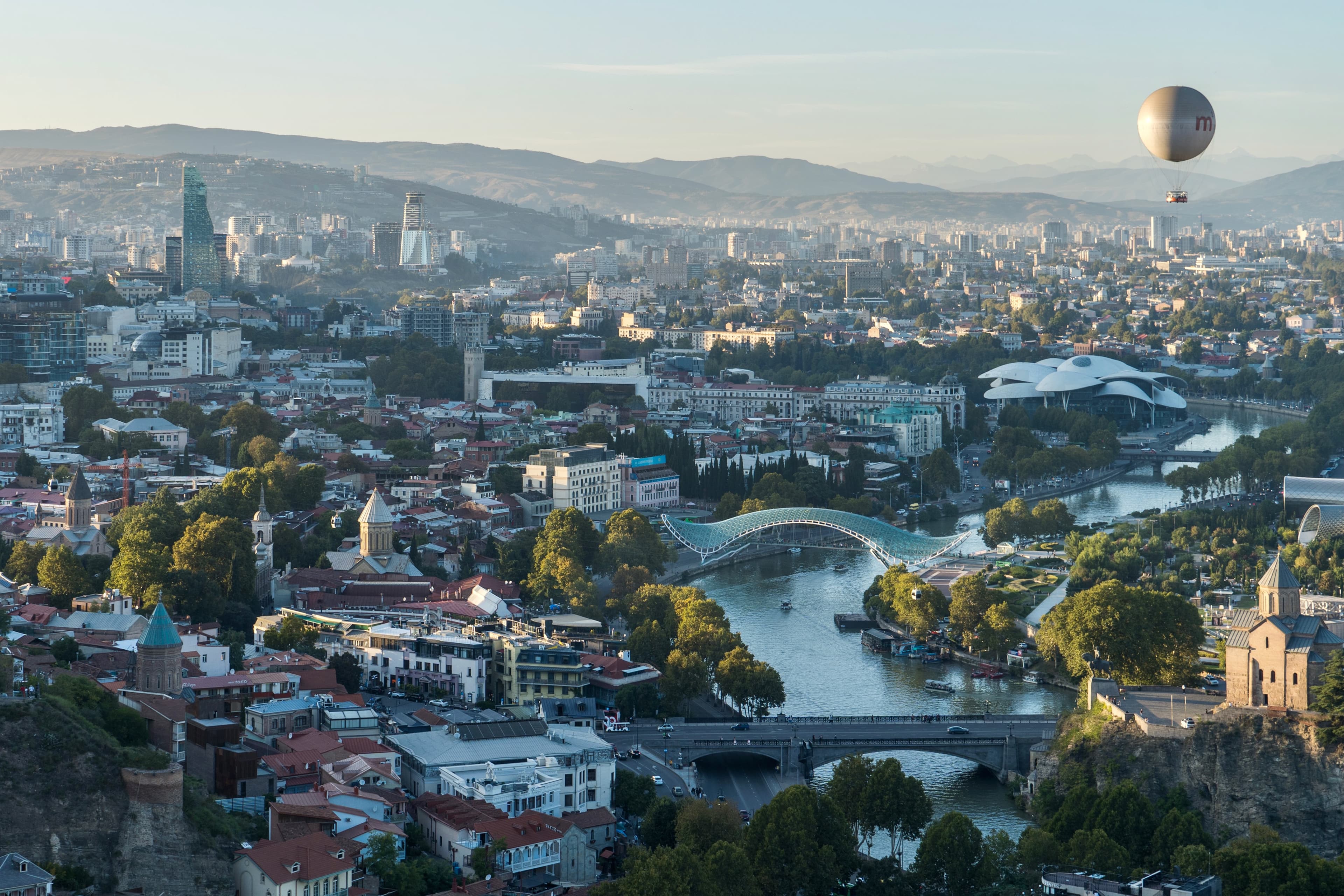

Georgia
A plan for Tbilisi
Not a list of things to see in Tbilisi — a day-by-day plan somebody could actually follow, built from places we can point to a source for. Make your own in about a minute.
- 2 nights
- Couple
- Balanced pace
- Mid-range budget
Every place here was checked on 2026-10-27 or later, and each one says where it came from.
The plan, day by day
Day 1
09:30
You arrive
13:00
Lolita
Suggested because you chose food
- 1h
- Meal
14:30
Open Air Museum of Ethnography
Picked because you chose culture & museums and local experiences + balanced energy
- 2h 30m
- Culture & museums
2h open
Nothing planned here. That was on purpose.
19:00
Tom Yam
Suggested because you chose food
- 1h 30m
- Meal
20:30
Tbilisi Circus
Picked because you chose culture & museums and local experiences + balanced energy
- 2h 30m
- Culture & museums
Day 2
08:00
Cafe Leila
Suggested because you chose food
- 45m
- Meal
45m open
Nothing planned here. That was on purpose.
09:30
Simon Janashia Museum of Georgia
Picked because you chose culture & museums + balanced energy
- 2h 30m
- Culture & museums
1h open
Nothing planned here. That was on purpose.
13:00
გაბრიაძე
Suggested because you chose food
- 1h
- Meal
14:30
Georgian Museum of Fine Arts
Picked because you chose culture & museums + balanced energy
- 2h 30m
- Culture & museums
2h open
Nothing planned here. That was on purpose.
19:00
Picasso
Suggested because you chose food
- 1h 30m
- Meal
20:30
Rustaveli Theatre
Picked because you chose culture & museums + balanced energy
- 2h 30m
- Culture & museums
Day 3
08:00
Plant Lovers
Suggested because it fits a mid-range budget
- 45m
- Meal
45m open
Nothing planned here. That was on purpose.
09:30
Tbilisi History Museum
Picked because you chose culture & museums + balanced energy
- 2h 30m
- Culture & museums
1h open
Nothing planned here. That was on purpose.
13:00
Fire Wok
Suggested because you chose food
- 1h
- Meal
14:30
You leave
Weather through the year
Monthly averages from NASA's 25-year climate record, day and night together.
Best months: May, June, August, and September
| January | Cold: 1°C, 18 mm |
|---|---|
| February | Cold: 3°C, 17 mm |
| March | Cold: 7°C, 28 mm |
| April | Mild, some rain: 12°C, 49 mm |
| May | Mild, some rain: 18°C, 58 mm |
| June | Mild, some rain: 23°C, 49 mm |
| July | Warm and dry: 26°C, 27 mm |
| August | Warm and dry: 26°C, 27 mm |
| September | Mild and dry: 20°C, 25 mm |
| October | Cool and dry: 14°C, 38 mm |
| November | Cold: 7°C, 25 mm |
| December | Cold: 2°C, 17 mm |
From the Wikivoyage guide
Quoted from the travel guide anyone can edit, as it read on the day we took it.
Understand
Tbilisi (formerly called 'Tiflis' after its Russian name) lies in the centre of eastern Georgia, in the foothills of the Trialeti mountain range. According to Georgian legends, it was founded in the 5th century by King Vakhtang Gorgasali who, while hunting, shot a pheasant which fell into a warm spring and was either boiled or healed. Either way, the king was inspired to found a city on the site, and the name of the city derives from the Georgian word tbili meaning "warm". Although the city has been destroyed and rebuilt 29 times, the layout of the Old Town is largely intact with narrow alleys and big crooked houses built around courtyards.
Climate
Tbilisi experiences relatively cold winters and hot summers. Because the city is bounded on most sides by mountain ranges, the close proximity to large bodies of water (Black and Caspian Seas) and the fact that the Greater Caucasus Mountain Range (further to the north) blocks the intrusion of cold air masses from Russia, Tbilisi has a relatively mild micro-climate compared to other cities that possess a similar continental climate along the same latitudes. The average annual temperature in Tbilisi is 12.7 °C (54.9 °F). January is the coldest month with an average temperature of 0.9 °C (33.6 °F). July is the hottest month with an average temperature of 24.4 °C (75.9 °F). The absolute minimum recorded temperature is −24 °C (−11 °F) and the absolute maximum is 40 °C (104 °F). Average annual precipitation is 568 mm (22.4 in). May and June are the wettest months (averaging 84 mm (3.3 in) of precipitation each) while January is the driest (averaging 20 mm (0.8 in) of precipitation). Snow falls on average 15–25 days per year.
See
Museums
The Georgian National Museum is the umbrella organisation for a dozen museums and other sites in Tbilisi and elsewhere, with practical info in English. Usually they charge 7 lari for an adult, and are closed Mondays.
1 Open Air Museum of Ethnography (ეროვნული მუზეუმი ღია ცის ქვეშ), Kus Tba 1 (1 Turtle Lake Road, Tortoise pond lane) კუსტბის გზა #1) (Bus 59 from Metro Rustaveli; Bus 9 from station square and a little walk up), ☏ +995 32 2729045, fax: +995 32 2982133. Tue-Sun 10:00-18:00. Part of the Georgian National Museum. "Skansen"-type museum with 70 houses and other buildings characteristic of the various parts of Georgia, plus household gadgetry and craft tools. The houses are in variable states of repair, some are tumbledown but especially those near the entry gate are okay and with helpful docents. Allow a half day for a visit, a quiet escape from the city. Adults 25 lari, guided tour 60 lari. (updated Oct 2018)
2 Museum of Fine Arts (საქართველოს ხელოვნების მუზეუმი), 1 Gudiashvili Street (Metro: Liberty Sq.), ☏ +995 32 999909, fax: +995 32 2982133. Tue–Sun 10:00–18:00. Part of the Georgian National Museum. Large permanent collection from antiquity to present. Adults 3 lari, students 1 lari. (updated Oct 2018)
3 Tbilisi History Museum (Former Caravanserai / თბილისის ისტორიის მუზეუმი), #8 Sioni St, ☏ +995 32 2982281, fax: +995 32 2982133, info@museum.ge. Tue–Sun 10:00–18:00. Part of the Georgian National Museum. Adults 3 lari, students 1 lari. (updated Oct 2018)
Do
1 Sulphur Baths (Abanotubani), Bath Street (აბანოს ქუჩა) (from Metro Avlabari 1 km SW, south side of the Metekhi bridge). The main bath district is easy to spot with its small domes on ground level. There are several small baths offering different levels of comfort. The baths are relatively small, and you may have to wait for a pool to become available. English service is not guaranteed. Massages are available; however, they are more like a washing, but well worth it for the experience. You should bring your own towel and beach sandals but also they are available for a small fee, but pricey compared to the 3 lari if you use the public bath. Some travellers have suggested the Royal Baths is a much better alternative to Sulphur Baths (they are next to each other). Sulphur baths tend to double the price at the end of the massage and bath in spite of your original agreed price. Private pool: 50–200 lari/hr; massage/scrub 5–20 lari.
2 Bath No. 5 (Public bath), 4 Mirza Fatali Akhudovi. This is the only public bath in this area right at the beginning, follow the neon light. It is definitely worth the experience, so do not miss it. The men's section has a central shower area, a hot pool and a sauna. The women's public section only provides showers and massage, and are probably not worth it. Massage is 10 lari extra. Bring slippers and towel or rent them there for extra cost. 10 lari men, 6 lari women. (updated Oct 2025)
Eat
Budget
Street side stalls selling Georgian fast food are all over the city. Some kind of hot snack will cost 0.70-2.50 lari.
City centre
1 Kiwi Vegan Cafe, 6 Ivane Machabeli St (in Old Town between Pushkin and Leselidze), ☏ +995 322990456. Vegan cafe. Low prices, delicious, has tofu. 4-7 lari (Dec 2017). (updated Aug 2022)
2 Racha, 4 Mikheil Lermontovi St. Great and authentic Georgian restaurant. It is not fancy, but it is real and the food is tasty. An interesting place in the basement for unpretentious tourists who want to eat inexpensively. The menu offers a selection of national dishes. You can feel the atmosphere of Georgia here. (updated Aug 2022)
3 Veliaminov, 8 Shalva Dadiani St. Restaurant with Georgian cuisine. It has the most delicious khinkali. (updated Aug 2022)
4 Family kitchen, 1 Giorgi Leonidze St. Delicious dishes and comfortable atmosphere. There are options for those who don't eat meat. It works like in a canteen. (updated Aug 2022)
5 Good Mood Food, 1، Kote Afkhazi St. Small eatery serving different kinds of Khachapuri. (updated Aug 2022)
6 Tom Yum Thai Food, Lado Asatiani 48. Excellent authentic Thai dishes, everything very tasty. The interior is rather simple. (updated Aug 2022)
7 Shawarma (West of Metekhi Bridge on Kote Afkhazi St, just past the Spar). A delicious no-name shawarma joint nestled amongst the pricier tourist-oriented restaurants. 10 lari for a "small" (quite big) shawarma. (updated Oct 2022)
8 Fire Wok Dadiani, 20 Shalva Dadiani St. Nurse that hangover with some greasy Asian noodles. No seating. 10–15 lari for a noodle box. (updated Oct 2022)
9 Klike's Khinkali, 1 Shio Chitadze St. An excellent underground khinkali spot, popular among locals. 1–2 lari per dumpling. (updated Oct 2022)
Didube station
10 Joker Shaurma, Транспортная ул.4. delicious shawarma and tasty kebab. (updated Aug 2022)
Drink
One is never far from a corner store opening late selling the bare essentials of life late into the night, which always include booze and bread. Georgia is known as the cradle of wine having produced wine since the neolithic period; and locals are very proud of this. Georgian wine was and still is the best in post-Soviet culture and there are many wine tasting shops in the upmarket areas of the city where wine culture is greatly respected. Try one of the famous wines from Kakheti or the other popular regions.
It is possible to have a great night you may or may not remember for only 10 or 15 lari if you follow students to the cheaper bars where tourists are welcome, but you might be shortchanged a few lari. Nightlife tends to congregate north and northwest of the city centre; do your best to avoid the overpriced drinks in the old town.
Also of note (especially for non-drinkers) is the famous Georgian "Laghidze Waters", sweet drinks based on soda and natural fruit and herb syrups, listed as Intangible Cultural Heritage of Georgia. There is a Laghidze Waters restaurant in Tbilisi selling the genuine article, but Natakhtari is quite similar and sold in corner shops all over.
Bars
1 Fabrika courtyard, 8 Egnate Ninoshvili St. A large courtyard filled with bars and cafes. Packed at night with locals and tourists alike. (updated Oct 2022)
2 Wine Factory N1, 1 Vasil Petriashvili Street. Another courtyard with numerous bars and restaurants, a bit lower key than Fabrika (updated Oct 2022)
3 Meoba Bar, 4 Constitution St. A hip cocktail joint, popular with locals and not bad on the prices. (updated Oct 2022)
4 Lolita, 7 Tamar Chovelidze St. Popular restaurant by day, cracking bar by night. (updated Oct 2022)
41 Gradus (41° Art of Drinks), 19 Galaktion Tabidze St (1.5 blocks south of Liberty Square). Small stylish cocktail bar serving their own creations. Slide the metal door to get downstairs. Cocktail 15 lari. (updated Jan 2019)
Alibi Room, Akhvlediani, 20. Daily 18:00-03:00. Cheap bar well known (or infamous) among locals, attracts a young crowd and gets packed on Fridays, when things can get a bit rough; so it's not for the faint hearted. ' Chacha 1 lari, beer 2 lari. (updated Jan 2018)
5 Dublin, 8 Akhvlediani St (Metro Rustaveli), ☏ +995 32 98 44 67. until 03:00. Irish pub with live music from 20:00-00:00. Try the meat wrapped in bacon. 30 lari.
Get around
By public transport
The primary transport inside and outside the Tbilisi city are metro, buses and marshrutka (converted transport vans aka minibuses aka microbuses). Check the Tbilisi Transport Company website for live overview and more information on buses. Otherwise, to find the correct bus route, Google Maps has comprehensive bus network information with numbers and routes. If you click on one of the numerous bus stops around the city or next to you, you will get displayed the bus lines, their routes and frequency. Be aware that
There is the Metromoney (IC) card, which must be used for most of Tbilisi's public transport options and tapped when entering any vehicle or station. Visa and Mastercard is also possible on most buses and all metro entries, but 50% extra.
The Metromoney card gives discounts when transferring between metro, buses and minibuses, specifically the first ride is 1 lari (for either metro, buses or marshrutka) and all subsequent rides are free within the next 1½ hr. Several people can use one card together, however, only the first person can profit from the free transfer.
You can buy the card at any metro station, with a one-time "non-refundable" deposit of 2 lari. (It can be refunded though if you have the original receipt and register the card onto your name.) The card can be topped up with any amount in metro stations or at Bank of Georgia pay-booths around the city.
Buses and metro station turnstiles will also accept contactless cards, though your bank may charge you for this service.
By metro
Tbilisi has a two-line metro system, which operates from 06:00–24:00. However, sometimes the last metros leave at around 23:00 from either end.
All signs inside the metro are in Georgian and English, but station name signs are not always visible from the train. Station names are also announced in two languages. There are rarely system maps on the train cars themselves. You will be lucky to find English speakers riding the Metro. You will however have better luck with Russian, which older people will speak. Take a bilingual map with you if you are not proficient with the local alphabet/pronunciation.
Some rebuilt metro cars have USB charging ports near the doors, so that passengers can charge their phone. Cell coverage exists in most stations.
Stay safe
Tbilisi is very safe after the Rose Revolution. You will be welcomed with the cheerful hospitality that is a hallmark of Georgian culture. The police system was reformed completely and the public's trust in police rose dramatically. The police are usually quick to respond, though usually only Georgian and Russian are spoken. However, as part of the democratic backslide in the 2020s, trust in police, particularly from young liberal Georgians, has eroded. For example, the police response to the 2024 protests included the use of World War I chemical agents in water cannons.
Stay away from protests. Georgian police may record these protests and will deny you entry on your next visit.
Walking as a solo black man is unusual. Be prepared to receive stares and be "randomly" controlled by police every day.
While walking is generally fine, even for solo women, it makes sense to take a bus or taxi home at night. Use common sense and big-city awareness. Night time at the clubs and bars are generally safe but fights between locals can escalate quickly. The taxi service is safe as long as it's a company taxi like "009" or others. The public bus is also a good, safe option for 1 lari.
Police Tel: 112
Ambulance tel: 112
Nightlife
Extreme caution should be exercised when frequenting any establishment in the "Shardeni" area, between Kote Apkhazi street and the river, on streets "Chardin", "Bambis Rigi", and "Rkinis Rigi". These bars, clubs, and restaurants are well known for operating expensive scams, charging upwards of US$1,000 for a few drinks and forcing tourists to pay. Although a few establishments in this area have a reasonable reputation, such as "KGB", it is safer and cheaper to completely avoid this area. This is the only area of the city where such caution should be taken.
Taxi drivers
As always, taxi drivers will try to cheat tourists; especially coming from the airport, rigging the meter, misrepresenting the value of the lari or quoting a price in lari then demanding payment in US dollars. Stand your ground and walk away if necessary.
Practical facts for Georgia
Taken from open data. Rules and numbers change, so check locally before you rely on them.
- Currency
- Georgian Lari (GEL)
- Languages
- Georgian, Russian, Armenian, and Azerbaijani
- Plugs and power
- Types C and F, 220 V at 50 Hz
- Traffic drives
- On the right
- Country calling code
- +995
- Time zone
- Asia/Tbilisi
Official travel advice
Quoted from each government as published, with the date they last changed it. We do not add a verdict of our own.
UK Foreign, Commonwealth & Development Office
- Advises against all travel to parts of the country
Read the full adviceAreas where FCDO advises against travel
South Ossetia and Abkhazia
For security reasons, FCDO advises against all travel to the Russian occupied regions of:
• South Ossetia
• Abkhazia
FCDO also advises against all but essential travel to areas immediately next to the administrative boundary lines with South Ossetia and Abkhazia.
FCDO cannot provide face-to-face support to British nationals travelling in South Ossetia and Abkhazia, as UK government employees are restricted from travelling there.
Find out more about why FCDO advises against travel.
Global travel impacts due to escalation in the Middle East
Escalation in the Middle East has caused widespread travel disruption, including airspace closures, delayed and cancelled flights.
Your travel plans may be affected, even if your destination is not in the Middle East. Before you travel:
• check travel advice for any countries or territories you are transiting through
• check for the latest updates from your airline or tour operator
• review your travel insurance policy for coverage
• monitor local and international media for the latest information and sign up for travel advice email alerts
If you have been impacted by travel disruption and need to review your visa contact the Ministry of Foreign Affairs of Georgia.
US Department of State
Level 1 of 4: Exercise normal precautions
Read the full adviceExercise normal precaution in Georgia.
Georgia is generally a safe destination for travelers.
• Review our Travel Guidance for Georgia to learn how to prepare for a safe trip.
Do Not Travel To:
• The Russian-occupied Georgian regions of South Ossetia and Abkhazia due to risk of crime, unrest, and landmines.
Entry and visas
Entry rules depend on your passport and change without notice. Check the official pages before you book.
Sources