
Taiwan
A plan for Taipei
Not a list of things to see in Taipei — a day-by-day plan somebody could actually follow, built from places we can point to a source for. Make your own in about a minute.
- 2 nights
- Couple
- Balanced pace
- Mid-range budget
Every place here was checked on 2026-10-27 or later, and each one says where it came from.
The plan, day by day
Day 1
09:30
You arrive
13:00
Tong Hua Night Market
Suggested because you chose food
- 1h
- Meal
14:30
Songshan Cultural and Creative Park
Picked because you chose culture & museums and local experiences + balanced energy
- 1h 30m
- Culture & museums
3h open
Nothing planned here. That was on purpose.
19:00
On Tap
Suggested because you chose food
- 1h 30m
- Meal
20:30
Taipei Performing Arts Center
Picked because you chose culture & museums + balanced energy
- 2h 30m
- Culture & museums
Day 2
08:00
i CAFE
Suggested because you chose food
- 45m
- Meal
45m open
Nothing planned here. That was on purpose.
09:30
Huashan 1914 Creative Park
Picked because you chose culture & museums and local experiences + balanced energy
- 1h 30m
- Culture & museums
2h open
Nothing planned here. That was on purpose.
13:00
南門市場
Suggested because you chose food
- 1h
- Meal
14:30
Ching-kuo Chi-hai Cultural Park
Picked because you chose local experiences + balanced energy
- 2h 30m
- History
17:00
Taipei Fine Arts Museum
Picked because you chose culture & museums + balanced energy
- 2h 30m
- Culture & museums
19:30
辣王忠麻辣乾麵
Suggested because you chose food
- 1h 30m
- Meal
21:00
Wellspring Theater
Picked because you chose culture & museums + balanced energy
- 2h 30m
- Culture & museums
Day 3
08:00
N Café
Suggested because you chose food
- 45m
- Meal
45m open
Nothing planned here. That was on purpose.
09:30
Ama Museum
Picked because you chose culture & museums + balanced energy
- 2h 30m
- Culture & museums
1h open
Nothing planned here. That was on purpose.
13:00
臺北魚市
Suggested because it fits a mid-range budget
- 1h
- Meal
14:30
You leave
Weather through the year
Monthly averages from NASA's 25-year climate record, day and night together.
Best months: February, October, November, and December
| January | Mild, some rain: 14°C, 95 mm |
|---|---|
| February | Mild, some rain: 15°C, 88 mm |
| March | Rainy: 17°C, 127 mm |
| April | Rainy: 21°C, 122 mm |
| May | Wet season: 24°C, 227 mm |
| June | Wet season: 26°C, 270 mm |
| July | Rainy: 28°C, 169 mm |
| August | Wet season: 27°C, 263 mm |
| September | Wet season: 26°C, 243 mm |
| October | Rainy: 23°C, 109 mm |
| November | Rainy: 20°C, 107 mm |
| December | Mild, some rain: 16°C, 96 mm |
From the Wikivoyage guide
Quoted from the travel guide anyone can edit, as it read on the day we took it.
Understand
In 1884, Liu Mingchuan, the Qing dynasty governor of Taiwan, moved the prefectural capital to Taipei. As officials arrived and government buildings were constructed, the city began to transform from a quiet market town. When Taiwan became a province in 1887, Taipei was named its capital and continued to hold that status. Its position in northern Taiwan — closest to Japan — also supported its growth after the island was ceded to Japan in 1895.
During Japan’s fervent modernization campaign, much of Taipei’s traditional Chinese architecture was swept away, including the historic city walls. However, several Qing-era structures, such as the old North Gate, the former Provincial Administration Hall, and a number of temples, survived. The Japanese colonial period also left a lasting mark on the city’s architectural landscape, with prominent landmarks such as the Presidential Palace and National Taiwan University built during this time.
Taipei underwent another dramatic transformation after 1945, when the Kuomintang (KMT) government relocated from mainland China. To accommodate the massive influx of mainland refugees, temporary housing spread rapidly across the city. These were later replaced with utilitarian concrete apartment blocks, which defined Taipei’s urban aesthetic for decades. Many of these buildings still stand, but beginning in the 1980s, Taiwan’s economic boom fueled a new phase of development. Modern neighborhoods took shape, tree-lined boulevards were introduced, and stylish cafés, restaurants, and high-quality apartment buildings began to emerge, signaling Taipei’s urban renewal that continues to this day.
See
Those who take the time to visit and look around will soon find that Taipei is just as vibrant as any other major city, and is full of a certain charm which makes it unique in its own right. Just spend a day wandering around Taipei's streets and you will start finding many surprises.
Landmarks
Several memorial halls like the Chiang Kai-shek Memorial Hall in Zhongzheng District and Sun Yat-sen Memorial Hall in Xinyi commemorate the most recognized leaders of the Nationalists to the lesser known war dead in the Martyrs' Shrine in Zhongshan District. All three have honor guards which change at set hours, demonstrating military precision and solemn respect for the ROC leaders and soldiers before them. Built in the middle of large parks, the memorial halls are also good places for some quiet reflection.
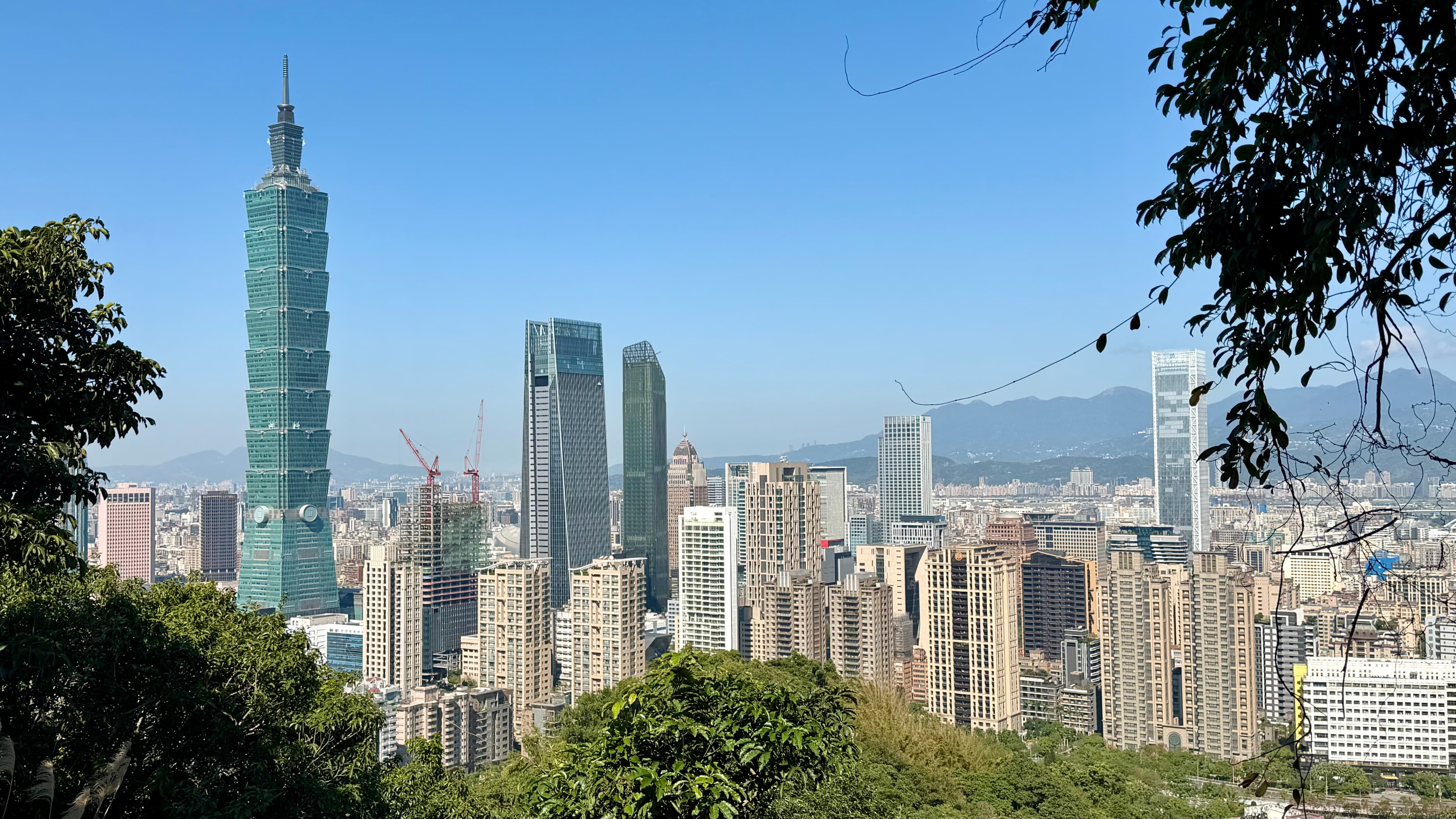
While Taipei is largely secular, the elaborate Taoist and Buddhist temples such as Longshan Temple and Bao'an Temple in the older districts of Wanhua and Datong still draw locals who maintain the old rituals and traditions. On the glitzier side of town, Taipei 101 may have relinquished its tallest building status but remains a very popular attraction for its architectural style and observation deck. On New Year's Eve, Taipei 101 becomes a beacon of lights and fireworks.
Museums and galleries
Anyone with even the slightest interest in Chinese history should visit the National Palace Museum in Shilin, which holds the singular best collection of historical artifacts from China, expertly curated by its staff. It is large enough that only one percent of what it owns is displayed at any one time, chief among them ancient paintings, scrolls, books and ceramics that span over 5000 years. The National Museum of History in Zhongzheng also holds valuable relics. There are other quirky little private museums such as the Miniatures Museum (Adult NS$200) and Museum of Drinking Water for more off-beat exploration.
Do
Hot springs
Hot springs (溫泉) come in various brands in Taipei, ranging from basic natural pools, to plush spas at five star hotels. The three main places to have a soak in the Greater Taipei area are: Beitou (北投), Wulai (烏來) and Yangmingshan National Park (陽明山). The basic free 'rub and scrub' type public baths are run by the city. Most hotels offer the option of a large sex-segregated bathing area that generally consists of several large baths of various temperatures, jacuzzi, sauna and steam bath and also private and family rooms. Some hotels also have outdoor baths (露天溫泉), which offer restful views over the surrounding countryside. Prices range from around NT$300 to NT$800.
The law in Taiwan states that for safety reasons, individuals are not allowed to bathe in the private rooms, and there must be at least two people. Etiquette requires that bathers thoroughly wash and rinse off their bodies before entering public baths, do not wear clothing (which includes swimwear, though this is not the case for mixed-sex public areas) and tie up their hair so that it does not touch the water. Finally, people with high blood pressure, heart disease or open wounds should not enter the baths.
Hiking
The mountains around Taipei make hiking a popular exercise in the city. The main hiking spot closest to the city is the Four Beasts Mountain which border Xinyi and Nangang. One of the most rewarding walks is on Elephant Mountain, where steep steps lead up to several different viewpoints that give a striking contrast between Taipei 101 and its neighboring low-rise buildings, especially against the orange hues of sunset. Continuing on separate trails will head towards the remaining 'beasts' of Leopard, Lion and Tiger, and Nangang mountain and Jiuwufeng beyond them.
Yangmingshan National Park (陽明山國家公園) (just north of Beitou). A favourite destination, particularly during spring when thousands of calla lilies, peonies and cherry blossoms bloom in the valleys. Besides that public hot springs, as well as hot sulphur blow holes and sources are equally worth the visit. There are dozens of hiking trails in the park, most marked out on maps from the visitors centre. Qixingshan is the highest peak in Yangmingshan, and looks out over the Taipei Basin and the north coast.
Eat
Taipei is a foodie's paradise. Almost every street and alley offers some kind of eatery. Although Taiwanese cuisine is primarily based on the cuisine of southern Fujian, the huge influx of Kuomintang refugees from mainland China after losing the Chinese Civil War means that Taipei is also one of the best places in the world to sample regional cuisines from all over China, with many of these also having been given a unique Taiwanese twist. In addition, Thai, Vietnamese, Japanese, Korean and Italian cuisines are also popular. Basically, East Taipei, especially around Dunhua and Anhe Roads, and also the expat enclave of Tianmu are where to clash chopsticks with the rich and famous, whereas West Taipei offers more smaller, homey restaurants. Convenience stores are open 24/7 and are extremely useful for travelers. You can buy cheap meals, withdraw cash, and buy toiletries.
Night markets
There are several night markets (夜市) in each district. Some are open during daytime, and all are open until around midnight. Night markets consist of restaurants and stores at the permanent locations and little booths along the center. Every night market has a huge variety of food, so a visit to any one is a good bet for good food.
A lot of Taiwanese street food didn't actually originate in Taipei, but any popular xiaochi (small snack) eventually makes their way up to the capital. Some of the best known night market snacks are: oyster vermicelli (蚵仔麵線; ô-á mī-sòa), oyster omelet (蚵仔煎; ô-á-chian), fried chicken fillet (雞排; jīpái), stinky tofu (臭豆腐; chòudòufǔ) and aiyu jelly (愛玉冰; ài-yù-bīng) among a long list of others. Because of the vast selection, the recommendation is to go with a few people and share the food. Otherwise, honestly the best way to eat is to join the longest queue in the market, or just buy whatever catches your eye! Vendor food is generally safe to eat, but use common sense though if you have a sensitive stomach.
Drink
The nightlife in Taipei runs from boisterous night markets to equally exuberant clubs and bars, and indeed the city comes alive with glittering lights after the last rays of the sun leave the grey buildings.
Bars and clubs
Xinyi is where the biggest and most flashy clubs are, especially the ATT4FUN Building which has an excellent view of Taipei 101, while smaller shophouses around the Taida and Shida university areas host live music gigs (although lessened after noise complaints). The "Combat Zone" in Zhongshan used to be the go-to district for US soldiers in the Vietnam War and remains fairly gritty with quite the collection of dive bars. The area around Red House Theater near Ximending has a large number of gay bars. Visit the Taiwan Beer Bar, also known as Taipei Brewery, in Zhongzheng if you fancy trying cheap and fresh brews of the local favorite Taiwan Beer.
Cover charges are usually required for entry, but these will include a free drink at the very least, with some places even offering free flow of house pours for the whole night after payment. Wednesday nights are ladies' night in most venues.
Tea houses
Taiwan's speciality teas are High Mountain Oolong (高山烏龍, a fragrant, light tea) and Tieguanyin (鐵觀音, a dark, rich brew). The hills south of Taipei are known for Baozhong (包種茶, a light, almost-floral tea).
Tea stores are scattered throughout the city. Most will invite you to sit down for an extended sampling of their tea. Some are relaxed, as if running the shop was an excuse for the owner to chat and drink all afternoon, others are excited to share with you the best tea in all of Taiwan. The tastings are free, but there is an expectation to buy if you find something you like. Tea houses operate more like cafes, with menus to order from and open or semi-private seating. Tea houses are easiest to find near Yongkang Street and Dihua Street.
The mountainous Maokong area of Muzha in the Wenshan district of the city has dozens upon dozens of teahouses, many of which also offer panoramic views of the city. It's especially spectacular on a clear evening. A Maokong Gondola (cable car) system services the Taipei Zoo MRT station to Maokong. The S10 bus comes up from the Wanfang Community MRT station.
Get around
By metro
Taipei City has a very clean, efficient and safe Mass Rapid Transit system known most commonly as the MRT, but also called Metro Taipei (臺北捷運). Fares are between NT$20 and NT$65 for one-way trips around town. It has been widely lauded as one of the most reliable and efficient systems in the world, and is often cited as a gold standard to which Metro systems around the world should aspire to. Stations are clearly identified in English as well as Chinese. All stops are announced in six languages: Mandarin, English, Japanese, Korean, Taiwanese and Hakka. All stations have information booth/ticket offices close to the ticket vending machines. There is no eating or drinking while in the stations or on the trains. There are priority seats. If you need a seat, there are stickers offered at the information booth that allow passengers to identify those in need. Trains generally run from 06:00 to 00:00, with convenient bus connections outside the stations.
Women and/or children traveling at night can benefit from the Safe Zones - sections of platforms that are under heavy surveillance - in some of the subway lines. Stations and trains (including the monorail) are wheelchair-friendly, but when there are multiple exits from a single station, usually only one of these is equipped with a lift. All trains have priority seats (博愛座 bó ài zuò) that have a dark blue colour distinct from that of the other seats; these are reserved for the elderly, disabled people, pregnant women and women carrying young children. Do not sit in them unless one of those situations applies to you.
Stay safe
Taipei is one of the safest cities you will ever visit, and violent crime is extremely rare. Most people, including female travellers, will not encounter any problems roaming the streets alone at night. However, while not as rampant as in major European cities, pickpockets operate in crowded areas, so you should be vigilant of your belongings, particularly in night markets. Homeless people tend to congregate near Taipei Main Station. While most of them are harmless and will not bother you, you may want to avoid the area late at night if it makes you feel uncomfortable. Smoking is only allowed in designated areas. Walking while smoking can result in a penalty fee.
Local police are a resource you can turn for help, and many officers speak at least basic English.
Central Weather Administration – In addition to giving a seven-day forecasts for Taiwan(including districts in Taipei), this website also has detailed maps showing the path of an approaching typhoon and up-to-the-minute information of earthquakes, giving their location and magnitude.
Taipei City Police Department Foreign Affairs Division, No.96, Yanping S. Rd, ☏ +886-2-2381-8251, +886-2-2381-7494. The specialized division of the Taipei City Police Department (TCPD) tasked with dealing with crimes involving foreigners. Each precinct of the TCPD has a foreign affairs section; their contact information is listed here. (updated May 2020)
Taipei City Police Department Foreign Affairs Service Station, No. 80, Dadong Rd, ☏ +886-2-2556-6007. Branch office of TCPD's Foreign Affairs Division. (updated May 2020)
Practical facts for Taiwan
Taken from open data. Rules and numbers change, so check locally before you rely on them.
- Currency
- New Taiwan Dollar (TWD)
- Languages
- Chinese (Taiwan), Chinese, Min Nan Chinese, and Hakka Chinese
- Plugs and power
- Types A and B, 110 V at 60 Hz
- Traffic drives
- On the right
- Country calling code
- +886
- Time zone
- Asia/Taipei
Official travel advice
Quoted from each government as published, with the date they last changed it. We do not add a verdict of our own.
UK Foreign, Commonwealth & Development Office
- No areas listed that it advises against travelling to
Read the full adviceThe UK does not recognise Taiwan as a state and has no diplomatic relations with Taiwan, so limited support is available to British nationals. Please refer to the British Office in Taipei for further information.
Typhoon season warning
Typhoons can affect Taiwan in June, but the most active period is between July and September. Typhoon frequency gradually decreases in October. If you are planning to visit Taiwan during typhoon season, it is important to stay informed and plan ahead:
• monitor official weather forecast: check the website of the Taiwan Central Weather Administration for updated typhoon news
• be flexible with your itinerary: flights, trains, buses and other transportation services may be delayed or cancelled during severe weather
• check your travel arrangements with your travel provider
• follow the guidance of the Taiwanese authorities
• conditions may be dangerous for swimming, water sports and other activities in coastal waters around Taiwan during this period
Information and advice on how you can prepare for a range of disasters and emergency situations in Taiwan can be found in their Public Safety Guide or “Little Orange Book”.
US Department of State
Level 1 of 4: Exercise normal precautions
Read the full adviceExercise normal precaution in Taiwan.
There is a risk of natural disasters in Taiwan, including earthquakes, tsunamis, typhoons, flooding, and extreme heat.
Entry and visas
Entry rules depend on your passport and change without notice. Check the official pages before you book.
Sources