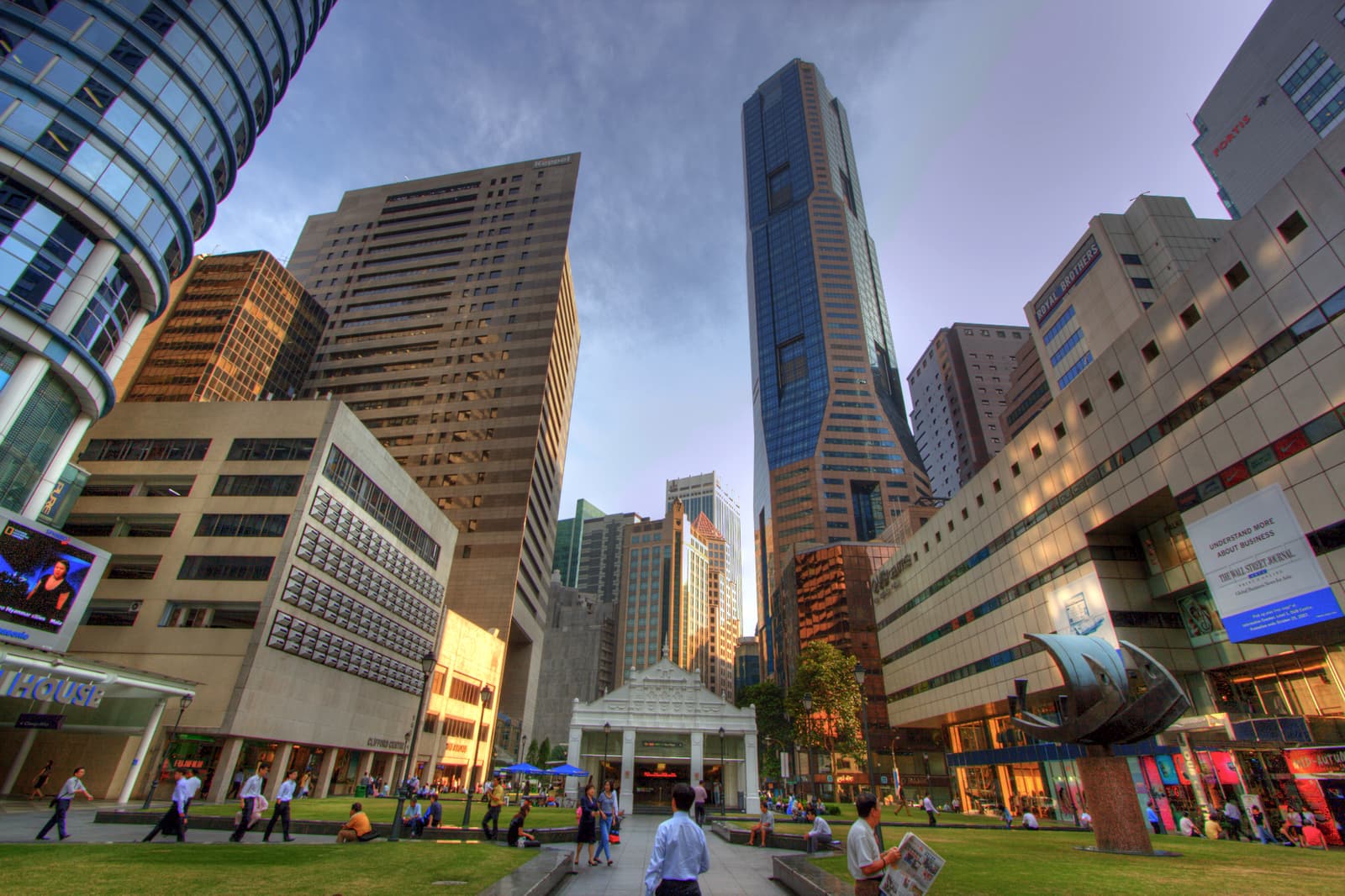

Singapore
A plan for Singapore
Not a list of things to see in Singapore — a day-by-day plan somebody could actually follow, built from places we can point to a source for. Make your own in about a minute.
- 2 nights
- Couple
- Balanced pace
- Mid-range budget
Every place here was checked on 2026-10-20 or later, and each one says where it came from.
The plan, day by day
Day 1
09:30
You arrive
13:00
Esquina
Suggested because you chose food
- 1h
- Meal
14:30
Madame Tussauds Singapore
Picked because you chose culture & museums + balanced energy
- 2h 30m
- Culture & museums
2h open
Nothing planned here. That was on purpose.
19:00
Best Satay 7 & 8 (Lau Pa Sat)
Suggested because you chose food
- 1h 30m
- Meal
20:30
MacRitchie Reservoir
Picked because balanced energy + it fits a mid-range budget
- 2h 30m
Day 2
08:00
Isle Cafe
Suggested because you chose food
- 45m
- Meal
45m open
Nothing planned here. That was on purpose.
09:30
ArtScience Museum
Picked because you chose culture & museums + balanced energy
- 2h 30m
- Culture & museums
1h open
Nothing planned here. That was on purpose.
13:00
Odette
Suggested because you chose food
- 1h
- Meal
14:30
Peranakan Museum
Picked because you chose culture & museums + balanced energy
- 2h 30m
- Culture & museums
2h open
Nothing planned here. That was on purpose.
19:00
Founder Bak Kut Teh
Suggested because you chose food
- 1h 30m
- Meal
20:30
Capitol Theatre
Picked because you chose culture & museums + balanced energy
- 2h 30m
- Culture & museums
Day 3
08:00
Breakfast, open
No verified place here fits this meal and your answers, so it is left open.
- 45m
- Open time
45m open
Nothing planned here. That was on purpose.
09:30
Sun Yat Sen Memorial Hall (Singapore)
Picked because you chose culture & museums + balanced energy
- 2h 30m
- Culture & museums
1h open
Nothing planned here. That was on purpose.
13:00
Herbivore
Suggested because you chose food
- 1h
- Meal
14:30
You leave
Weather through the year
Monthly averages from NASA's 25-year climate record, day and night together.
Best months: February
| January | Wet season: 26°C, 235 mm |
|---|---|
| February | Rainy: 26°C, 102 mm |
| March | Rainy: 27°C, 168 mm |
| April | Rainy: 28°C, 193 mm |
| May | Rainy: 28°C, 199 mm |
| June | Rainy: 28°C, 164 mm |
| July | Rainy: 27°C, 174 mm |
| August | Rainy: 27°C, 173 mm |
| September | Rainy: 27°C, 167 mm |
| October | Wet season: 27°C, 210 mm |
| November | Wet season: 27°C, 283 mm |
| December | Wet season: 26°C, 300 mm |
From the Wikivoyage guide
Quoted from the travel guide anyone can edit, as it read on the day we took it.
Understand
Singapore is a microcosm of Asia, populated by Chinese, Malays, Indians and a large group of workers and expatriates from all around the globe, in a country that can be crossed in barely an hour. Having celebrated its 50th birthday in 2015, Singapore has more often than not chosen economic pragmatism over social concerns, encouraging constant reuse and redevelopment of land with huge projects like the Marina Bay Sands and Resorts World Sentosa integrated resorts as well as becoming a significant Asian financial hub, but there has also been a growing push-back to preserve local heritage in Balestier and elsewhere; just one of the many decisions to balance for the country's future.
History
The first mentions of Singapore in historical records date back to the second and third centuries, in Greek and Chinese texts. According to legend, Srivijayan prince Sang Nila Utama landed on the island in the 13th century and, catching sight of a strange creature that he thought was a lion, decided to found a new city he called Singapura, Sanskrit for Lion City. Alas, there have never been any lions anywhere near Singapore or elsewhere in Malaya, so the mysterious beast was more probably a tiger or wild boar. Other records indicate that the island was settled earlier and was an important port for various kingdoms for centuries. However, Portuguese raiders destroyed the settlement in 1613 and Singapura faded into obscurity.
See
Sights in Singapore are covered in more detail under the various districts. Broadly speaking:
Beaches and tourist resorts: Head to one of the three beaches on Sentosa or its southern islands. Other beaches can be found on the East Coast.
Culture and cuisine: See Chinatown for Chinese treats, Little India for Indian flavours, Geylang Serai for a Malay experience or the East Coast for Eurasian and Peranakan culture and delicious seafood, including the famous chilli and black pepper crab.
History and museums: The Bras Basah area east of Orchard and north of the Singapore River is Singapore's colonial core, with historical buildings and museums. All government-run museums in Singapore are free admission for Singapore citizens and permanent residents except for temporary exhibits, but visitors will be charged an admission fee.
Nature and wildlife: Popular tourist attractions in the Mandai Wildlife Reserve include the Singapore Zoo, Night Safari, Bird Paradise and River Wonders. The Mandai Boardwalk is a free scenic walk along the Upper Seletar Reservoir in the Mandai Wildlife Reserve. The Botanic Gardens are the only UNESCO World Heritage Site in Singapore. For something closer to the city, visit the futuristic Gardens by the Bay in the Marina district, behind the Marina Bay Sands. Finding "real" nature is a little harder, but the Bukit Timah Nature Reserve (in the same district as the zoo) has more plant species than in the whole of North America, and is also home to a thriving population of wild monkeys. Pulau Ubin, an island off the Changi Village in the east, is a flashback to the rural Singapore of yesteryear. Red junglefowl (often called wild chickens) can often be seen in many grassy areas around the city, even in downtown areas. City parks full of locals jogging or doing tai chi can be found everywhere. See Botanical tourism in Singapore for details on where to see trees and plants.
Do
While you can find a place to practice nearly any sport in Singapore — golfing, surfing, scuba diving, even ice skating and snow skiing — due to the country's small size your options are rather limited and prices are relatively high. For scuba diving in particular, the busy shipping lanes and sheer population pressure mean that the sea around Singapore is murky, and most locals head across the border into Malaysia (in particular Pulau Tioman or Pulau Dayang) to get their fix. Dive shops in Singapore often arrange weekend trips to good dive sites off the East Coast of Malaysia.
Culture
On the cultural side of things, Singapore has been trying to shake off its boring, buttoned-down reputation and attract more artists and performances. The star in Singapore's cultural sky is the Esplanade theatre in Marina Bay, a world-class facility for performing arts and a frequent stage for the Singapore Symphony Orchestra. For traditional Chinese music, its counterpart is the Singapore Chinese Orchestra.
Most any big-ticket musician or band touring Asia will perform in Singapore, see Ticketle for a one-stop shop listing of upcoming events. In May or June, don't miss the yearly Singapore International Festival of Arts (formerly the Singapore Arts Festival), featuring a programme of art exhibitions/performances and artist conversations over several weeks. Advance tickets for almost any cultural event can be purchased from SISTIC, either on-line or from any of their numerous ticketing outlets, including the Singapore Visitor Centre on Orchard Rd.
Going to the movies is a popular Singaporean pastime, but look for "NC16" (age 16 and above only) or "M18" (age 18 and above only) or "R21" ratings (age 21 and above only) if you like your movies with fewer cuts. The big theatre chains are Carnival Cinemas, Golden Village and Shaw Brothers. For a taste of Singapore through film, Jack Neo's popular comedies showcase the foibles of Singaporean life, while directors like K. Rajagopal, Boo Jun Feng, and Tan Pin Pin are ushering in a new wave of contemporary film art in Singapore.
Eat
Singapore is a melting pot of cuisines from around the world, and many Singaporeans are obsessive gourmands who love to makan ("eat" in Malay). You will find quality Chinese, Malay, Indian, Japanese, Korean, Thai, Italian, French, British, American and other food in this city-state.
Eating habits run the gamut, but most foods are eaten by fork and spoon: push and cut with the fork in the left hand, and eat with the spoon in the right. Noodles and Chinese dishes typically come with chopsticks, while Malay and Indian food can be eaten by hand, but nobody will blink an eye if you ask for a fork and spoon instead. If eating by hand, use only your right hand to handle your food, as Malays and Indians traditionally use their left hand to handle dirty things. Take note of the usual traditional Chinese etiquette when using chopsticks, and most importantly, do not stick your chopsticks vertically into a bowl of rice. If eating in a group, serving dishes are always shared, but you'll get your own bowl of rice and soup. It's common to use your own chopsticks to pick up food from communal plates, but serving spoons can be provided on request. When eating at Western restaurants, traditional European dining etiquette generally applies.
Keep an eye out for the Singapore Food Festival, held every year in July.
Drink
Singapore's nightlife isn't quite a match for Patpong, but it's no slouch either: some clubs have 24 hr licences and few places close before 3AM. Singapore's nightlife is largely concentrated along the three quays — Boat, Clarke and Robertson — of the Riverside, with the clubs of Sentosa giving party animals even more reason to dance the night away and the casino on Marina Bay also entering the fray. Any artists touring Asia are pretty much guaranteed to stop in Singapore, with superclub Zouk (Clarke Quay) in particular regularly clocking high on lists of the world's best nightclubs and Marquee at Marina Bay Sands drawing big names. Hipsters congregate in Kampong Glam/Arab St near Bugis, while gay bars are concentrated around Neil Road in Chinatown.
Fancy cocktail bars cluster near the aptly named Club St near the CBD and Keong Saik Road in Chinatown. The legal drinking age is 18, and while this is surprisingly loosely enforced, some clubs have higher age limits. If you are asked for identification, the only acceptable forms of identification are a Singapore-issued identity card or a passport.
Friday is generally the biggest night of the week for going out, with Saturday a close second. Sunday is gay night in many bars and clubs, while Wednesday or Thursday is ladies' night, often meaning not just free entrance but free drinks for women. Most clubs are closed on Monday and Tuesday, while bars generally stay open but tend to be very quiet.
Outside the city centre, large concentration of bars can also be found in Geylang, Singapore's largest red-light district, as well as along Joo Chiat Road, both on the East Coast. These bars cater to a more local working class clientele, and you are likely to stand out as a tourist.
For a night out Singapore style, gather a group of friends and head for the nearest karaoke box. Major chains include Party World and the family-friendly "no alcohol, no surprises, no frills" Teo Heng. Room rental ranges from $30/hour and up, drinks and snacks extra.
Get around
Getting around Singapore is easy: the public transport network is extremely easy to use, affordable, and covers populated areas extensively. Furthermore, taxis/rideshares are reasonably priced and easy to hail via apps. CityMapper, Google Maps, and Apple Maps are all capable of figuring out the fastest route by rail and bus and even estimating taxi/rideshare fares between any two points.
Public nuisance behaviours like putting your feet on the seats or playing loud music from your phone are strictly prohibited on all public transport, and violation of this rule can result in a $500 fine.
Fares
Fares are charged based on distance and mode of transport.
The easiest way to pay for all public transport is to use a contactless Visa, Mastercard or American Express, which you can use to tap in to and out of any train or bus, including the Sentosa Express. Mobile phones with Visa, Mastercard or American Express stored in Apple Pay or Google Pay work as well. Foreign-issued cards are charged an additional $0.60/day handling fee, but for short stays (i.e. up to eight days over a five-year period) this still works out cheaper than an EZ-link/NETS prepaid card. Journey history is available with a TransitLink SimplyGo account.
Stay safe
Singapore is one of the safest major cities in the world by virtually any measure. Most people, including female travellers, will not face any problems walking along the streets alone at night. But as the local police say, "low crime does not mean no crime" — beware of pickpockets in crowded areas and don't forget your common sense entirely.
Crime
The Singapore Police Force is responsible for law enforcement throughout the country, and you can recognise police officers by their distinctive dark blue uniforms. Police officers are required to carry their warrant cards while on duty, and are required to present it when performing their duties out of uniform (e.g. when making arrests or asking members of the public for information about crimes) Most visitors will find Singaporean police officers to be professional and helpful, and you should report any crimes that you encounter to them as soon as possible: timely police reports often result in the apprehension of criminals within hours.
If you get arrested, Singaporean police have broader powers than their Western counterparts. While you are entitled to have a lawyer represent you at trial, the police will not allow you to speak to a lawyer until after they have finished their interrogation. You do not have the right to silence and are required to answer the police's questions truthfully. You should always disclose all facts in your defence during your interrogation, as failure to do so could result in the judge not believing you should you raise them for the first time at your trial.
Singapore's squeaky cleanliness is achieved in part by its strict rules against activities that are tolerated in other countries. For example, jay-walking, spitting, littering and drinking and eating on public transport are prohibited. Locals joke about Singapore being a "fine city" because heavy fines are levied if you're caught committing an offence. Enforcement is sporadic at best, though, and it's not uncommon to see people openly litter, spit, smoke in non-smoking zones, etc.
Respect
Singaporeans care little about formal politeness. What would be decent behaviour at home, wherever home might be, is unlikely to offend anyone in Singapore. In Singapore, unlike much of southeast Asia, women wearing revealing clothing or men wearing shorts and slippers are perfectly acceptable and only the fanciest bars and restaurants, government institutions (e.g. parliament and the courts), and some private clubs, enforce dress codes.
That said, Singaporeans tend to be more socially conservative than Westerners, meaning that public display of affection is still frowned upon: holding hands is fine, but making out in public is considered to be impolite. Toplessness for women is not acceptable anywhere, even on the beach. Most places of worship require visitors to be conservatively dressed - no bare shoulders or midriff, and no shorts or skirts above the knee-cap. The major touristy places of worship will have shawls and sarongs so visitors can cover up before entering. Many places of worship also require you to remove your shoes before you enter.
The local dialect with its heavy Chinese influences may appear brusque or even rude, but saying "You want beer or not?" is in fact more polite in Chinese than asking if you want beer; after all, the person asking you the question is offering you a choice, not making a demand.
Take dietary restrictions into account when inviting Singaporean friends for a meal. Many Indians and some Chinese are vegetarian. Most Malays, being Muslims, eat only halal food, while most Hindus (and a few Chinese) abstain from beef. If unsure, ask beforehand.
When visiting Chinese temples, do not point at the statues of deities with your index finger, as this is considered to be very rude. Use your thumb or an up-facing open palm instead. If you want to watch a street performance during the Hungry Ghost Festival, do not sit in the first row as it is traditionally reserved for the spirits of the deceased.
Swastikas are commonly seen in Buddhist and Hindu temples and altars. This is an ancient religious symbol that has nothing to do with Nazism.
Practical facts for Singapore
Taken from open data. Rules and numbers change, so check locally before you rely on them.
- Currency
- Singapore Dollar (SGD)
- Languages
- Chinese, English (Singapore), Malay (Singapore), Tamil (Singapore), and 1 more
- Plugs and power
- Type G, 230 V at 50 Hz
- Traffic drives
- On the left
- Country calling code
- +65
- Time zone
- Asia/Singapore
Official travel advice
Quoted from each government as published, with the date they last changed it. We do not add a verdict of our own.
UK Foreign, Commonwealth & Development Office
- No areas listed that it advises against travelling to
Read the full adviceGlobal travel impacts due to escalation in the Middle East
Escalation in the Middle East has caused widespread travel disruption, including airspace closures, delayed and cancelled flights.
Your travel plans may be affected, even if your destination is not in the Middle East. Before you travel:
• check travel advice for any countries or territories you are transiting through
• check for the latest updates from your airline or tour operator
• review your travel insurance policy for coverage
• monitor local and international media for the latest information and sign up for travel advice email alerts
Illegal drugs
There are severe consequences for drug related crimes in Singapore. Evidence of drug use in your system on arrival or in transit will lead to refusal of entry or arrest. See Entry requirements and Safety and security pages for more information.
US Department of State
Level 1 of 4: Exercise normal precautions
Read the full adviceExercise normal precaution in Singapore.
Singapore is generally a safe destination for travelers.
Review our travel guidance for Singapore to learn how to prepare for a safe trip.
Entry and visas
Entry rules depend on your passport and change without notice. Check the official pages before you book.
Sources