
Spain
A plan for Sevilla
Not a list of things to see in Sevilla — a day-by-day plan somebody could actually follow, built from places we can point to a source for. Make your own in about a minute.
- 2 nights
- Couple
- Balanced pace
- Mid-range budget
Every place here was checked on 2026-10-27 or later, and each one says where it came from.
The plan, day by day
Day 1
09:30
You arrive
13:00
Mercado de Abastos Puerta de la Carne
Suggested because you chose food
- 1h
- Meal
14:30
Foro de la Biodiversidad (Sevilla)
Picked because you chose culture & museums and local experiences + balanced energy
- 2h 30m
- Culture & museums
2h open
Nothing planned here. That was on purpose.
19:00
Habanita
Suggested because you chose food
- 1h 30m
- Meal
20:30
La Casa del Flamenco
Picked because you chose culture & museums + balanced energy
- 2h 30m
- Culture & museums
Day 2
08:00
Bar Las Teresas
Suggested because you chose food
- 45m
- Meal
45m open
Nothing planned here. That was on purpose.
09:30
Museo del Baile Flamenco
Picked because you chose culture & museums + balanced energy
- 2h 30m
- Culture & museums
1h open
Nothing planned here. That was on purpose.
13:00
Mercado del Arenal
Suggested because you chose food
- 1h
- Meal
14:30
Archeological Museum of Seville
Picked because you chose culture & museums + balanced energy
- 2h 30m
- Culture & museums
2h open
Nothing planned here. That was on purpose.
19:00
Bodeguita Romero
Suggested because you chose food
- 1h 30m
- Meal
20:30
Auditorio Rocío Jurado
Picked because you chose culture & museums + balanced energy
- 2h 30m
- Culture & museums
Day 3
08:00
Parcería
Suggested because it fits a mid-range budget
- 45m
- Meal
45m open
Nothing planned here. That was on purpose.
09:30
Science Museum, Seville
Picked because you chose culture & museums + balanced energy
- 2h 30m
- Culture & museums
1h open
Nothing planned here. That was on purpose.
13:00
Dúo Tapas
Suggested because you chose food
- 1h
- Meal
14:30
You leave
Weather through the year
Monthly averages from NASA's 25-year climate record, day and night together.
Best months: April, May, September, and October
| January | Cold: 9°C, 48 mm |
|---|---|
| February | Cold: 10°C, 49 mm |
| March | Mild, some rain: 13°C, 58 mm |
| April | Mild, some rain: 16°C, 53 mm |
| May | Mild and dry: 20°C, 28 mm |
| June | Warm and dry: 25°C, 5 mm |
| July | Warm and dry: 29°C, 1 mm |
| August | Warm and dry: 29°C, 3 mm |
| September | Warm and dry: 24°C, 24 mm |
| October | Mild, some rain: 19°C, 71 mm |
| November | Mild, some rain: 13°C, 71 mm |
| December | Cold: 10°C, 57 mm |
From the Wikivoyage guide
Quoted from the travel guide anyone can edit, as it read on the day we took it.
Understand
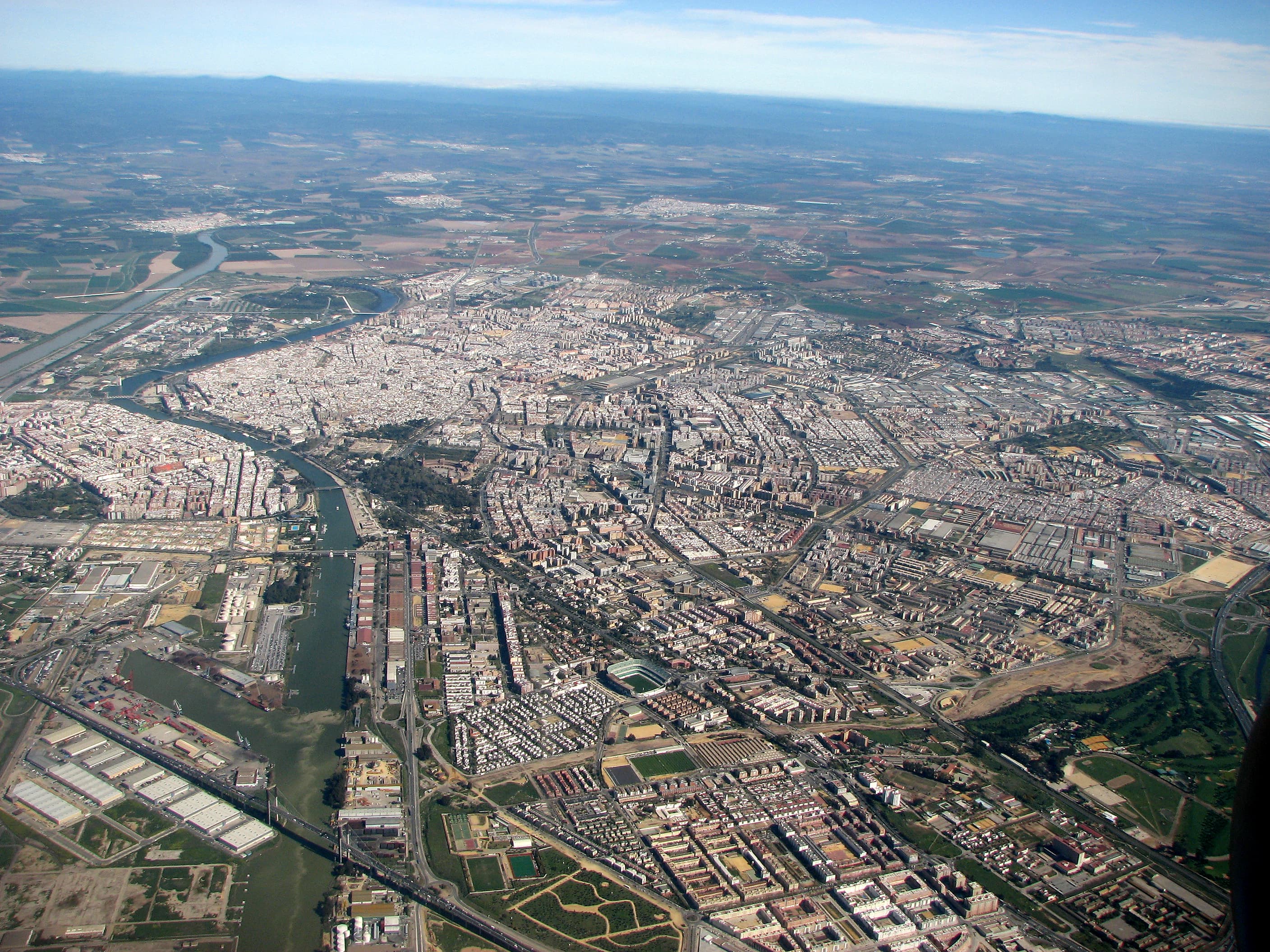
With more than 685,000 inhabitants (2021), and 1.5 million in the metropolitan area, it is Spain's fourth-largest city, dominating southern Spain.
The smooth, slow Guadalquivir River flows through Seville, known as Betis by the Romans and as Betik Wahd-Al-Khabir by the Arabs. Since it is hard to navigate upstream from Seville, the cereal-producing region starts here, and Seville has been a busy port from Roman times, under Muslim rule, and exploding during the Age of Discovery. As the monopoly was broken and Cádiz largely took Seville's place, the city entered a period of relative decline.
In the 19th century Seville gained a reputation for its architecture and culture and was a stop along the Romantic "Grand Tour" of Europe. Seville has built on its tourism industry since, playing host to the International Exposition in 1992, which spurred the construction of a new airport, a new train station, a bullet train link to Madrid, new bridges and improvements to the main boulevards.
For classical music buffs, Seville is the setting of many famous operas over the years, such as Mozart's Le nozze di Figaro and Don Giovanni, Beethoven's Fidelio, Rossini's Il barbiere di Siviglia and Bizet's Carmen.
See
Landmarks
1 Cathedral (Catedral de Sevilla), Avenida de la Constitución, ☏ +34 902 09 96 92, info@catedraldesevilla.es. Jul-Aug: Mon 09:30-14:30, Tue-Sat 09:30-14:00, Sun 14:30-18:00; Sep-Jun: Mon 11:00-15:30, Tue-Sat 11:00-17:00, Sun 14:30-18:00. Huge 15th-century church on the site of the former great mosque; richly decorated with the central nave rising to 37 m. An ornate canopy and statue marks the final resting place of Christopher Columbus. If there's a queue for tickets then go to the nearby Church of Salvador (Iglesia del Salvador) and buy a combi ticket. Cathedral admission includes La Giralda, the minaret that is now the magnificent bell tower. Within, you ascend 34 ramps - no need to keep count as they're tallied on the wall - then a last short flight of steps brings you onto the viewing terrace. Church of Salvador: all of its Rocco altarpieces were cleaned and excavations revealed remains from an Islamic mosque and earlier Christian churches, now accessible in the crypt. Unless you like massive cathedrals, the effect is much more impressive. Adult €10, concessions €5. (updated Jan 2020)
2 Real Alcázar, Enter from Plaza del Triunfo, ☏ +34 912 302 200, alcazar@patronato-alcazarsevilla.es. Apr-Sep: daily 09:30-19:00; Oct-Mar: daily 09:30-17:00. A beautiful palace in Mudéjar (Moorish) style, built in the 12th century by the Almohad Caliphs. Greatly remodelled and extended in the 14th century by Pedro I the Cruel, its myriad rooms, extravagant architecture, lavish gardens including a maze, with many courtyards, ponds and secrets to be explored, make it a fascinating place to visit. The room where Christopher Columbus's journey across the Atlantic was planned has his coat of arms embroidered on the wall along with those of royalty. The Royal Apartments are open to tours whenever the royal family aren't using them. In the heat of summer the palace is a cool retreat from the sun's glare, and there are night tours Mar-Oct. There are toilets and a cafe within the walls of the site. It gets busy in high season: buy tickets online in advance, and only from the official website. The tourist entrance, "The Lion's Gate", is on the side facing the cathedral and has a large image of a lion above it. Adult €13.50, concessions €6, plus Royal Apartments €4.50. (updated Mar 2024)
Do
Cruises, an hour in duration, leave from beneath the Torre del Oro and travel a circuit on the Guadalquivir river.
Horse-drawn carriage rides found near the cathedral take you to the nearby park and other sites of interest. For the sake of the animals, try to avoid carriage rides in the heat of the day in summer.
Flamenco
Flamenco is very popular in Spain and is not just for tourists; however finding the right place is hard. Poke around the neighbourhood of El Arenal, following the sounds of flamenco music to find a place.
1 Museo del Baile Flamenco, Calle de Manuel Rojas Marcos, 3, ☏ +34 954 34 03 11. Daily: museum 10:00-19:00, performances 19:00-20:00. Offers an experience for all the senses with ambiental music, videos, touch-screens and artifacts to be found in this 18th century building at the heart of the historical Barrio Santa Cruz. On Friday and Saturday evenings a spectacular show is hosted at a discounted price for visitors to the museum. Flamenco art and photography exhibitions are also on display and dance, singing, percussion and guitar lessons are offered. Museum: €10 adult, €8 senior, €6 child; performances: €20 adults, €14 senior, €12 child.
2 La Casa del Flamenco (Cultural Centre), Calle Ximénez de Enciso, 28, ☏ +34 955 02 99 99. Daily autumn/winter 19:30, spring/summer 21:00. A good spot to see real flamenco. €22.
3 La Carbonería, Calle Céspedes, 21 A (near the cathedral), ☏ +34 954 21 44 60. 21:30, 22:30, and 23:30 daily. Offers free flamenco shows nightly. Arrive early for good seats.
Festivals
Semana Santa. The sombre Easter week processions feature thousands of people and go on all week, a spectacular display of conspicuous Catholicism.
Eat
Seville, like most Andalusian destinations, is known for its tapas. "Tapa", while it is associated with certain dishes, is actually a size and many restaurants or bars will offer a tapa, media ración (half serving, although sometimes enough to make a meal) and ración (serving) of the same dish. There are many great tapas places around the foot of the cathedral in the centre of town. You can't go wrong; simply order one of everything to find your favourite! Some typical tapas include tortilla española (potato omelet), pulpo gallego (Galician octopus), aceitunas (olives), patatas bravas (spicy potatoes), and queso manchego (sheep's milk cheese from the region of La Mancha in central Spain). Also be sure to try the jamón (ham), which you often see hanging above the bar. Most of the restaurants kitchens do not open before 20:30 in the evening. Though usually some easy to prepare meals are available before that time.
As the quality of food is considered of a great importance in Seville, most local bars will have very good food at a low price. For an authentic and interesting meal, stop at one of the many bars, especially one which doesn't offer English menus (the prices are likely to be lower!).
Some bars near the river, such as Pedalquivir and El Faro de Triana, offer a nice view but aren't as good of a deal in terms of the quality of the food. Another would be El Patio San Eloy (San Eloy 9, Sevilla) where the tapas can be a little hit and miss, but where the cool staggered seating steps, fabulous décor and fruity sangria; provide a wonderful respite from the heat of the day.
A good deal can more easily be had at less characteristic places such as Sloppy Joe's Pizza Inn and Papasá.
If you would like to purchase your own food, head down to one of the markets close to the centre of the city, such as in Plaza Encarnación. El Corte Inglés is a larger more popular department store that you can go to for almost every need.
Don't eat the oranges from the trees on the street, they have been sprayed to repel birds and taste awful.
Drink
Coffee
Most cafés or cafeterías in Sevilla serve slightly longer shots of darkly roasted coffee, and even cortado is quite large compared to what one might expect to get e.g. in Valencia. Speciality coffee connoisseurs will probably prefer one of the cafés serving single-origin or organic coffee:
1 Parcería Café, Calle Calderón de la Barca 9. Situated near Mercado Feria, Parcería is a tiny café serving coffee from a local roaster. Laptops aren’t allowed, but the coffee is worth a walk from the city centre.
2 Utopía Café, Calle Fernán Caballero, 1. Hidden in a side street, Utopía is a takeaway-only café serving coffee from the same local roaster as Parcería.
3 Delatribu, Pje. Andreu, 3. A small takeaway café serving organic coffee and homemade pastry.
4 CafeTeaTe, Plaza del Altozano s/n Mercado de Triana, puesto 34-35. Located inside the Triana market, this café also serves breakfast sandwiches and other items. Their espresso shots are slightly longer than one might expect, but still decent. Make sure to ask about the current coffees when you order, they usually have one darker and one lighter roast.
Alcohol
The nightlife of Seville is fantastic; no other European city has so many bars per inhabitant than Seville. In summer go to Isla Cartuja and find out why the Spanish night doesn't stop before 07:00. There you can find plenty of open-air discothèques. Other nightlife spots include Calle Betis in Triana, La Alamede de Hércules, and Plaza Alfalfa.
There are quite a few teterias in Triana across the river offering teas, shakes and Middle Eastern pastries in a cozy cushion filled environment.
Down the street is a patisserie shop selling chocolate covered palmeras, a wonderful afternoon treat after a long day touring the sites. There are many coffee shops and patisserie shops in Seville, particularly in Calle Asunción in Los Remedios. Café de Indias, Starbucks and other franchises have descended lately on the city and are a good option in an emergency, but you can get a decent coffee in most local bars. For an up-market classic, visit La Campana, at the end of calle Sierpes.
Get around
On foot
Walking is the best option for sight-seeing: Seville is a large city but the points of interest are in the compact old centre. Strolling and coming across fine old churches, charming cafes and hidden plazas is part of the experience of being here.
By public transport
With the rechargable green travel card you can use all means of public transport (metro, tram, regional trains (Cercanías), city and regional buses) for a lower price. The card can be bought in tobacco shops for €1.50 and must be charged with at least €5 (Nov 2024). There are other travel cards issued by the metro or the city bus operator, but you can only use certain means of public transport with those cards.
The local bus operator issues a rechargeable card named bonobus. The minimum recharge is €7 plus €1.50 as a deposit. With the card the fare is €0.35 or €0.38 including a transfer. Bonobuses can be bought at most kiosks and tabacarias (tobacco shops) (updated Mar 2024)
By bus
Buses run frequently and cover the majority of the city in their routes. The single fare without a travel card is €1.40. Regular service is kept until around 23:30, after which night buses run, with different routes, on the hour until 02:00 (updated Mar 2024)
The letter "C" in front of a bus line means circular. The standard fares of city buses apply.
The bus line EA looks like a normal city bus and has many stops in the city. All rides cost €5 (Dec 2024) even if you don't use the bus to the airport but only inside of Seville.
The Hop-on-Hop-off bus service is available in Seville for €26 (March 2024). It has 14 stops on both sides of the river. Great for a multilingual overview for first time visitors.
By metro
You are unlikely to use it as it does not run near the old town, or other sights or accommodation. Its sole line follows an arch, from the southwest burbs to south end of city centre stopping at Plaza de Cuba, Prado de San Sebastián and San Bernardo, then out to the southeast burbs. It runs Su-Th 06:30-23:00, until 02:00 on Friday and Saturday nights. Tickets are €1.30 for a single zone or €4.50 for all 3 zones unlimited trips.
Practical facts for Spain
Taken from open data. Rules and numbers change, so check locally before you rely on them.
- Currency
- Euro (EUR)
- Languages
- European Spanish, Catalan, Galician, Basque, and 1 more
- Plugs and power
- Types C and F, 230 V at 50 Hz
- Traffic drives
- On the right
- Country calling code
- +34
- Time zones
- Africa/Ceuta, Atlantic/Canary, and Europe/Madrid
Official travel advice
Quoted from each government as published, with the date they last changed it. We do not add a verdict of our own.
UK Foreign, Commonwealth & Development Office
- No areas listed that it advises against travelling to
Read the full adviceHigh speed rail collision in Toledo
On 28 October, two high-speed trains collided between the towns of Mora and Orgaz, in the province of Toledo.
Significant disruption to rail services is expected.
If you need assistance or information about affected passengers, contact RENFE on +34 900 10 10 20.
If you are a British national and you or a family member have been affected by the accident and need consular support, call the nearest British embassy or consulate on +34 91 714 6300.
US Department of State
Level 2 of 4: Exercise increased caution
Read the full adviceExercise increased caution in Spain due to terrorism and unrest.
Terrorist groups continue plotting possible attacks in Spain. Terrorists may attack with little or no warning and target:
• Tourist locations
• Transportation centers like airports and train stations
• Markets and shopping malls
• Local government facilities
• Hotels, clubs, and restaurants
• Places of worship and educational institutions
• Parks
• Major sporting and cultural events
Demonstrations are common. They may take place in response to political or economic issues, on politically significant holidays, and during international events.
Reconsider travel to Ceuta due to unrest.
Entry and visas
Entry rules depend on your passport and change without notice. Check the official pages before you book.
Sources