
Brazil
A plan for São Paulo
Not a list of things to see in São Paulo — a day-by-day plan somebody could actually follow, built from places we can point to a source for. Make your own in about a minute.
- 2 nights
- Couple
- Balanced pace
- Mid-range budget
Every place here was checked on 2026-10-28 or later, and each one says where it came from.
The plan, day by day
Day 1
09:30
You arrive
13:00
Feira do Bom Retiro
Suggested because you chose food
- 1h
- Meal
14:30
Science and Technology Park of the University of São Paulo
Picked because you chose culture & museums and local experiences + balanced energy
- 2h 30m
- Culture & museums
2h open
Nothing planned here. That was on purpose.
19:00
Terraço Itália
Suggested because you chose food
- 1h 30m
- Meal
20:30
Municipal Theater of São Paulo
Picked because you chose culture & museums and local experiences + balanced energy
- 2h 30m
- Culture & museums
Day 2
08:00
Bella Paulista Casa dos Pães
Suggested because it fits a mid-range budget
- 45m
- Meal
45m open
Nothing planned here. That was on purpose.
09:30
São Paulo Museum of Art
Picked because you chose culture & museums + balanced energy
- 2h 30m
- Culture & museums
1h open
Nothing planned here. That was on purpose.
13:00
Estadão Bar & Lanches
Suggested because you chose food
- 1h
- Meal
14:30
Museum of Contemporary Art of the University of São Paulo
Picked because you chose culture & museums + balanced energy
- 2h 30m
- Culture & museums
2h open
Nothing planned here. That was on purpose.
19:00
Osnir Hamburguer
Suggested because you chose food
- 1h 30m
- Meal
20:30
Vibra São Paulo
Picked because you chose culture & museums + balanced energy
- 2h 30m
- Culture & museums
Day 3
08:00
Gran Royalle Casa de Pães
Suggested because it fits a mid-range budget
- 45m
- Meal
45m open
Nothing planned here. That was on purpose.
09:30
Ipiranga Museum
Picked because you chose culture & museums + balanced energy
- 2h 30m
- Culture & museums
1h open
Nothing planned here. That was on purpose.
13:00
O Gato Que Ri
Suggested because you chose food
- 1h
- Meal
14:30
You leave
Weather through the year
Monthly averages from NASA's 25-year climate record, day and night together.
Best months: June, July, August, and September
| January | Wet season: 22°C, 230 mm |
|---|---|
| February | Rainy: 22°C, 175 mm |
| March | Rainy: 22°C, 145 mm |
| April | Mild, some rain: 20°C, 84 mm |
| May | Mild, some rain: 17°C, 67 mm |
| June | Mild, some rain: 16°C, 58 mm |
| July | Mild, some rain: 16°C, 61 mm |
| August | Mild and dry: 17°C, 36 mm |
| September | Mild, some rain: 19°C, 68 mm |
| October | Rainy: 21°C, 105 mm |
| November | Rainy: 21°C, 148 mm |
| December | Rainy: 22°C, 177 mm |
From the Wikivoyage guide
Quoted from the travel guide anyone can edit, as it read on the day we took it.
Understand
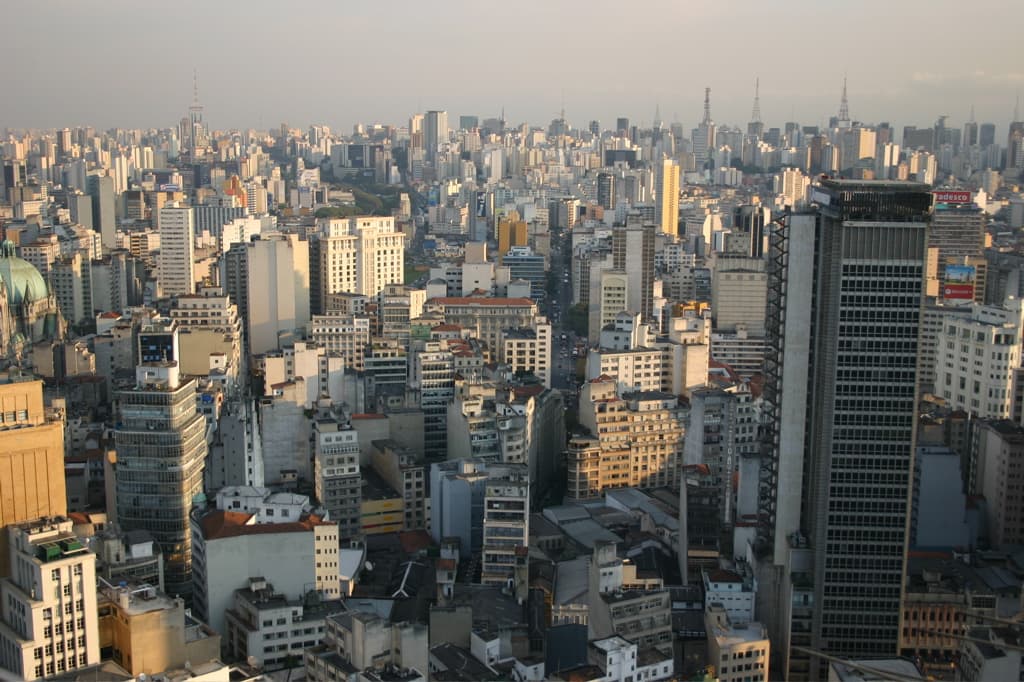
São Paulo is the most visited city of Brazil, but mostly because of business and event tourism, with many of the visitors not taking much effort to explore the city. Those who do so may, however, discover one of
the most complex and fascinating cities in the world, where even nearby areas may look and feel like a different city, due to São Paulo's staggering social inequality and variety of cultural influences, and its hard to understand urban planning.
For instance, if you walk from one end to another of Rua Augusta (which later becomes Rua Colômbia and Avenida Europa), starting from Downtown, you will pass through:
One of the city's hottest nightlife areas in Baixa Augusta
A vibrant cultural and business area surrounding Avenida Paulista
A variety of shopping options in the area surrounding Rua Oscar Freire
The green, affluent low-rise neighbourhood of Jardim América
A stream of expensive car shops in Jardim Europa
The modern business district in Av. Faria Lima and the ultra-affluent neighbourhood of Itaim
Although the first impression might be that of a grey concrete jungle, soon it becomes apparent that the city has a great number of pockets of beauty, and fantastic places (and not always expensive) to dine, drink and hang out.
History
Native Brazilian Chief Tibiriçá and the Jesuit priests José de Anchieta and Manuel de Nóbrega founded the village of São Paulo de Piratininga on 25 January 1554—Feast of the Conversion of Paul the Apostle. Along with their entourage, the priests established a mission named Colégio de São Paulo de Piratininga aimed at converting the Tupi-Guarani native Brazilians to the Catholic religion. São Paulo's first church was constructed in 1616 at the site where the Páteo do Colégio stands now (metrô: Sé or São Bento station).
See
Avenida Paulista
Avenida Paulista (Paulista Avenue) is one of São Paulo's most popular postcards, as it is the pride of Paulistanos. It is one of the largest business centers, and probably the largest cultural region in the city. Its architectural contrast reflects the fact that the avenue is located between the "old" and "new" parts of the city.
The avenue and its surroundings, such as Rua Augusta, Alameda Santos and Rua Oscar Freire, contain numerous shop galleries, art galleries, theatres, movie theaters, pubs, hotel, coffee shops, bookstores, and gourmet restaurants. Gay nightlife is intense on Consolacao and Haddock Lobo Streets.
Historic center
São Paulo's Historic Center met a period of degradation, but it is gradually recovering with recent projects and investments. Even though it still has some problems, it is an area to not be missed due to its historical and cultural value for the city. Here you can find many constructions and landmarks from glorious moments of São Paulo's history, ridiculously crowded commercial areas, and a multitude of theatres and cultural activities.
Rio Pinheiros river area
The Pinheiros river crosses the West of São Paulo in North-South direction, and although heavily polluted, the neighbourhoods surrounding the river are among the most beautiful and interesting areas of the city. The East shore is filled with skyscrapers that compose the business centers of Faria Lima, Brooklin Novo and Vila Olímpia, and contains the longest cycleway of the city, as well as one of the most vibrant nightlife areas. The West shore is home to University of São Paulo and exhibits a stereotypical portrait of São Paulo's social inequality, contrasting luxurious apartments and mansions with low class suburbs and favelas. In the middle of the river, stands the magnificent Ponte Octavio Frias, more known as Ponte Estaiada. The Line 9-Emerald train line runs alongside the river, making all spots quite easy to reach.
Do
Theaters and concert halls
The two most important concert and opera houses of the city are Theatro Municipal and Sala São Paulo (see São Paulo/Historic Center). São Paulo has a great number of theaters, most of which feature plays in Portuguese. The British Cultural Centre, Goethe Institute, Instituto Cervantes and Alliance Française occasionally have plays in English, German, Spanish and French, respectively; check individual District listings. A list of performances being carried in the city can be found in various websites, including: [1], [2], [3].
Ciclofaixa de Lazer
The Ciclofaixa de Lazer (Leisure Cycling Lane) comprises dozens of kilometers of interconnected cycling lanes, in the central, south and west areas of the city, that are available on Sundays and some holidays, between 07:00-16:00. It interconnects most places of interest of the city - Downtown, Avenida Paulista, Parque do Ibirapuera, University of São Paulo, the Pinheiros river business centers and the Guarapiranga reservoir, although certainly not using the shortest paths. Bicycle borrowing and renting is available at Parque das Bicicletas (in Parque do Ibirapuera) and at Praça do Ciclista (at Avenida Paulista), but try to get a bicycle in advance if possible.
Since the cycling route is family-oriented, signaling and safety standards are high. The route is strictly intended for recreational, not sportive cycling, so set your speed accordingly in the presence of other cyclists. A full map of the route, as well as other useful information, are available here.
Eat
São Paulo is home to a superb diversity of restaurants and cuisines, where you can enjoy typical dishes from literally all over the world. The price range is as wide as the diversity of the restaurants in the city, from cheap snacks and meals in simple and cozy restaurants and food tents in popular markets, to the hugely expensive high end cuisine and internationally recognized restaurants.
In São Paulo, the ever-present beans-and-rice accompaniment typically involves brown beans instead of black beans, as in Rio. Another local specialty in São Paulo is the Virado à Paulista, which consists of rice, tutu de feijão (a paste of beans and manioc flour; sometimes made of corn flour, in order to be drier than the manioc flour one), kale sautéed with garlic (couve) and pork chops, typically bisteca. It is usually accompanied by pork rinds, bits of sausage, a fried egg and a fried banana.
One dish that claims its local character is the bauru sandwich, allegedly created by a drunken student from the University of São Paulo's law school at the Ponto Chic restaurant after a long night out. It consists of four types of melted cheese and sliced roast beef, and it still endures as one ubiquitous snack in padarias (Brazilian-style eateries).
Another typical type of restaurant in São Paulo is the world-famous churrascaria, where an enormous range of meats and cuts comes to your table by the stick; they also offer a range of sides and salads. In those places, you can eat as much as you want. This system is called rodízio, and it has been very successful in the city, spreading to other types of cuisine like Italian, where you can find the rodízio de pizza and Japanese, with the rodízio de sushi.
Drink
You will have no trouble finding bars in São Paulo, where you can enjoy an ice cold beer, a shot of cachaça or a caipirinha - or anything else for that matter. Vila Madalena and Itaim have a very high concentration of bars, and are great spots for an all-nighter. For specific suggestions of bars, check the district section.
Clubs
This city has an unbelievably rich and diverse night life, and is able to provide entertainment for all tastes, from traditional samba-rock live music to electro-pop night clubs, raves and even some fetish clubs. It is worth planning at least one night out while you're in town. On the other hand, São Paulo's nightlife can be quite expensive; most clubs charge an entrance fee.
The main areas for nightlife in the city are Vila Olímpia, Vila Madalena, and Barra Funda (West), Moema (South Central), Tatuapé and Mooca (Southeast), and Santana (Northeast). The Downtown has also experimented an impressive revival of nightlife. Be sure to check the individual District listings.
Visit this website or buy one of the paper editions to have the latest clubbing updates.
Get around
Transport in São Paulo can be anything from joyful to complicated. Usually, the fastest and less stressful way to get around is by bicycle and public transportation, while the experience with cars can be hellish. Peak hours are normally roughly 06:00-09:00 and 16:00-19:00, but since city roads are constantly at maximum capacity, any little incident can cause major queues and delays. The cheapest way for tourists to get around is to use the subway/metro, trains and buses/trolleybuses as much as possible, and then take a taxi for shorter distances. Even these means of transport can be uncomfortably crowded during peaks, and only a very limited carry-on is recommended. You can check the SPTrans website, which is the city's transport administration department. There you can get itineraries using all the city's public transportation options. São Paulo has an extensive network of cycleways and a strong bicycle culture, and riding bikes can be quite enjoyable. Walking can also be very enjoyable depending on the routes.
Bilhete Único
The Bilhete Único is a transport smartcard that is used for paying fares on buses, subways, and trains. In essence, a single billing of the card grants a person up to four trips in São Paulo's public transportation system with free transfers between the subway system and buses within 3 hours. Since September of 2021, only personalized Bilhete Único cards are accepted in the entire transport system. Online emission of cards is only available for Cadastro de Pessoa Física (CPF) holders, which means foreign tourists can only obtain a Bilhete Único by going to a SPTrans store with a passport in hand. The stores are listed here. To check if a store can emit a card click on "Ver serviços disponíveis neste posto" (Check available services) and look for "Emissão da 1ª e 2ª via". But be wary that your card might not be available immediately, so plan accordingly.
Fare charging rules are as follows:
On buses: upon boarding a bus, you'll be charged R$5.30 and can board up to three other buses in a three-hour period without being charged a second time.
On the Metro or CPTM trains: for a single trip in the underground train system, you'll be charged R$5.40.
Stay safe
Crime
São Paulo, once one of the most violent cities in Brazil, has managed to drastically reduce crime during the 2000s.
Unfortunately, that doesn't mean that a visitor can really relax about safety, because São Paulo is simply too large and diverse to be described by average statistics. In fact, two of the most visited areas, Downtown and the Pinheiros subprefecture (in the West), have respectively 150% and 50% more violent crime than the city average. Check the individual district listings for safety advice in each area of the city. The general advice is as follows:
Visitors should avoid walking in deserted areas at night, or at least avoid walking alone. Buses are reasonably safe, but waiting alone at a bus stop at night is not. The metro is always safe, but commuter trains that go to peripheral areas can be dangerous late at night. Be extremely careful when using ATMs at night (or better, do not use them if they are in deserted and dark places. If you really need one, try searching in places like shopping malls, theaters and cinemas and gas stations).
Driving can sometimes also be risky, especially when you are alone and/or in an upscale bars/clubbing area, like Vila Madalena or Vila Olímpia. If you are driving at night, when stopping for whatever reason (even at a traffic light), check your surroundings. Keep your doors locked and windows closed during the night. If possible, when going back late to the hotel, take a cab or ride with a group of friends. During the day, keep valuable objects away from the window (even if you are using a taxi).
Some areas can be dangerous even during the day. These include run-down areas, like favelas and areas populated by drug addicts. The last can be easily recognized by the presence of poorly maintained buildings, bad odor, and dirty streets - there are many of those in the Historic Center. Most drug addicts are harmless, but a few may resort to violence to get money to buy their drugs. Contrary to popular belief, nowadays poor neighbourhoods in São Paulo aren't usually dangerous, at least not more dangerous than an ordinary neighborhood. Still, some of them can be dangerous, so if you are in doubt, don't go or have the company of a local.
Respect
People from São Paulo kiss on the right cheek once when they say hello, goodbye and nice to meet you. Some will kiss twice, once on each cheek, a kiss in the air. Men kiss women on the cheek and women kiss women as well, but two men won't give the kiss out unless they're gay or with intimate long-time friends or family. If you feel the occasion is a bit formal, especially on business occasions or if you don't know the person too well, a handshake will do the job. However, if a Paulistano takes the initiative to kiss, make sure you turn your face to the left side to avoid embarrassment.
Business etiquette
Paulistanos do appreciate if you are on time. However, given the infamous traffic congestion that prevails in town, a 15- to 30-min delay in a meeting is usually tolerated, and you shouldn't worry too much if you or someone else turns up a bit late. In general, do not plan more than two meetings per day, with a possible lunch meeting in between, due to the traffic delay in getting from place to place.
Office hours are usually from 09:00-18:00, and banks are open M-F 10:00-16:00. However, don't be surprised if a meeting is scheduled after 18:00, as the business culture in São Paulo is a bit workaholic.
Small gifts are usually gladly accepted, but exchanging presents is not the general rule.
It is always safer to first adopt a business attire to a meeting—suit and tie for men, business suit for women—even if you turn out to be a bit overdressed in a more informal business environment.
Before a meeting starts, it is not unusual to have some 5-10 min of informal chat, not related to the business to be discussed (traffic, weather forecasts, and football matches are accepted example topics). To cut short this informal chit chat might appear slightly rude and potentially embarrassing.
Practical facts for Brazil
Taken from open data. Rules and numbers change, so check locally before you rely on them.
- Currency
- Brazilian Real (BRL)
- Languages
- Brazilian Portuguese, Spanish, English, and French
- Plugs and power
- Types C and N, 127 or 220 V at 60 Hz
- Traffic drives
- On the right
- Country calling code
- +55
- Time zones
- America/Araguaina, America/Bahia, America/Belem, America/Boa Vista, and 12 more
Official travel advice
Quoted from each government as published, with the date they last changed it. We do not add a verdict of our own.
UK Foreign, Commonwealth & Development Office
- Advises against all but essential travel to parts of the country
Read the full adviceAreas where FCDO advises against all but essential travel
Amazonas State
FCDO advises against all but essential travel to the following river areas towards the west of Amazonas State:
• along the Amazonas (Amazon) River and its tributaries west of the town of Codajás and east of the town of Belém do Solimões in Amazonas State
• along any part of the Itaquaí River in Amazonas State
• along any part of the Japurá River or its tributaries in Amazonas State
• along the Rio Negro (Black River) and its tributaries north or west of the town of Barcelos in Amazonas State
Find out more about why FCDO advises against travel.
US Department of State
Level 2 of 4: Exercise increased caution
Read the full adviceExercise increased caution in Brazil due to crime and kidnapping. Some areas have increased risk. Read the entire Travel Advisory.
Crime
Violent crime occurs in urban areas, day and night. Crimes include murder, armed robbery, and carjacking.
• Gang activity and organized crime are widespread. and are often tied to the illegal drug trade.
• Assaults are common, including with sedatives or drugs placed in drinks, especially in Rio de Janeiro.
• Criminals target foreigners through dating apps or at bars before drugging and robbing their victims.
Entry and visas
Entry rules depend on your passport and change without notice. Check the official pages before you book.
Sources