
Iceland
A plan for Reykjavík
Not a list of things to see in Reykjavík — a day-by-day plan somebody could actually follow, built from places we can point to a source for. Make your own in about a minute.
- 2 nights
- Couple
- Balanced pace
- Mid-range budget
Every place here was checked on 2026-10-27 or later, and each one says where it came from.
The plan, day by day
Day 1
09:30
You arrive
13:00
Kolaportið
Suggested because you chose food
- 1h
- Meal
14:30
Perlan
Picked because you chose culture & museums and local experiences + balanced energy
- 1h 30m
- Culture & museums
3h open
Nothing planned here. That was on purpose.
19:00
Bæjarins Beztu Pylsur
Suggested because you chose food
- 1h 30m
- Meal
20:30
Reykjavík Botanic Garden
Picked because you chose local experiences + balanced energy
- 1h 30m
- Local experiences
Day 2
08:00
Kaffihús Vesturbæjar
Suggested because it fits a mid-range budget
- 45m
- Meal
45m open
Nothing planned here. That was on purpose.
09:30
Reykjavik Art Museum
Picked because you chose culture & museums + balanced energy
- 2h 30m
- Culture & museums
1h open
Nothing planned here. That was on purpose.
13:00
Tapas barinn
Suggested because you chose food
- 1h
- Meal
14:30
FlyOver Iceland
Picked because you chose local experiences + balanced energy
- 1h 30m
- Adventure sports
16:30
the Settlement Exhibition
Picked because you chose culture & museums + balanced energy
- 2h 30m
- Culture & museums
19:00
Bastard
Suggested because you chose food
- 1h 30m
- Meal
20:30
Klambratún
Picked because you chose local experiences + balanced energy
- 1h 30m
- Local experiences
Day 3
08:00
Múlakaffi
Suggested because it fits a mid-range budget
- 45m
- Meal
45m open
Nothing planned here. That was on purpose.
09:30
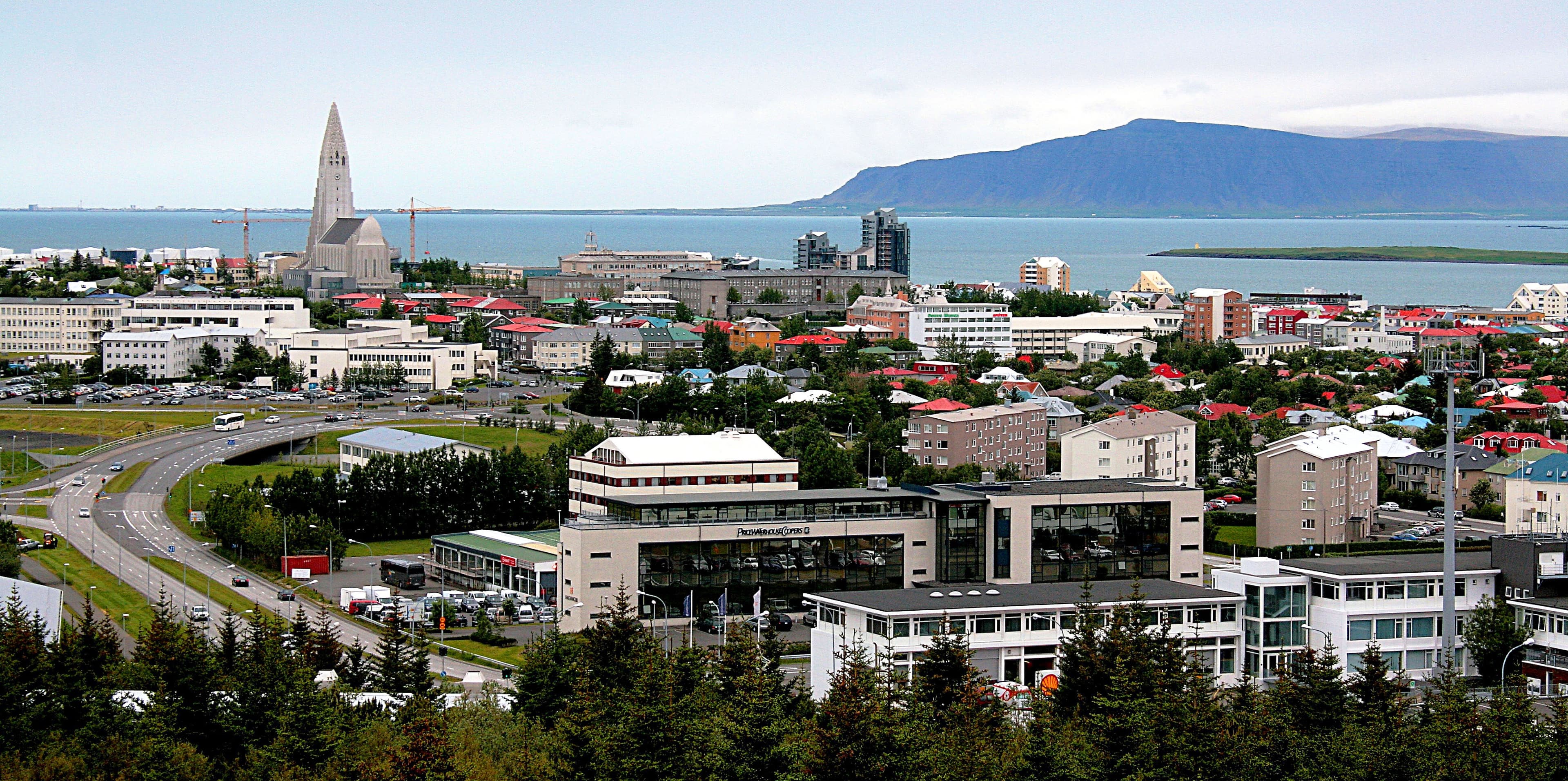
Hallgrímskirkja
Picked because you chose culture & museums and local experiences + balanced energy
- 45m
- Culture & museums
2h 45m open
Nothing planned here. That was on purpose.
13:00
Þrír Frakkar
Suggested because it fits a mid-range budget
- 1h
- Meal
14:30
You leave
Weather through the year
Monthly averages from NASA's 25-year climate record, day and night together.
Best months: July
| January | Cold: 0°C, 169 mm |
|---|---|
| February | Cold: 0°C, 152 mm |
| March | Cold: 1°C, 154 mm |
| April | Cold: 3°C, 119 mm |
| May | Cold: 6°C, 93 mm |
| June | Cold: 9°C, 83 mm |
| July | Mild, some rain: 11°C, 99 mm |
| August | Cold: 11°C, 121 mm |
| September | Cold: 8°C, 181 mm |
| October | Cold: 4°C, 147 mm |
| November | Cold: 2°C, 149 mm |
| December | Cold: 0°C, 172 mm |
From the Wikivoyage guide
Quoted from the travel guide anyone can edit, as it read on the day we took it.
Understand
History
When it started to develop as a town in the 18th century, Reykjavík had already been inhabited for almost a thousand years. Legend has it that the first permanent settler in Iceland was a Norwegian named Ingólfur Arnarson. He is said to have thrown his seat pillars into the sea en route to Iceland, and decided to settle wherever the pillars were found. The pillars washed up in Reykjavík, and so that was where he set up his farm.
Although the story of Ingólfur Arnarson is not widely believed to be true by modern historians, it's clear that Reykjavík was one of the first settlements in Iceland. Archaeological remains confirm that people were living there around the year 871, and for the first few centuries of Icelandic settlement, Reykjavík was a large manor farm. Its fortunes steadily waned as other centres of power increased in importance. By the 18th century, the farm of Reykjavík was owned by the king of Denmark (under whose domain Iceland fell at the time). In 1752, the estate was donated to a firm, Innréttingarnar, led by Icelandic politician Skúli Magnússon. Innréttingarnar were meant to become an important industrial exporter and a source of development in Iceland, and their main base was in what is now the heart of Reykjavík. Although the company didn't achieve all its high ideals, it did lay the foundations of Reykjavík as it is today. In 1786, Reykjavík got a trading charter and it soon started to grow in importance.
See
Reykjavík's old town is small and easy to walk around. The houses have some very distinct features, most notably their brightly colored corrugated metal siding. Plan to spend at least a couple hours just wandering around, taking in the city. And for further feasts of the eyes, there are several museums and art galleries in the city, most of them within easy reach of the downtown area.
Parks and open areas
1 Tjörnin (The Pond). A small lake in the centre of the city where young and old often gather to feed the ducks. The Icelandic name, Tjörnin, literally means "The Pond". Tjörnin is mostly surrounded by a park called Hljómskálagarðurinn (Music Pavilion Park) which gets very popular in good weather. The southern end of Tjörnin links it to the Vatnsmýri swamp, a small bird reserve with paths open to the public except during egg hatching season. Built into Tjörnin on the northern side is Reykjavík City Hall.
2 Austurvöllur. A small park (or square, depending on definitions) in the heart of Reykjavík. It's many locals' favorite place to spend sunny days, either at one of the cafés lining the north of the square or simply having a picnic on the grass. The parliament and the national cathedral both stand by Austurvöllur.
3 Klambratún. Klambratún is a park just east of the city centre on an area which remained farmland while the city was built up around it. The area was later converted into one of the largest public parks in the city and often hosts various events. One of the houses of the Reykjavík Art Museum, Kjarvalsstaðir, is inside the park.
4 Reykjavík Botanical Gardens (Grasagarður Reykavíkur), In Laugardalur. The Reykjavík Botanical Gardens are not large, but they're nice for a short stroll and a good place to see some of the plants that grow in Iceland. Free.
Do
There is a lot to do in Reykjavík, despite being a small city. There is a vibrant music scene with concerts most evenings in the centre of the city. For theatre enthusiasts the city boasts two main theatres staging around 10 domestic and foreign plays a year each, and a number of smaller theatre groups specialising in different kinds of modern theatre.
There are a number of opportunities to experience at least a bit of Icelandic nature without leaving the city itself, and outdoors activities in the immediate vicinity of the city are easy to find. And no visit to Reykjavík would be complete without going to at least one of the geothermal pools.
For more information about tours and attractions, it may be a good idea to pay a visit to the Tourist Information Centre located in a beautifully renovated old building by Ingólfstorg.
Music and theatre
Reykjavík has a remarkably active cultural scene for a city of its size. There are a number of art galleries, theaters and concert venues. Some of these are listed below, but many of the places mentioned in the “drink” section below also frequently host concerts. There are no dedicated literary locations listed here, but for book readings it may be best to visit book stores and libraries and ask the staff what's coming up.
1 Nordic House (Norræna húsið), Sturlugata 5 (in Vatnsmýri, south of Tjörnin), ☏ +354 551 7030, nh@nordice.is. Exhibition space open Tue-Sun 12:00-17:00, irregular opening hours for other events but the building is generally open during office hours. A cultural centre in Vatnsmýri designed by Finnish architect Alvar Aalto, just south of the city centre. Art exhibitions, concerts, poetry readings and other cultural events frequently take place here.
Eat
Budget
Food in Iceland can be expensive. In order not to break the bank, you'll need to be smart when eating. On the budget side, you're mostly looking at international-type fast food options common to what you'd find in Europe and America. Alcohol in particular is expensive in restaurants: a pint of beer is typically 1000-1300 kr. Beer can be purchased for under 300 kr in most convenience/grocery stores, but wine and spirits are available only in the few government-controlled shops. As Iceland is not part of the EU, duty free purchases can be made by all international passengers who have just arrived at the airport, so that is another way to pay less for alcohol.
10-11 is a chain of convenience stores (open 24/7) with plenty of ready-to-eat items such as sandwiches, wraps, and surprisingly enough, tacos. 10-11 is always open but also more expensive than supermarkets, that's why you see most Icelanders shop for food at Bónus (open 10:00-18:00), a low-cost supermarket chain. Even better, you can find a fish shop which sell ridiculously fresh and absolutely delicious fish, at a very reasonable price, and cook it yourself with some potatoes and vegetables. The fish shop could be in Kolaportið, a central market which only opens on weekends, or alternatively one of the many fish shops (fiskbúð) all around the city.
Try one of the hot dog places that are found everywhere. This German import has become thoroughly Iceland-ized. A hot dog should cost 820-900 kr as of June 2026. Ask for "Eina með öllu", a hot dog with everything on it.
Drink
Reykjavík is considered to have some of the best nightlife in all of Europe and it can be almost guaranteed that you haven't really "partied" until you've done it here. This fact is proven by the number of celebrities who come specifically for it.
Drinking is expensive - expect to pay between ISK 1.000 and 1.400 (2021 prices) for a draft pint at a bar. Bottled beers and mixed drinks are more expensive, sometimes outlandishly so. Despite the cost, going out in Reykjavik is a fun experience. Since alcohol is expensive at Reykjavík bars and clubs, Icelanders usually buy their alcohol at the government owned liquor stores (Vínbúðin, called Ríkið by locals) and stay at home drinking until about midnight (or later), then they will wander to the bars. Do not expect bars and clubs to become crowded during weekends until about 1AM (at least). Cover charges are very rare in Reykjavík, unless there is live music or some other sort of event going on. Note that although the legal age for entering clubs is 18, the legal drinking age is 20 and many places set higher entry age limits themselves.
Bars are open to 01:00 on weeknights, but most will stay open until 06:00 or 07:00 on Friday and Saturday. The clubs and bars themselves are mostly found in a very small area of the city centre, it's easy to just walk around and follow the crowds. You're sure to find somewhere to go, but if you're not sure, groups of drunken Icelanders will usually be eager to help a tourist out! During weekends, live music is easy to find in some of Reykjavík's bars. During the day, be sure to pick up the free English-language magazine The Reykjavík Grapevine for information on live music events for that evening. It is easy to find in shops, restaurants and bars around the city.
There is an ice bar in Restaurant Reykjavík where all the furniture and the bar are made from glacial ice. This seems like an interesting place to go, however, you will be charged 1300 kr for entry which includes a single vodka-based cocktail in what is effectively an atmosphere and music-free deep freezer. You cannot bring in or buy more drinks, if you are keen for novelty it is good, otherwise perhaps not worth the money.
Get around
On foot
Walking in Reykjavík is highly recommended, the downtown is very compact and many attractions are within walking distance from most hotels. The city is very beautiful, and the sidewalk and pathway system is first-rate. Reykjavík drivers are in general very friendly, and will sometimes stop for you even when there is no crossing facility.
Unknown to many tourists a very long and scenic pathway for walking and cycling circles almost the whole city. A good starting point is anywhere where the city touches the sea. The path leads by an outdoor swimming pool, a sandy beach, a golf course, and a salmon river.
By bus
Reykjavík has a public bus system that is clean and reliable, called Strætó. There are several different methods of payment:
Single rides cost 670 kr in cash (March 2025). If you need to switch buses to get to your final destination, ask the driver for an exchange ticket (skiptimiði), which is valid for the next 75 minutes on any bus. Tickets from the app are also valid for 75 minutes, once activated.
Single rides can also be paid for through the Klappið app connected to your credit card.
As of January of 2025 you can pay the $4.50 fare with contactless Mastercard, Europay or Visa credit/ debit cards. [1]
Sets of tickets are available only through the app, but have no discount.
If you're staying outside the city centre it may be best to get a Reykjavík City Card, which allows unlimited access to the buses, along with free museums and free internet at the hostel. The tourist cards are available at the Tourist Information Centre by Ingólfstorg, and also at some hotels and convenience stores. A 24-hr card costs 4,770 kr, a 48-hr card 6,630 kr and a 72-hr card 8,180 kr, as of December 2023. The Reykjavik Card is also available online.
If you're staying for longer you can buy a long-term pass: A green pass lasts a month and costs 9,300 kr, a red pass is for three months and costs 21,000 kr and a blue pass lasts nine months and costs 49,900 kr.
Hlemmur and Lækjartorg are the main bus interchanges in central Reykjavík, with buses that can take you to any part of the city. The Strætó system has buses going all the way east to Selfoss and north to Akranes, the former leaving from Mjódd and the latter from Háholt. Both of these stations can be reached from Hlemmur.
Stay safe
Iceland is one of the safest countries in the world, and Reykjavík is one of the safest cities you will ever visit. Just be sure to avoid the fights that break out among the most intoxicated partiers in bars on the street on weekends. However most people are incredibly friendly and police are also friendly and very helpful.
Petty thefts in Reykjavík have occasionally occurred. In addition, the female traveller would do well to exercise good judgment when walking alone at night. Rape is rare, but can occur. Still, even with these issues, Reykjavík is much safer than most other Western cities, and certainly safer than the larger capitals of other countries.
Homeless people generally hang in the area around the Hlemmur bus station or on Austurvöllur park. They usually don't bother people, not even to ask for spare change even though they might seem to act strangely.
Practical facts for Iceland
Taken from open data. Rules and numbers change, so check locally before you rely on them.
- Currency
- Icelandic Króna (ISK)
- Languages
- Icelandic, English, German, Danish, and 2 more
- Plugs and power
- Types C and F, 230 V
- Traffic drives
- On the right
- Emergency numbers
- Any emergency112
- Country calling code
- +354
- Time zone
- Atlantic/Reykjavik
Official travel advice
Quoted from each government as published, with the date they last changed it. We do not add a verdict of our own.
UK Foreign, Commonwealth & Development Office
- No areas listed that it advises against travelling to
Read the full adviceVolcanic eruptions
Recently there has been a series of volcanic eruptions on the Reykjanes peninsula in south-west Iceland.
For more details see Extreme weather and natural disasters.
US Department of State
Level 1 of 4: Exercise normal precautions
Read the full adviceExercise normal precaution in Iceland.
• Iceland is generally a safe destination for travelers.
• Iceland regularly experiences quickly changing weather, dangerous natural features, active volcanoes, and earthquakes. Review our information on weather and natural disasters in Iceland.
• Petty crime is common, especially in popular tourist locations. Stay aware of your surroundings.
• Most crimes against foreigners are crimes of opportunity, like purse snatching and pickpocketing.
• Review our travel guidance for Iceland to learn how to prepare for a safe trip.
Entry and visas
Entry rules depend on your passport and change without notice. Check the official pages before you book.
Sources