
Portugal
A plan for Porto
Not a list of things to see in Porto — a day-by-day plan somebody could actually follow, built from places we can point to a source for. Make your own in about a minute.
- 2 nights
- Couple
- Balanced pace
- Mid-range budget
Every place here was checked on 2026-10-27 or later, and each one says where it came from.
The plan, day by day
Day 1
09:30
You arrive
13:00
Mercado do Bolhão
Suggested because you chose food
- 1h
- Meal
14:30
Casa Tait
Picked because you chose culture & museums and local experiences + balanced energy
- 2h 30m
- Culture & museums
2h open
Nothing planned here. That was on purpose.
19:00
Trinkas
Suggested because you chose food
- 1h 30m
- Meal
20:30
Casa da Música
Picked because you chose culture & museums and local experiences + balanced energy
- 2h 30m
- Culture & museums
Day 2
08:00
Café Majestic
Suggested because it fits a mid-range budget
- 45m
- Meal
45m open
Nothing planned here. That was on purpose.
09:30
Quinta da Macieirinha romantic museum
Picked because you chose culture & museums and local experiences + balanced energy
- 2h 30m
- Culture & museums
1h open
Nothing planned here. That was on purpose.
13:00
Vicios de Mesa (Maus Hábitos)
Suggested because you chose food
- 1h
- Meal
14:30
Rivoli Theatre
Picked because you chose culture & museums and local experiences + balanced energy
- 2h 30m
- Culture & museums
17:00
Casa do Infante
Picked because you chose culture & museums + balanced energy
- 2h 30m
- Culture & museums
19:30
MUU Steakhouse
Suggested because you chose food
- 1h 30m
- Meal
21:00
Teatro Sá da Bandeira
Picked because you chose culture & museums + balanced energy
- 2h 30m
- Culture & museums
Day 3
08:00
Estrela do Oriente
Suggested because you chose food
- 45m
- Meal
45m open
Nothing planned here. That was on purpose.
09:30
Casa de Serralves
Picked because you chose culture & museums + balanced energy
- 2h 30m
- Culture & museums
1h open
Nothing planned here. That was on purpose.
13:00
Pizzaria Casa da Foz
Suggested because you chose food
- 1h
- Meal
14:30
You leave
Weather through the year
Monthly averages from NASA's 25-year climate record, day and night together.
Best months: June, July, August, and September
| January | Cold: 11°C, 138 mm |
|---|---|
| February | Cold: 11°C, 97 mm |
| March | Rainy: 12°C, 112 mm |
| April | Mild, some rain: 14°C, 91 mm |
| May | Mild, some rain: 16°C, 61 mm |
| June | Mild and dry: 18°C, 32 mm |
| July | Mild and dry: 20°C, 13 mm |
| August | Mild and dry: 20°C, 22 mm |
| September | Mild, some rain: 19°C, 49 mm |
| October | Rainy: 17°C, 137 mm |
| November | Rainy: 13°C, 137 mm |
| December | Rainy: 11°C, 122 mm |
From the Wikivoyage guide
Quoted from the travel guide anyone can edit, as it read on the day we took it.
Understand
History
Porto (POHR-too, /ˈpoɾ.tu/) was named by the Romans Portus Calle (the origin of the entire country's present name), the city is nowadays officially styled A muito nobre, sempre leal e invicta cidade do Porto (the very noble, always loyal, and undefeated city of The Harbor). This is usually shortened to "a Cidade Invicta" (the undefeated city) a title won because of Porto's unparalleled resistance against hostile troops during the 1820s. Residents of Porto are nicknamed the Tripeiros, or tripe eaters, since the Portuguese conquest of Ceuta in North Africa in 1415, when the city's inhabitants went without meat in order to provision the fleet (which left from Porto), and had to subsist on tripe soup, which developed into a gastronomical specialty of the city.
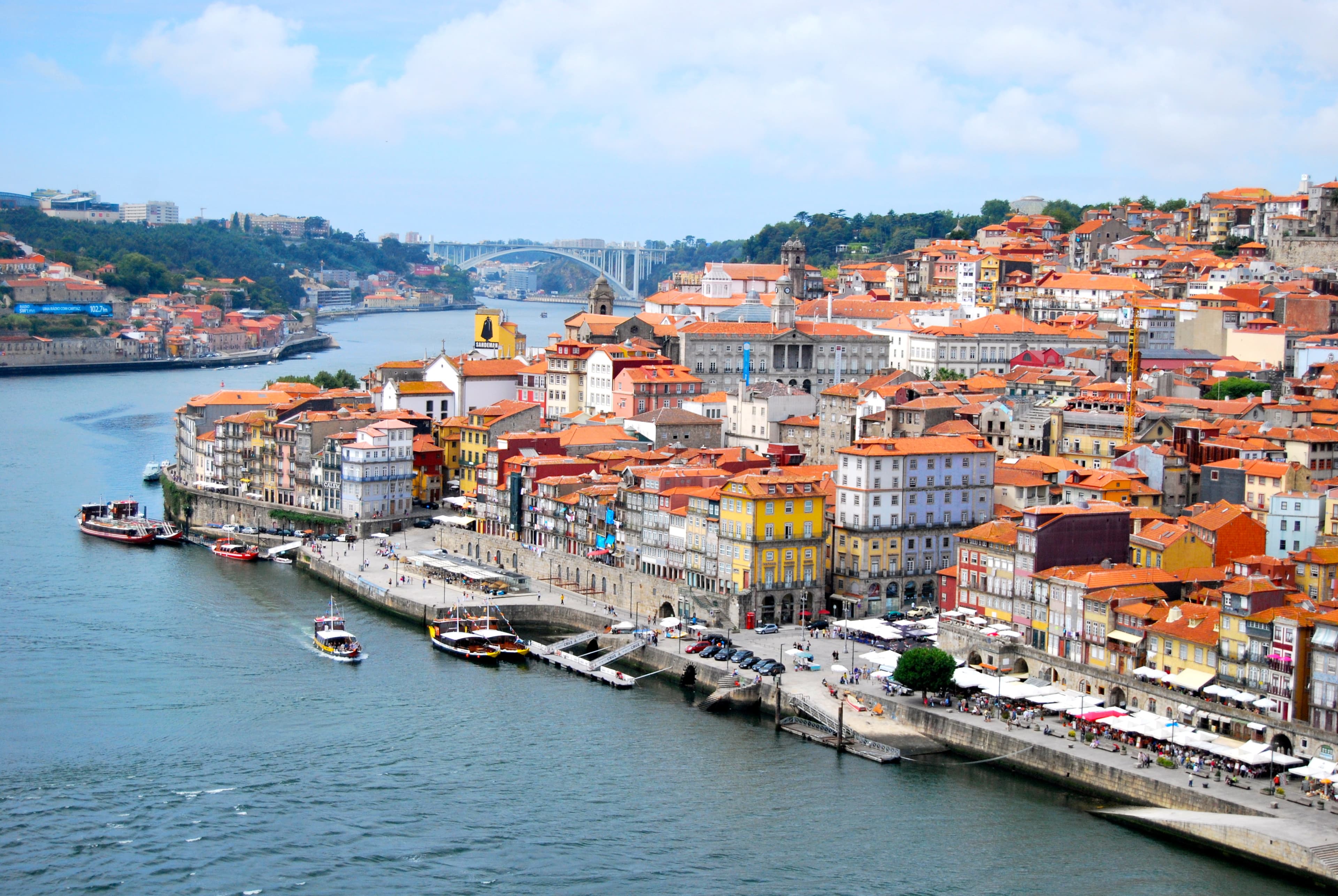
The city is quite varied architecturally, with medieval and modern buildings side by side. Porto's geography is hard on the feet, but pleasant to the eye. The city's grounds are extremely uneven; the Romans strategically built their fortified settlement into a cliff face that overlooks the river, where the present cathedral stands today. Stairs cut into the stone run up and down the cliff face and offer a laborious but rewarding walking tour. Across the Douro from Porto proper, at Vila Nova de Gaia, are the warehouses of notable Porto wine companies: Cálem, Ferreira, Fonseca, Sandeman, Kopke and others.
The Portuguese usually include the article "o" when referring to the city, "O Porto" (literally, the port). It used to be common in English to write the city as "Oporto", but this spelling has declined in popularity. Nowadays it is rendered in English simply as "Porto" without the article.
While most don't think of it, the influence of Porto's football team had got the city's name in one of Australia's six big fast food stores: Oporto, which still uses the old spelling.
See
Porto is a mysterious city that reveals its charm to the visitor through time. Take your time, wander through the mazes and alleys of the city. Take in the old, bohemian spirit of the city. Hike through the Ribeira and Foz do Douro regions (the latter, at sunset). Porto may not be in every tourist's Iberian Peninsula itinerary, but it's well worth a visit if you want to see a city that has changed economically, but that has kept its old traditions.
If you want to visit several museums, consider the Porto Card which provides free access to several museums and further discounts, optionally also free public transport access.
City centre
1 Palácio da Bolsa (Stock Exchange Palace), Rua Ferreira Borges, 4050-253. Daily 09:00-18:30. It was built in the 19th century on the grounds of the destroyed old cloisters of the adjacent São Francisco church. It also contains the most impressive Arab room in the country. There is also a Port wine tasting room. €12 adults, €7.5 concessions. (updated Feb 2024)
2 Sé do Porto (Porto Cathedral), Terreiro da Sé, 4050-573. This Romanesque cathedral was built in the 13th century. Later on Baroque alterations were made in the 17th and 18th century. The cathedral is on top of a hill from where you also have great views over the city and the river. €3. Combined ticket with adjacent Bishop's palace €6. (updated Feb 2024)
3 Port Wine Institute, Rua Ferreira Borges 27, 4050-253, ☏ +351 22 2071669. Mon-Fri 11:00-19:00, Sat Sun closed. A small exhibition about Port wine and its certification process. Samples of a small variety of Port wines can be bought. Guided tastings and tours to the laboratories can be arranged. Free. (updated Sep 2015)
4 City Hall, Avenida dos Aliados. (updated Sep 2015)
5 Igreja de São Francisco (Church of Saint Francis) (adjacent to Palácio da Bolsa). A Gothic church with later alterations of the interior decorations in Baroque style. (updated Sep 2015)
Baixa (downtown)
6 Mercado do Bolhão, Rua Formosa. Sun closed. A traditional market of fruits, vegetables, fish and meat. As of 2022 the entire market is now open after major refurbishment.
Do
Douro river cruise. Take a cruise upriver (the cost starts at €15 (although they can be slightly cheaper if paired with a different activity) and takes about 50 minutes. Cruises run from 10:00 to 18:30, with sailings every 30 minutes for most operators. There are multiple river cruise operators and you can purchase a ticket from every tourist service and office in the Sao Bento area, or potentially from the wharf itself. Many of the cruises are themed around seeing the various bridges and river-adjacent facilities. You may also choose a day-long cruise starting at €70 to or from Régua, with one way of the journey completed by bus (included in the price). This tour states at 08:00 and returns at 17:00 or 18:00. Go at least as far as Pinhão — the landscape is absolutely stunning. If you choose to do this in the summer, don't forget your factor 30 sunscreen! Look for cruises based on the Vila Nova de Gaia wharf (the same side as the port wine caves), as some of them may offer discounts for cave tours or port wine purchases. (updated Feb 2024)
Fado Bars. Fado is a music genre originating in Lisbon and considered an integral part of Portuguese music. It is traditionally sung by a woman in a black dress, accompanied by guitar players. A handful of Fado bars stand in Porto, primarily in the Sao Bento area, offering one or two shows per day. The cost is generally €15 (as of June 2022) and tickets for different shows are sold by tourist offices throughout the Sao Bento area. Some shows may include a glass of Port Wine within the cost of the ticket. €10. (updated Jun 2022)
1 Teatro Nacional São João (TNSJ), Praça da Batalha, 4000-102, ☏ +351 22 340 19 56 (tour enquiries and reservations), toll-free: 800 108 675. Porto's main theatre and opera production company and venue. There are also guided tours (€5/person) for access to the stage, rehearsal room, dressing rooms and the technical area (if they are not used during the time of the tour). (updated Sep 2015)
Football: the city has two men's pro soccer teams:
2 FC Porto. They play in Primeira Liga, Portugal's top tier. Their home ground Estádio do Dragão (capacity 50,000) is 1 km north of the centre with its own metro station. (updated Jun 2023)
Eat
Porto has some of the finest restaurants in Portugal.
It is said that if you like to eat, you should go to Porto because it's a place where you eat well in terms of quality and amount (even Lisbon citizens say that in Porto is where they eat the best food).
The best restaurants of the city are mainly in Matosinhos near the beach, and the Porto de Leixões seaport but watch out for pricing, more than a few ok establishments deem themselves worthy of high pricing just because of the decor or the "in crowd" is seen going there or a combination of both, they charge ridiculous prices for food not much better prepared or presented than elsewhere and many times, the dose is very small, so don't be shy to look around to get a sense of what is what. You can take the blue metro line A to get there which takes about 30 min. In the Ribeirinha part of Porto, overlooking the Douro River and Vila Nova de Gaia, there's many well run very affordable small family run restaurants with a great vibe, friendly staff, great food and drink and sometimes, due to limited space, having to share tables with complete strangers, sometimes local people and sometimes not, making the whole experience very cosmopolitan and entertaining. Within the old city centre, inexpensive to reasonable priced eating houses catering mostly for residents are also easily found for both lunch and dinner, these places welcome foreigners and many take special pride in hosting you.
Drink
Porto is home to port wine of course, and there are many wineries around the city where port wine is brewed. Strictly speaking, port wine can only be called port wine if the grapes are grown in the Douro valley, and the wine is produced and bottled in Porto. Port wines come in many styles, with vintage port being the most expensive.
The main areas for bars are Praça de Ceuta to the north, through the station surrounds to Ribeira further south.
Mid-range
1 Solar Vinho do Porto, ☏ +351 226094749, solarporto@ivp.pt. Rua de Entre-Quintas 220. A villa with port samples and a great view of the Douro. Open M-Sa 14:00-00:00. This is the perfect place to sit in soft chairs or outside in the garden and enjoy a few glasses of the finest ports. You can also have cheese with your port.
Dance clubs
Dance clubs here always start very (very) late, around 01:00-02:00, and end up from 06:00-07:30. You have nice choices to pick from. Most clubs are located in the Industrial region and in the upmarket Foz area.
2 Industria, Avenida do Brasil 843, Foz. "Local heroes and international superstars" - going since 1987. It's open until around 06:00.
3 Discoteca Via Rápida, R. Manuel Pinto de Azevedo 567, ☏ +351 910 088 920, viarapida.geral@gmail.com. Thu–Sat 23:50–06:00. A popular disco in the Industrial Area. The nightclub opens Fridays and Saturdays and it's always crowded. The club plays the latest dance hits and the crowd is 20ish. (updated Feb 2021)
4 Passos Manuel, R. de Passos Manuel 137, ☏ +351 22 205 8351, geral.passosmanuel@gmail.com. A dance club/bar frequented by the arty crowd, with a varied but tasteful selection of music and a warm decór. (updated Feb 2021)
5 Plano B, R. de Cândido dos Reis 30. Near Torre dos Clérigos is a popular art gallery and bar installed on Porto's historic centre.
6 Clube Mau Mau, Rua do Outeiro 4, ☏ +351 22 457 8912. In the Foz region, it is a popular nightclub with varying musical styles, from house to pop to R&B. (updated Feb 2021)
There are some LGBT clubs and bars in Porto. Late night scene.
Bars & pubs
7 Ryan's Irish Pub, Rua do Infante D. Henrique 18, ☏ +351 963 041 615, ryansirishporto@gmail.com. In the Ribeira, nice cozy atmosphere and friendly bar staff. Always a good place to start. (updated Feb 2021)
Get around
By car
Porto, like most Portuguese cities, is a nightmare to drive in. Roads vary in conditions - from fully paved to cobbled lanes that can make even the most shortest of distance seem like a go-kart rally. With that said, keep in mind that the tourist parts of the city (the Ribeira and Baixa) are a never ending maze of narrow streets, short tempered drivers and snakelike alleys. Better to walk (despite the fact that it's very hilly). Also, drivers seem to have forgotten how to drive (apart from pushing the pedals) - therefore, they make their own rules of the road (however, this generally does not apply to young drivers). Be prepared to lose your patience several times whilst driving.
By metro
Porto Metro is a modern light rail/subway system, which was only constructed at the turn of the millennium and is still being expanded. It has several lines, that run across the centre of Porto, and reach out to surrounding municipalities. It is quick, and probably the most efficient way to get around Porto. Some major areas of the city, however, are not that well served by the metro. Announcements in the metro are made only in Portuguese, though most ticket machines and directional signs are bilingual in Portuguese and English.
Stay safe
There may be pickpockets in heavily crowded areas and on public buses and trains; however, pickpocketing is not common in Porto. Travelling by bus or metro is generally safe and one of the best ways to go from a place to another.
Porto is generally a safe place to be if you take normal precautions like walking in well-illuminated streets at night.
One part of Porto, near the Tourist Information Office between the cathedral and the steps to the small church, often has drunk people that could cause you trouble. There's no reason for alarm because many of them are inoffensive, but it is best to use some caution, as you would elsewhere.
If you take the main road from the bus station to the cathedral and tourist information centre, walk back to the bus station after you're done and then walk from there to the other sites. Avoid the shortcut from the tourist information centre downstairs because near there have been many incidents there.
Call 112 if you have an emergency.
Practical facts for Portugal
Taken from open data. Rules and numbers change, so check locally before you rely on them.
- Currency
- Euro (EUR)
- Languages
- European Portuguese and Mirandese
- Plugs and power
- Types C and F, 230 V at 50 Hz
- Traffic drives
- On the right
- Emergency numbers
- Any emergency112
- Country calling code
- +351
- Time zones
- Atlantic/Azores, Atlantic/Madeira, and Europe/Lisbon
Official travel advice
Quoted from each government as published, with the date they last changed it. We do not add a verdict of our own.
UK Foreign, Commonwealth & Development Office
- No areas listed that it advises against travelling to
Read the full adviceThis travel advice also covers Madeira, Porto Santo and the Azores.
Wildfires in Portugal
There is a high risk of wildfires during the summer season from April to October. For advice, visit the wildfires section on the Safety and security page.
US Department of State
Level 1 of 4: Exercise normal precautions
Read the full adviceExercise normal precaution in Portugal.
• Portugal is generally a safe destination for travelers. Travelers should remain vigilant against petty theft, particularly in crowded tourist areas and on public transportation.
• Review our travel guidance for Portugal to learn how to prepare for a safe trip.
Entry and visas
Entry rules depend on your passport and change without notice. Check the official pages before you book.
Sources