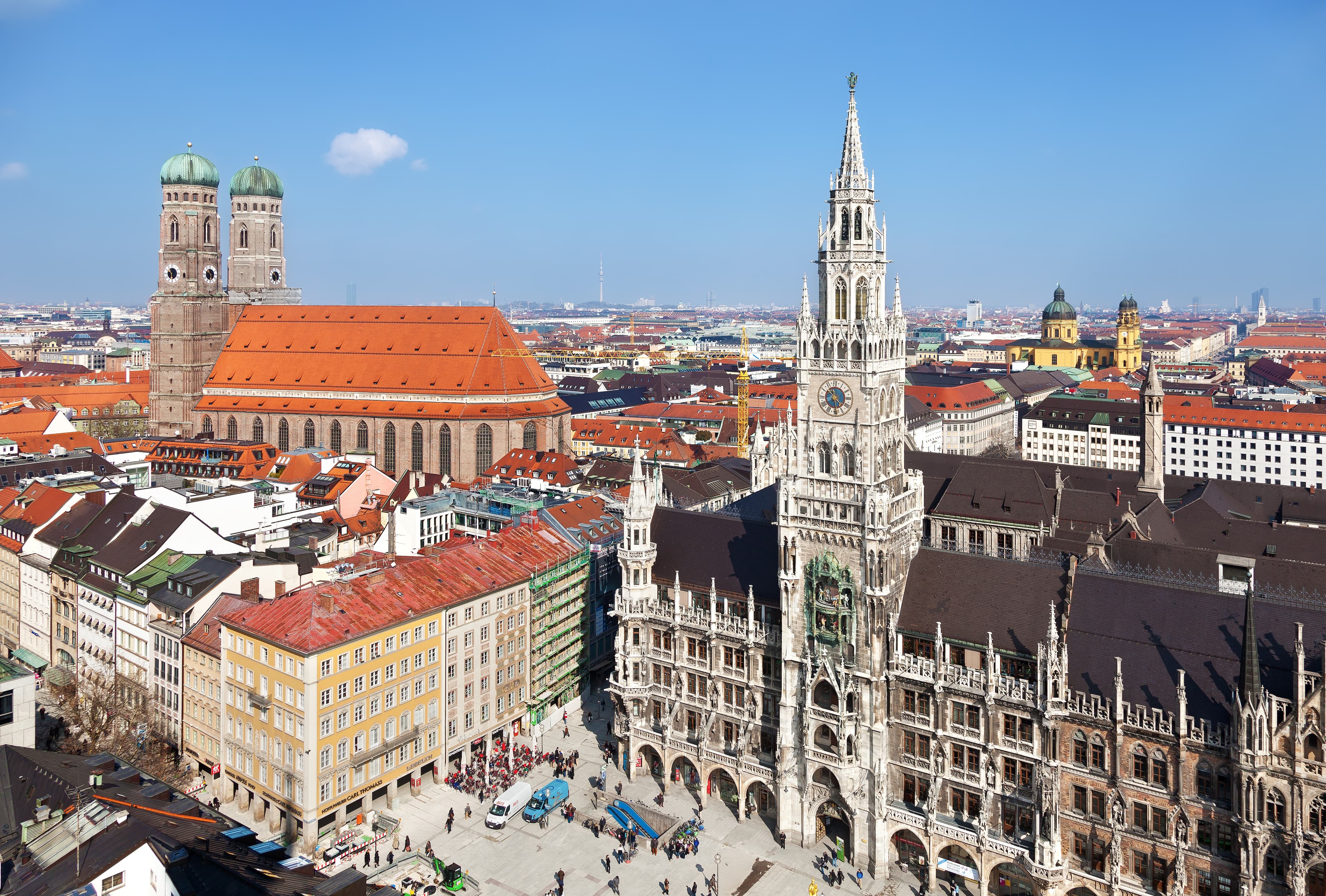

Germany
A plan for Munich
Not a list of things to see in Munich — a day-by-day plan somebody could actually follow, built from places we can point to a source for. Make your own in about a minute.
- 2 nights
- Couple
- Balanced pace
- Mid-range budget
Every place here was checked on 2026-10-27 or later, and each one says where it came from.
The plan, day by day
Day 1
09:30
You arrive
13:00
Forschungsbrauerei
Suggested because you chose food
- 1h
- Meal
14:30
Nymphenburg Palace
Picked because you chose culture & museums and local experiences + balanced energy
- 2h 30m
- Culture & museums
2h open
Nothing planned here. That was on purpose.
19:00
Hofbräuhaus
Suggested because you chose food
- 1h 30m
- Meal
20:30
Gasteig
Picked because you chose culture & museums + balanced energy
- 2h 30m
- Culture & museums
Day 2
08:00
Henry hat Hunger
Suggested because you chose food
- 45m
- Meal
45m open
Nothing planned here. That was on purpose.
09:30
Deutsches Museum
Picked because you chose culture & museums + balanced energy
- 2h 30m
- Culture & museums
1h open
Nothing planned here. That was on purpose.
13:00
Augustiner-Keller
Suggested because you chose food
- 1h
- Meal
14:30
Haidhausen-Museum
Picked because you chose culture & museums and local experiences + balanced energy
- 2h 30m
- Culture & museums
2h open
Nothing planned here. That was on purpose.
19:00
Tantris
Suggested because you chose food
- 1h 30m
- Meal
20:30
National Theatre Munich
Picked because you chose culture & museums and local experiences + balanced energy
- 2h 30m
- Culture & museums
Day 3
08:00
Café im Hinterhof
Suggested because it fits a mid-range budget
- 45m
- Meal
45m open
Nothing planned here. That was on purpose.
09:30
Alte Pinakothek
Picked because you chose culture & museums + balanced energy
- 2h 30m
- Culture & museums
1h open
Nothing planned here. That was on purpose.
13:00
Atzinger
Suggested because you chose food
- 1h
- Meal
14:30
You leave
Weather through the year
Monthly averages from NASA's 25-year climate record, day and night together.
Best months: June, July, August, and September
| January | Cold: -2°C, 78 mm |
|---|---|
| February | Cold: -1°C, 61 mm |
| March | Cold: 4°C, 72 mm |
| April | Cold: 8°C, 69 mm |
| May | Rainy: 13°C, 124 mm |
| June | Rainy: 17°C, 143 mm |
| July | Rainy: 18°C, 138 mm |
| August | Rainy: 18°C, 143 mm |
| September | Mild, some rain: 13°C, 95 mm |
| October | Cold: 9°C, 80 mm |
| November | Cold: 4°C, 62 mm |
| December | Cold: -0°C, 68 mm |
From the Wikivoyage guide
Quoted from the travel guide anyone can edit, as it read on the day we took it.
Understand
1 Tourist information, Neues Rathaus, Marienplatz, ☏ +49 89 233 96500, tourismus.gs@muenchen.de. Mon-Fri 10:00-18:00, Sat 09:00-17:00, Sun 10:00-14:00. The official tourist office is in New Town Hall and can make bookings for tours, hotels and events. (updated Apr 2026)
Munich tourism website
History
When the last Ice Age retreated 12,000 years ago, it dumped gravel and silt across this area, leaving a heath that was well-drained and suitable for grazing, but not particularly fertile. Munich, like other German cities, has been settled from prehistory, but by convention the "founding date" is taken as the first documentary mention. That came in 1158 in a document signed in Augsburg, at a time when Munich was just a bridge over the Isar controlled by monks, hence the monk on the city coat of arms. Henry the Lion built a rival bridge so the highway became re-aligned and the town grew rapidly. In 1175 Munich was awarded city status and built its first defensive walls. But Henry fell out with the ruling Staufer dynasty, whereupon Otto I Wittelsbach became Duke of Bavaria (his descendants ruled here until 1918), while Munich was handed over to the Bishop of Freising. In 1255, when an inheritance split the Duchy of Bavaria, Munich became the ducal residence of Upper Bavaria. The late 15th century saw a revival of Gothic arts: the Old Town Hall was enlarged, and Frauenkirche cathedral was built.
See
Stately avenues
Four royal avenues were laid out in the 19th century, with imposing architecture.
Briennerstraße starts at Odeonsplatz (where you can find Feldherrnhalle, Theatinerkirche and the Residenz) on the northern fringe of Altstadt. It runs east to west past Wittelsbacherplatz (with Alfons-Palais and the statue of Maximilian I), Karolinenplatz (the black obelisk honours the Bavarian Army), to Königsplatz. This is Athens-on-the-Isar, with the Doric Propylaea, the Ionic Glyptothek and the Corinthian State Museum of Classical Art. The east end of Briennerstraße is lined with upscale shops, galleries, cafés and restaurants.
Ludwigstraße runs north from Odeonsplatz through Maxvorstadt into Schwabing. It's lined by Italian Renaissance and Neo-Romanesque buildings, such as St Ludwig's Church and the main campus of the Ludwig-Maximilians-Universität München (LMU Munich). Ludwigstraße ends at Siegestor, a triumphal arch crowned with a statue of Bavaria with a quadriga of lions, but the avenue continues north as Leopoldstraße.
Maximilianstraße starts at Max-Joseph-Platz by the Residenz and National Theatre, and runs east across the river Isar to end at Maximilianeum, the Bavarian state parliament. The avenue is framed by neo-Gothic buildings with a hint of English Perpendicular. Its west end together with Residenzstraße has Munich's most upscale shopping and hotels.
Prinzregentenstraße runs parallel 500 m north of Maximilianstraße from Prinz-Carl-Palais. Museums along it are Haus der Kunst, the Bavarian National Museum and Schackgalerie. It forms the southern boundary of English Garden, where the Eisbach is one of the world's most unlikely surfing spots. The avenue crosses the Isar, circles the Friedensengel monument, and on the east bank passes Villa Stuck.
Museums, galleries and palaces
Discounts: Keep your ticket after visiting one of the museums owned by the City, i.e., Münchner Stadtmuseum, Villa Stuck, Jüdisches Museum, Valentin-Karlstadt-Musäum or the NS-Dokumentationszentrums and get free entry into another one of these on the following two calendar days.
Do
Events
St Patricks's Day is on 17 March, but in Munich is held over the nearest weekend, with parades and a street festival. Locations vary but parades are likely to be around Odeonsplatz in Altstadt and Münchner Freiheit further north.
May Day is a public holiday in Germany. Many Bavarian villages erect maypoles, dress up in Lederhosn and Dirndln, and cavort to the tunes of oompah bands. Locations vary but in Munich city the likeliest spot is Viktualienmarkt south of Town Hall.
Lange Nacht der Musik is an all-night event in May, with 400 concerts and other musical events, and shuttle buses between venues.
Tollwood organise two extended music festivals: June-July in Olympic Park in northern Munich, and Nov-Dec (with a Christmas market) on the Wies'n site in Ludwigsvorstadt.
Corso Leopold is a street fair taking over 2 km of Leopoldstraße in north Munich, traditionally in June and September.
Theatron Pfingsfestival is a music festival in Olympiapark in June, with the stage on a platform on the lake. Theatron also organise Musiksomer here in August.
Christopher Street Day is a Rainbow Pride or LGBTQ+ event, held over two weeks in June. It's named after Christopher Street in Greenwich Manhattan, New York which was the scene of the 1969 Stonewall uprising against police oppression. Multiple venues, the big parade is around Marienplatz in Altstadt.
Münchner Sommernachtstraum (Midsummer Night's Dream) is a music festival with fireworks on Olympiapark in July.
Kocherlball ("Cooks' Ball") is held by the Chinese Tower in English Garden in July. 19th-century servants were briefly allowed out to party, but they had to be back on duty by midday, so it's held from 06:00 to 10:00. Many dance in old costume.
Impark is held on Olympia Park in August. It's a mixture of fairground, live music and sports events.
Isarinselfest (Isar island festival) is a street fair along the river bank in Lehel on a September weekend.
Eat
Bavarian cuisine is the main offering, majoring on sausages and other pork. Munich specialities are Weißwurst (a breakfast sausage served until noon and not a second later, washed down with Weissbier), Schweinsbraten (roasted pork) or Schweinshaxe (roasted pig's knuckle). Other trad dishes such as schnitzel are popular but not specifically Bavarian. Beer gardens and beer halls serve heaps of all these.
Leberkässemmeln is a white roll filled with a thick warm slice of "Leberkäse" — which, despite its name, contains neither liver nor cheese. It's a mix of veal, pork, spices and a hint of lemon zest baked in an open pan and served with a sweet and grainy mustard. Buy these filling, inexpensive snacks at butchers rather than bakers.
Bavarian / Austrian cakes and tortes can be bought by the slice at countless bakeries and cafés. There's also a great array of bread: one local snack is pretzels, "Brezn".
International cuisines are widely available, especially Italian, with a strong showing also of Chinese, Turkish, Arab and Japanese.
Vegetarian, vegan and GF food is found in many restaurants, and there are specialist vegetarian cafes.
Bakeries sell bread, pastries, sandwiches, salads and sometimes broader offerings such as soup. One Munich-only bakery chain is Rischart.
See "Buy" above for fresh and seasonal food markets.
Drink
Oktoberfest is the huge event held over 16-17 days in Theresienwiese in Ludwigsvorstadt. You need to feel comfortable in dense crowds.
Beer halls serve the product of a particular brewery and are often within their historic brewing and cellar premises, cleared when production moved elsewhere. Concentrated in Altstadt, there's typically a ground-floor "brown table" area, an upstairs swankier "white table" restaurant, and suites for events and functions. Outside if space permits is a beer garden. The beer hall in which Hitler launched the infamous Munich putsch of 1923 has been demolished.
Beer gardens may be summer-only but several are year-round, albeit weather-dependent. They may be self- or table-service, and all serve traditional meals or snacks such Riesenbrezn (big pretzels) and Steckerlfisch (cured fish). You're allowed to bring your own food but not drink. Drinks are typically litre mugs (Maß) of beer or of Radler, a shandy of beer and lemonade. Beer gardens are family-friendly (with play areas within parental sight) and diverse, welcoming a motley crowd including well-behaved dogs. There are over two dozen around the city, good examples being Hofbräuhaus in Altstadt (very touristy), Viktualienmarkt in Altstadt (with beer from all the major breweries), Chinese Tower in English Garden, Paulaner and Bavariapark in Ludwigsvorstadt, and Löwenbräukeller and Augustiner in Maxvorstadt. Paulaner am Nockherberg in Haidhausen hosts a strong beer festival in March.
Get around
The innermost city is walkable and the outer fringes are suitable for a car. For everything else use the excellent public transport system.
By public transport
This is an integrated system where one ticket is valid for interchanges across all modes of transport. Check the Munich MVV website for network maps, fare zones and prices, timetables, journey planner and P&R parking lots.
S-Bahn suburban trains (look for a white "S" on a green background) bring you from the airport to the city centre. All lines run east-west through Hauptbahnhof, Altstadt and Ostbahnhof then fan out, looking like the force field around a bar magnet. The central tunnel (Stammstrecke) suffers line congestion and a second tunnel is under construction, with some upheaval along its route.
U-Bahn underground lines are signed with a white "U" on a blue background. They are the way to go north-south, for instance to the University and Kunstareal art districts, Olympiapark and Allianz Arena. They also run east to Messe trade fair halls.
Trams circle the inner city and are the way to reach Nymphenburg Palace. They're a good option east of the river, where Max-Weber-Platz is a secondary hub.
Buses connect the spaces between rail and tram routes so they're more useful in the outer suburbs. Most visitors won't use them.
Which ticket? is a question of single versus day (or longer) ticket, one rider versus group ticket, and how many zones.
A single trip in the M city centre zone costs €4.20 (as of April 2026) for an adult. You must validate your ticket before you travel; the machine may do so automatically. It's valid for an hour but not for return trips, even if you found the place closed and turned straight back. A second single ticket to come back works out slightly cheaper than a day ticket, but you may need to factor in your change in coins, see below. Virtually every attraction described on these pages is within M zone, but from the airport you need a five zone ticket for €14.30. Children aged 6-14 have a single fare of €1.90 for anywhere in the system, accompanied under-6s ride free. See the MVV website for discounts for 15-20 year olds.
A day ticket is automatically validated from the time of issue to 06:00 next morning. M zone tickets cost €10.20, from the airport it's €16.30, and for children anywhere it's €3.70.
Stay safe
Boasting one of the lowest crime rates of any major European city, Munich is a very safe city, and violent crime is rare. Walking around, day or night, is not an issue, and you will most likely not encounter any crime at all, though you should still take the usual precautions against pickpocketing (especially in the central districts of Altstadt-Lehel and the Ludwigsvorstadt area immediately south of the central station), such as not leaving your camera unattended or venturing alone through parks at night. While some of Munich's boroughs like Neuperlach and Hasenbergl have a reputation for seediness among locals, crime levels are actually average.
Munich is an open-minded, international city with a large number of immigrants and expatriates living in the city (almost 40% of residents have a foreign origin, mostly from Turkey, the Balkans, and Poland), so you are very unlikely to encounter any problems because you are a foreigner. Gay and lesbian people should not experience any issues either: Munich has a large gay and lesbian community, and the Rosa Liste, a gay rights party, was part of the city government from 1996 to 2014.
A safety hazard in Munich is the local beer-drinking culture in combination with the high accessibility of alcohol. Think twice before trying to keep up with the locals or looking for your maximum level of alcohol intoxication; being drunk will sharply raise your chances of injuring yourself. You should also keep your distance if you see drunk people fighting, such as in the bars around the central station. Of course, heavy drinking at the time of Oktoberfest will inevitably make people lose control and result in some violent behaviour. Another issue for people not used to driving or walking on ice or snow is wintry road and pavement conditions.
If you've been to other major cities outside Bavaria before the encounters with the Munich police might be a bit of a culture shock, who mostly follow the "law and order" ideas of the regional politics here. Don't be surprised that minor infractions that could slide in Berlin will often get you into hot water with the Munich police. On the whole however they are helpful and there to make people feel safer and corruption is nearly unheard of.
Practical facts for Germany
Taken from open data. Rules and numbers change, so check locally before you rely on them.
- Currency
- Euro (EUR)
- Language
- German
- Plugs and power
- Types C and F, 230 V at 50 Hz
- Traffic drives
- On the right
- Country calling code
- +49
- Time zones
- Europe/Berlin and Europe/Busingen
Official travel advice
Quoted from each government as published, with the date they last changed it. We do not add a verdict of our own.
UK Foreign, Commonwealth & Development Office
- No areas listed that it advises against travelling to
US Department of State
Level 2 of 4: Exercise increased caution
Read the full adviceExercise increased caution in Germany due to terrorism.
Terrorist groups and lone actors remain a constant threat in Germany and Europe, attacking people in public locations with knives, small arms, rudimentary explosive devices, and vehicles. Such attacks may occur with little or no warning and target:
• Tourist locations
• Transportation centers (airports, train, or bus stations)
Entry and visas
Entry rules depend on your passport and change without notice. Check the official pages before you book.
Sources