
Italy
A plan for Milan
Not a list of things to see in Milan — a day-by-day plan somebody could actually follow, built from places we can point to a source for. Make your own in about a minute.
- 2 nights
- Couple
- Balanced pace
- Mid-range budget
Every place here was checked on 2026-10-27 or later, and each one says where it came from.
The plan, day by day
Day 1
09:30
You arrive
13:00
Jamaica
Suggested because you chose food
- 1h
- Meal
14:30
Museo Civico di Storia Naturale di Milano
Picked because you chose culture & museums + balanced energy
- 2h 30m
- Culture & museums
2h open
Nothing planned here. That was on purpose.
19:00
Ristorante Savini
Suggested because you chose food
- 1h 30m
- Meal
20:30
Teatro Carcano
Picked because you chose culture & museums + balanced energy
- 2h 30m
- Culture & museums
Day 2
08:00
Biffi
Suggested because it fits a mid-range budget
- 45m
- Meal
45m open
Nothing planned here. That was on purpose.
09:30
HangarBicocca
Picked because you chose culture & museums and local experiences + balanced energy
- 2h 30m
- Culture & museums
1h open
Nothing planned here. That was on purpose.
13:00
Il Luogo di AimoE Nadia
Suggested because you chose food
- 1h
- Meal
14:30
La Scala
Picked because you chose culture & museums and local experiences + balanced energy
- 2h 30m
- Culture & museums
2h open
Nothing planned here. That was on purpose.
19:00
Terrazza Palestro
Suggested because you chose food
- 1h 30m
- Meal
20:30
Bar Magenta
Picked because you chose food and local experiences + balanced energy
- 1h 30m
- Food
Day 3
08:00
Fashion Café
Suggested because it fits a mid-range budget
- 45m
- Meal
45m open
Nothing planned here. That was on purpose.
09:30
Museo della Scienza e della Tecnologia "Leonardo da Vinci"
Picked because you chose culture & museums + balanced energy
- 2h 30m
- Culture & museums
1h open
Nothing planned here. That was on purpose.
13:00
Osteria dei Formaggi
Suggested because you chose food
- 1h
- Meal
14:30
You leave
Weather through the year
Monthly averages from NASA's 25-year climate record, day and night together.
Best months: June, July, August, and September
| January | Cold: 3°C, 47 mm |
|---|---|
| February | Cold: 4°C, 62 mm |
| March | Cold: 9°C, 64 mm |
| April | Mild, some rain: 13°C, 87 mm |
| May | Rainy: 17°C, 106 mm |
| June | Mild, some rain: 22°C, 81 mm |
| July | Mild, some rain: 24°C, 68 mm |
| August | Mild, some rain: 24°C, 89 mm |
| September | Mild, some rain: 19°C, 80 mm |
| October | Mild, some rain: 14°C, 95 mm |
| November | Cold: 8°C, 137 mm |
| December | Cold: 4°C, 69 mm |
From the Wikivoyage guide
Quoted from the travel guide anyone can edit, as it read on the day we took it.
Understand
Milan is often described as representing "modern" Italy. The differences between Rome and Milan are evident from several proverbs, such as an Italian saying about the differences between the two cities which roughly translates, "Rome is a voluptuous woman whose gifts are very apparent, while Milan is the shy, demure girl whose treasures are plentiful, but discovered in time." Milan is the most modern of all Italian cities, yet it keeps most of its history intact.
At first sight, Milan looks like a bustling and relatively stylish (with its shiny display windows and elegant shops) metropolis, with a good number of grand palaces and fine churches in the centre, but might seem like a slightly prosaic, soulless and business-oriented place. It can be quite rainy, grey and foggy, and some of the buildings, ancient or modern, have quite a severe appearance. Whilst there are a lot of parks, Milan looks as if it has very little greenery, and apart from the very well-kept historic part, many areas are indeed quite scruffy and dirty. However, Milan, unlike most usually historical European cities which throw the sights in your face, requires quite a lot of exploring — take it as it is, and you might enjoy its fashionable glitter and business-like modernity, but might find it not very "captivating". If you spend time, though, strolling through less well known areas such as the pretty Navigli, the chic Brera district, the lively University quarter, or some of the smaller churches and buildings, you'll find a forward-thinking, diverse city filled in every corner with history, and with a plethora of hidden gems.
See
See the Districts articles for more listings.
There are many things to see in Milan - from fine churches, old palaces, excellent museums, world class theatres and opera houses, cultural gems, striking buildings, sleek modern architectural works and lovely streets and squares.
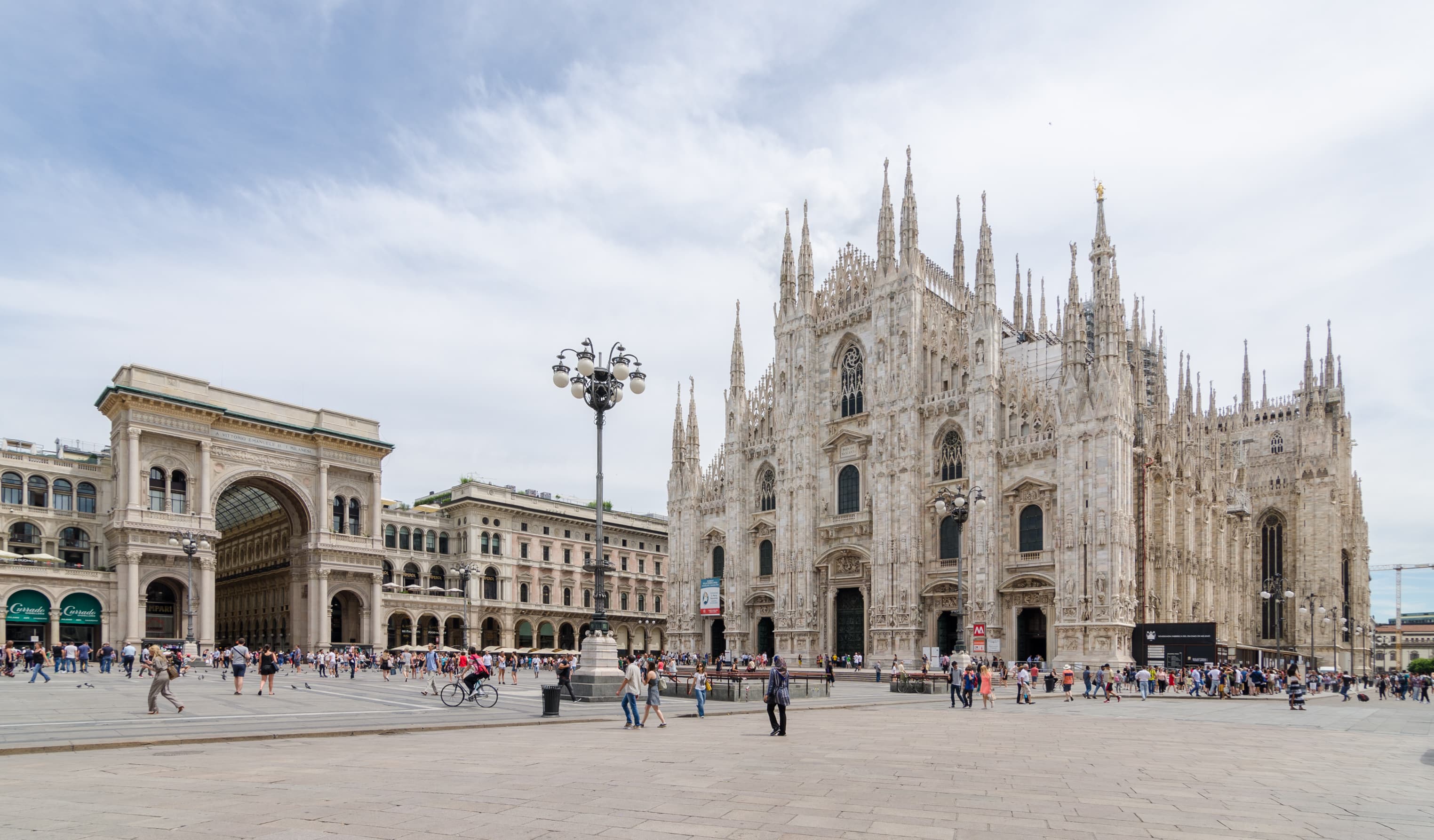
Milan has some of the oldest churches in Italy, older than the ones in Rome because Milan was the capital of the Northern part of the late Roman Empire. The cathedral, Duomo is the symbol and the heart of Milan. Santa Maria delle Grazie in the Western part of the city is the home for Leonardo da Vinci's painting The Last Supper and a UNESCO World Heritage Site. For those passionate about art Milan offers a large variety of art museums, mainly of Italian Renaissance and Baroque. Note, though, that most museums are closed on Mondays. The Case Museo di Milano (house museums) card offers reduced-price entry to four house museums.
For long periods Milan has been surrounded by walls, built during the Roman Empire, the Middle Ages and the rule of the Habsburg. Many of the gates are still there and well worth a visit. During the centuries some of them have been completely annihilated and many are built on the same place as a former gate. There are seven gates standing dating from various ages. Clockwise from 12 o'clock they are: Porta Nuova, Porta Venezia (formerly called Porta Orientale and Porta Renza), Porta Romana, Porta Ticinese (two gates; one closer to Duomo and one further out), Porta Sempione and Porta Garibaldi (formerly Porta Comasina).
Despite not having as much greenery as some cities, Milan offers several parks and gardens, scattered all over the city. Maybe the most visited of them is Parco Sempione, also home to the Sforzesco Castle. Many smaller and less-famous parks can be found in the southern part of the city.
Not all points of interest are right in the absolute centre — some of the most wonderful gems can be found near the outskirts or even outside of Milan.
Do
See the Districts articles for more listings.
Exhibitions - Many exhibitions are held during the year, ranging from wines to computers, industrial equipment and chocolate. The fieramilanocity is the old exhibitions ground in central Milan a few km northwest of Duomo (MM1 Amendola Fiera or MM1 Lotto - Fiera 2 Stations), the new fairgrounds of fieramilano are in Rho (northwest of Milan, MM1 Rho Fiera Station, A4 highway Pero exit).
La Scala, one of the world's most famous opera houses, is in Milan. It also hosts classical music concerts. Other places to enjoy classical music include Teatro dal Verme, Auditorium di Milano and the Giuseppe Verdi conservatory.
If you like theater and preferably understand Italian, there are a couple of theater houses in Milan. Piccolo Teatro di Milano has three theaters, Teatridithalia - Elfo e Portaromana Associati has two.
From Torre Branca and the roof of Duomo you have good views of the city - certainly worth taking a couple of photos of.
Watch football: The city has two teams playing soccer in Serie A, Italy's top tier, AC Milan and Internazionale. They share the San Siro stadium, capacity 80,000, which is 3 km west of city centre with its own metro stop. Matches between the two teams are known as the Derby della Madonnina, which while lacking the intensity of its counterpart in Rome, is also a fairly heated one, with occasional crowd violence between the supporters.
Watch basketball: If you prefer basketball, the city features Olimpia Milano, one of Italy's most storied teams. It plays in Lega Basket Serie A domestically, and is one of the clubs that plays every year in the continent-wide EuroLeague. However, the team's arena is outside the area covered by this page; for more details, see Grande Milano – Do.
Events
If you're into Italian fashion, there are few if any better shopping destinations than Milan. All the usual suspects have their brand stores in the historical center. Moreover, Milan Fashion Week, one of the "big four" fashion industry events in the world are held twice yearly (Feb-Mar and Sep-Oct).
If you're into Salone del Mobile, Considered the most important fair in the world of Design.
Eat
See the Districts articles for more listings.
Although Milan is a city that changes its mind as quickly as fashion trends come and go, it remains one of the strongest bastions of traditional Italian cooking, where homemade elements are still very much praised and appreciated. There are trattorias, enoteche (wine bars) and restaurants (including luxury ones) everywhere that offer traditional Milanese and Italian dishes to eat. This city's traditional cooking is based on filling dishes like osso buco (braised veal shanks) and risotto alla milanese (chicken-broth risotto made with saffron).
Dining times tend to be a shade earlier than in Rome or Florence, with lunch generally served between 12:30 and 14:30 and dinner from 19:30 to 21:30. Dinner, and sometimes lunch, are usually preceded by that great Milanese institution, the aperitivo—a glass of sparkling wine or a Campari soda in a sophisticated hotel bar.
Avoid the restaurants around the Duomo: they tend to be tourist-only spots, with low-quality food at inflated prices. Be aware that most restaurants charge an extra "serving tax" or "table rent", called coperto, of about €2 per consumer. Also avoid restaurants or cafes around the central station, where it has been reported that hidden serving tax can be up to €5 per person with cheap quality food.
There is much confusion regarding tipping in Italy. Italians do not typically leave tips at restaurants. In touristy locations there will often be a line left blank for a tip to be added. Just draw a line through it and leave a couple of euros. Never leave tips at bar counters.
Breakfast
In bars (in Italy, cafes are called bars, as the English pub-ish concept of bars doesn't really exist) you can enjoy great caffè espresso, cappuccino and a brioche for as little as €2. At bars in the Duomo and San Babila areas, breakfast can be very expensive if you sit down. If in doubt go to the bar and eat there, you'll pay what the Italians do- and they will admire your audacity too.
Drink
See the Districts articles for more listings.
There are plenty of bars and cafés in Milan of all kinds - from fancy old-fashioned ones, where you can enjoy a formal hot drink, to avant-garde modern places, and youthful spots for a happy hour/late-night drink. Some also offer some food too.
Milan by night
Milan has a great variety of places where you can have fun. A great starting point is Corso Como, near Garibaldi Station, full of bars and glamorous clubs. In the summertime, this street is packed with young and attractive people.
Another place where you can go is the Navigli quarter, near Porta Ticinese Avenue and XXIV Maggio Square, where you can find a lot of small pubs, open air cafes and restaurants by the water canals (navigli). In many pubs and bars you can find a free booklet named Zero2 which is a guide to Milan Nightlife: if you don't know what to do or where to go, do grab one!
Other popular night spots with bars and people are Viale Monte Nero (on Wednesday it's packed with people in the piazza in front of a bar called "Momo"), and Piazzale Susa (and nearby Citta' Studi area). In the Centro Storico, nights are overwhelmingly crowded at the Colonne di San Lorenzo (not far from Navigli quarter), and in the cozy Latin-quarter of Brera. Another good spot is the pedestrian part of Corso Sempione near the Peace Arch (Arco della Pace).
There are bars and clubs open all week long but usually few people go out at night on Mondays or Tuesdays, the vast majority prefer to have fun on Thursdays, Fridays and Saturdays. However, Wednesday night appears to be one of the coolest to go out in stylish VIP-frequented clubs.
Milan has an alternative club scene, with a few crews making electronic music parties outside clubs. Ultracheap, every time in a different location (lofts, warehouses, farms, pools, city parks) those kind of parties attract people aged 20–28. The biggest one is called RESET! and attracts 1500-2000 people once a month.
Get around
Urban Layout
Milan has a similar implant to many Italian cities: an old medieval core (though of medieval times essentially only the street layout remains, as Milan was continuously tore down and rebuilt over the ages), and the city forming a circle around it (the Duomo cathedral sits at the very hearth of this circle). Milan in particular has a very distinctive implant: circonvallazioni, viali/corsi and vie. The circonvallazioni are big streets running in circle: the historic core is bordered by the first circonvallazione, the “Cerchia dei Navigli”, and many other form around it, getting bigger progressively. Then corsi and viali form long axes, often cutting circonvallazioni perpendicularly running from the outside to the core. Vie are the small streets that make up most of the urban tissue.
By public transport
Azienda Trasporti Milanesi S.p.A. (ATM) operates a public transport network which is pretty efficient (especially the underground lines and the trams (streetcars)). There are three payment methods: traditional paper tickets, credit/debit cards, and app.
Smart paper tickets ("RicaricaMI") are available from news stands, tabaccherie (tobacconist - look for a large T sign), coffee bars, tourist information offices as well as automatic ticket machines in metro stations, and can be loaded with the following fares (as of July 2026):
Single ticket – €2.20, valid 90 minutes
24h ticket – €7.60
3 day ticket – €15.50
"Carnet" of 10 single trips – €19.50; beware that unlike in cities in neighbouring France or Switzerland, these 10 rides cannot be shared between two or more people, meaning most visitors will be much better off buying one of the other ticket types depending on the duration of their stay.
A weekly ticket is no longer sold; for stays longer than 3 days, the carnet or a monthly pass (€39, available from ATM points and the app) works out cheaper than buying single tickets.
Stay safe
Unless you venture into the dangerous suburbs, Milan is a rather safe city. Certain areas near Loreto, the central railway station, and Porto di Mare (Southern end of the yellow metro line) can be unsafe at night. At the station, do not seek help from any random person offering to help with the booking machines or ATMs or under any other pretext. After they have helped, they will pursue you to get as much money as possible for their "help". Or they can pretend to be helpful, cheating instead. A possible scenario: they guide you through the interface of the ticket machine in a metro station, and advice you to pay using notes instead of coins (allegedly the ticket machine wouldn't accept coins). If you insert a €20 note, the machine would give it back after a few moments. However, before it happens, they will grab your attention saying that the ticket should appear in the bottom of the machine, and simultaneously an old beggar with body odor will appear begging for money. You wouldn't notice it but the beggar will collect the €20 note that the machine would give back to you. The "helper" would then show to you that the maximum amount of change given by the machine is less than €10.
Pickpockets are active in busy places, including on metro trains.
Milan is home to two rival football (soccer) clubs; AC Milan and Internazionale. While not as heated as its counterpart in Rome, the Milan Derby (Derby della Madonnina) is still a rather intense one, and rioting has been known to occur between the supporters of the two rival clubs. Avoid wearing anything that identifies you as a supporter of either team whenever possible, and should you be supporting one of them on matchday, be careful not to wander into a groups of supporters of the other club. Also be sure to avoid wearing Juventus shirts, as they have a very heated rivalry with Internazionale, and doing so may result in you being targeted for violence by Inter fans, particularly on match days.
Beware of the migrant vendors in the streets: most of the merchandise they sell is imitation/fake luxury goods. Even at a fraction of the cost of the original merchandise, the quality is spotty, and the goods are not well maintained in storage. Remember that it's illegal to bring pirated goods into some countries and therefore such souvenirs might get even more expensive when trying to bring them home.
Practical facts for Italy
Taken from open data. Rules and numbers change, so check locally before you rely on them.
- Currency
- Euro (EUR)
- Languages
- Italian (Italy), German (Italy), French (Italy), Sardinian, and 3 more
- Plugs and power
- Types C, F, and L, 230 V at 50 Hz
- Traffic drives
- On the right
- Country calling code
- +39
- Time zone
- Europe/Rome
Official travel advice
Quoted from each government as published, with the date they last changed it. We do not add a verdict of our own.
UK Foreign, Commonwealth & Development Office
- No areas listed that it advises against travelling to
Read the full adviceThis travel advice also covers Vatican City.
Demonstrations and national strike
Recent demonstrations across northern Italian cities have led to violent riots and looting. There is an increased presence of police and military personnel in Milan. Further demonstrations may take place in major cities. See Political demonstrations.
A national strike is planned from 9pm on 29 October to 9pm on 30 October. The strike may disrupt rail and air travel, taxis, highways, local public transportation, schools, and government offices. Check with your travel provider for the latest information.
US Department of State
Level 2 of 4: Exercise increased caution
Read the full adviceExercise increased caution in Italy due to terrorism.
There is risk of terrorist violence, including terrorist attacks and other activity in Italy. Visit the U.S. Department of State's country reports on terrorism to learn more.
Petty crime is common, especially in popular tourist locations and on public transportation, including trains. Stay aware of your surroundings. Most crimes against foreigners are crimes of opportunity, like purse snatching, pickpocketing, and car break-ins.
Entry and visas
Entry rules depend on your passport and change without notice. Check the official pages before you book.
Sources