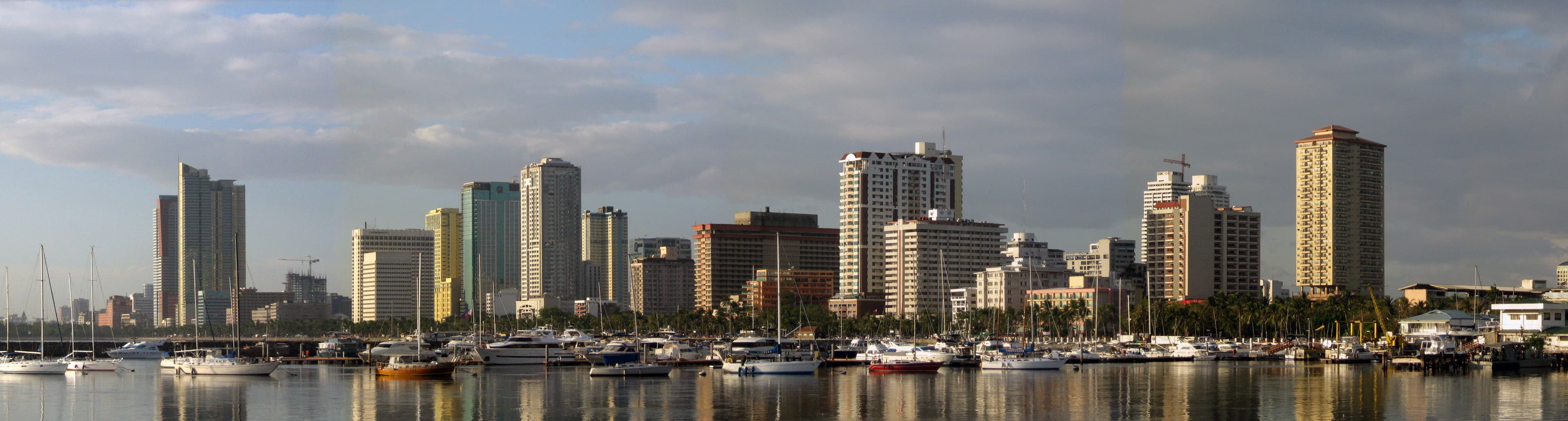

Philippines
A plan for Manila
Not a list of things to see in Manila — a day-by-day plan somebody could actually follow, built from places we can point to a source for. Make your own in about a minute.
- 2 nights
- Couple
- Balanced pace
- Mid-range budget
Every place here was checked on 2026-10-27 or later, and each one says where it came from.
The plan, day by day
Day 1
09:30
You arrive
13:00
Tapa Supreme
Suggested because you chose food
- 1h
- Meal
14:30
National Museum of Fine Arts
Picked because you chose culture & museums + balanced energy
- 2h 30m
- Culture & museums
2h open
Nothing planned here. That was on purpose.
19:00
Wai Ying Fast Food
Suggested because you chose food
- 1h 30m
- Meal
20:30
L.A. Cafe
Picked because you chose food + balanced energy
- 1h 30m
- Food
Day 2
08:00
Kim Chong Tin Hopia Factory
Suggested because you chose food
- 45m
- Meal
45m open
Nothing planned here. That was on purpose.
09:30
Casa Manila
Picked because you chose culture & museums and local experiences + balanced energy
- 2h 30m
- Culture & museums
1h open
Nothing planned here. That was on purpose.
13:00
Eng Bee Tin Chinese Deli
Suggested because you chose food
- 1h
- Meal
14:30
National Museum of Anthropology
Picked because you chose culture & museums + balanced energy
- 2h 30m
- Culture & museums
17:00
National Planetarium
Picked because you chose culture & museums + balanced energy
- 2h 30m
- Culture & museums
19:30
Ersao
Suggested because you chose food
- 1h 30m
- Meal
21:00
Tap Station
Picked because you chose food and local experiences + balanced energy
- 1h 30m
- Food
Day 3
08:00
Cafe Adriatico
Suggested because it fits a mid-range budget
- 45m
- Meal
45m open
Nothing planned here. That was on purpose.
09:30
Museo Pambata
Picked because you chose culture & museums and local experiences + balanced energy
- 2h 30m
- Culture & museums
1h open
Nothing planned here. That was on purpose.
13:00
Dong Bei
Suggested because you chose food
- 1h
- Meal
14:30
You leave
Weather through the year
Monthly averages from NASA's 25-year climate record, day and night together.
Best months: January, February, March, and April
| January | Rainy: 24°C, 148 mm |
|---|---|
| February | Rainy: 24°C, 148 mm |
| March | Rainy: 25°C, 119 mm |
| April | Rainy: 27°C, 102 mm |
| May | Rainy: 28°C, 171 mm |
| June | Wet season: 27°C, 248 mm |
| July | Wet season: 26°C, 312 mm |
| August | Wet season: 26°C, 289 mm |
| September | Wet season: 26°C, 301 mm |
| October | Wet season: 26°C, 341 mm |
| November | Wet season: 25°C, 345 mm |
| December | Wet season: 24°C, 393 mm |
From the Wikivoyage guide
Quoted from the travel guide anyone can edit, as it read on the day we took it.
Understand
The City of Manila is in the western part of Metro Manila, facing the Manila Bay. It is bordered on the west by Manila Bay, to the north by Navotas, Quezon City and Caloocan City, to the east by San Juan and Mandaluyong City and to the south by Pasay and Makati. It is the oldest part of Metro Manila and the seat of the government of the Philippines.
However, despite its historical and administrative importance, the City of Manila is not effectively the "Downtown" or "City center" of Metro Manila in the traditional sense. Metro Manila is a multipolar city, with other cities of the urban area such as Quezon City, Makati, Taguig and Parañaque rivalling or exceeding Manila in business, education, shopping, entertainment and tourism.
In contrast to other parts of the Metro area, the City of Manila is a place for travellers rather than for tourists. Even the so-called "tourist areas", such as Intramuros, Binondo, Ermita and Malate, may feel a bit gritty and chaotic, and the beauty of the city is not obvious, as World War II has wiped out much of Manila's historical architecture.
However, there's much more to Manila than meets the eye. The immaterial heritage, the unique blend of Spanish, American, Chinese and native Filipino culture, remains present, and can be felt even without going to the Intramuros historical district. The City of Manila remains the cultural centre of the Philippines, containing many of the country's best museums and cultural performances. And there are many hidden gems to be discovered, such as the colonial churches, the intricate mausoleums of the Manila Chinese Cemetery, the stunning modernist architecture of the Cultural Center of the Philippines, the fantastic food of Binondo, making Manila an "off the beaten path destination" despite being a country's capital.
See
The main tourist sites of Manila are mostly along Manila Bay.
Landmarks
Bonifacio Shrine - A shrine in honor of Andres Bonifacio who was one of the Filipinos who struggled and fought for freedom for the country against the Spanish forces.
Chinatown - Manila has one of the largest and oldest Chinatowns in the world, where one can find exotic Chinese goods and delicious cuisine.
Coconut Palace - a residence commissioned and built along the waterfront by First Lady Imelda Marcos for Pope John Paul II's visit in 1981. It is occupied by the Vice President and open for public visits (by appointment by calling the Office of the Vice President, leaving a return call number and waiting for a confirmation).
Intramuros - At the northern end of the bay lies the remnants of the old walled Spanish settlement of Manila, Intramuros (Spanish for 'within the walls'). Intramuros contains some of the city's most interesting museums, ruins, and churches including the Manila Cathedral and San Agustin Church one of the most finest churches in the city.
Mabini Shrine - Apolinario Mabini's former home. Mabini was a Lawyer and fought for Philippine Independence. During the American Occupation, this home became the first intellectual headquarters of the First Philippine Republic.
Malacañang Palace - Manila is the host of the official residence of the president of the Philippines. While heading your way here, you will see wonderful places. People can roam the garden afterward.
Manila Hotel - Just outside Intramuros and on the edge of Manila Bay is the beautiful and historic Manila Hotel, a legacy of the American colonial era and the place where General Douglas MacArthur made his home before World War II.
Plaza San Luis - A commercial complex consisting five house; Casa Manila, Casa Urdaneta, Casa Blanca, Los Hidalgos and El Hogar Filipino. Plaza San Luis showcases Filipino-Hispanic Architecture. Other than Souvenir shops there is a museum in Casa Manila.
Roxas Boulevard - A wide boulevard which runs along the shores of Manila Bay, it is known for its view of Manila's famous sunsets and stretch of coconut trees. The boulevard offers a wide selection of hotels, restaurants and significant cultural landmarks.
Do
Tours
Tour Manila's historical heart in a historical fashion. Watch out for touts, especially around Rizal Park, and negotiate prices with the cochero to avoid being ripped off.
On foot. Two self-guided walking loops are written up stop by stop in the district articles, with numbered pins, both directions and the one spot at each where a map pin misleads you: Intramuros, from Fort Santiago at the mouth of the Pasig south to Baluarte de San Diego and back, and Binondo, a loop that crosses by Jones Bridge and comes home over the Binondo-Intramuros Bridge. Both are under 2 km and mostly flat.
Manila's most populated district, Tondo, can be explored with a guided tour. There are no organized tour agencies, but you can ask many locals who know the life inside this giant slum. Beware of the hassles like gangs and thugs though, but your tour can go well if you don't provoke suspicious men.
Fiestas & festivals
Manila is just a bit of experiencing the Philippine fiestas, and if you have time to waste, it can help you connect with the diversity of the Philippine's cultural capital.
New Year celebrations are marked with noise, and it's celebrated twice. The traditional New Year based on the Gregorian calendar is celebrated almost anywhere, from earsplitting firecrackers on the streets to glamorous fireworks displays on Rizal Park. January 1 is a nightmare though to many locals, with all the smoke, trash and the worse, injured merrymakers coming around, as well as a lot of drunk locals and expats. New Year comes again in Binondo, and the streets become alive with the popping of firecrackers and the Dragon and Lion dances.
Eat
Street food
Street food is often described as "pantawid gutom" or food to tide over, something to temporarily hush a stomach growl, sold at small food stalls, food stands, or food carts set up in places with high amount of pedestrian traffic. Cheap and rushed, it could be something commuters can chew and swallow, or gulp in seconds while transferring from one route to another, or from station-to-station, with a quick standing stop at a sushi, siomai, barbecue, or hotdog stall.
The variety of street food available is tremendous and may reward the truly adventurous traveler. Some notable examples are balut (boiled duck embryo), fish ball, kwek-kwek (boiled duck, chicken or quail egg covered in an orangy batter and deep fried in hot oil), isaw (grilled chicken intestines), and banana cue (Philippine plantain fried in hot oil coated with caramelized brown sugar).
Low-income workers and students patronize them the most as they commute to their homes, often taking two-hour trips. These are noted in the open streets where they are the cheapest and these are what most bloggers and media immediately see. But there are ones that are as even cleaner as those found in Bangkok or at par with those in hawker centers in Taiwan, Singapore and Malaysia, or Japan and Korea. Mall walkways and Food Courts also offer a wide selection of Street Food menu and that is some notches less in worrying about hygiene. Expect the cost to be a little bit higher, although that would just come up to be in cents difference. For a taste of street food without the accompanying risk, try out Balut Eggspress, which serves balut, kwek kwek and one day old chicks, which are quite literally day old chicks marinated and fried in hot oil; and Nanay Q which serves special pork and chicken BBQ, liempo, grilled fish and shrimps
Drink
A very local drinking experience in Manila meant going to beer gardens or beerhouses as is commonly called. They are scattered mostly around the working districts of Sampaloc, Santa Mesa, Quiapo and even the tourist belt areas of Ermita and Malate. Every city in the metropolis has practically its own adult entertainment strip, block, or district where these establishments can be found. These are heavily sexualized. It's mostly working class men and those working in the military and police establishments who are the clientele with young sexy and provocatively dressed waitresses or euphemistically called GROs (Guest Relations Officers) serving the customers. Some beer gardens take it up a level higher and have entertainment on the sides with scantily two-piece suit dancers taking turns on the stage. The kind of food served somewhat resemble the Spanish Tapas style ranging from the simple such as peanuts, corn, and peas - boiled or deep fried to mundane such as fried pork, beef, chicken to the adventurous such as other body parts - ears, gizzards, livers, hearts, intestines, brains, balls, blood, and what have you. They are categorized under the subject Pulutan.
For establishments resembling the Western version of a pub, these establishments are concentrated in Remedios Circle in Malate district, a very important hub of nightlife. Bohemian Malate, the older Ermita neighborhood that stretches between them contains a variety of venues serving a combination of food, comedy, alcohol, and live music.
Karaoke and videoke bars are also very common as majority of Manileños are American Idol fans as one's living room can be easily converted into one.
Get around
By train
Manila is served by LRT Line 1 (green line), operated by Light Rail Manila Corporation, and LRT Line 2 (blue line), operated by the Light Rail Transit Authority. Line 1 uses light-rail type rolling stock and serves Malate, Ermita, Quiapo, Binondo and Santa Cruz. Line 2 uses longer commuter-grade rolling stock and serves Quiapo, Sampaloc and Santa Mesa.
Most tourist sites are along Line 1. The metro is insanely packed during rush hour. On the metro, partly due to space constraints and partly due to safety, everyone wears their backpacks/bags on the front.
By bus or jeepney
Several city and provincial bus routes either cross through or terminate in Manila. Most buses which serve Manila proper will cross through the Lawton Bus Terminal, which is in front of the LRT-1 Central Terminal station. Routes include points in Metro Manila, Laguna, Cavite and Bulacan; bus fares normally begin at ₱16 for city buses and ₱12 for provincial buses (as of 2019).
Manila was one of the last cities in Southeast Asia to implement the route numbering system. Prior to the COVID pandemic, Manila possessed a large number of unnumbered bus routes, with a lack of fare integration and government oversight. Since 2020, Manila overhauled the bus system, with route numbers being shown. The bus route is prominently displayed on the side of the bus and on the dashboard, listing both the route's endpoints and major points in between which will be served by that particular route. When in doubt, ask the bus conductor if a particular bus will go to a particular destination.
Manila is also served by several jeepney routes, some of which ply the routes previously served by Manila's pre-World War II tram system. The Lawton Bus Terminal is also a major jeepney terminal, with several jeepneys either crossing through, terminating or originating here. Fares begin at ₱10 (as of 2019) for the first 4 km (2.5 mi). However, unlike buses, jeepney routes are not numbered, but the route is prominently displayed on the sides of the jeepney and on the dashboard, and drivers, or specialized barkers announce their destination and departure at route origins.
Stay safe
Despite a reputation for crimes and congestion, Manila is relatively safe if you follow basic precautions. Touristy areas are well patrolled by police or private security, and most trips are done by public transport. Driving is surely the worse way to get around if you do not know large city driving.
Crime
Petty crimes are one risk, but you may get around without any hassle if you maintain common sense. Drugs, generally shabu and marijuana, are rife on crowded residential communities, but drug dealers generally hide inside homes while police and anti-drug agents are routinely searching houses for suspected drugs.
Theft is common, especially pickpocketing. You should act cautiously as you would in any other developing country, especially considering if you do not look Filipino. Thieves and con artists are likely to see you as an easy target. However, most travelers from other Asian nations, especially from southeast Asia, should have no problem blending in with the crowd.
Violent crimes are just another story; locals are more likely to be targeted by robbery at gunpoint. Bag snatchers can turn violent: some women are dragged on the streets with leg injuries when attempting to take back the bags from motorcycle thieves. Tondo is notorious for the most violent crimes as a gang capital.
Get away from slums to avoid becoming targets of impulsive attacks by drunk thugs and drug addicts, though locals generally fall victim. Dressing like a local can help, but avoid wearing clothes that may cause unwanted attention, like sleeveless shirts and shorts.
During rush hour, watch out for pickpockets on the crowded trains. Be vigilant when taking jeepneys; the next passenger beside you can be a pickpocket, but students in uniform are the most common victims. Groping is also another issue, especially during rush hour.
Practical facts for Philippines
Taken from open data. Rules and numbers change, so check locally before you rely on them.
- Currency
- Philippine Peso (PHP)
- Languages
- Filipino, English (Philippines), Cebuano, Iloko, and 6 more
- Plugs and power
- Types A, B, and C, 220 V at 60 Hz
- Traffic drives
- On the right
- Emergency numbers
- Any emergency911
- Country calling code
- +63
- Time zone
- Asia/Manila
Official travel advice
Quoted from each government as published, with the date they last changed it. We do not add a verdict of our own.
UK Foreign, Commonwealth & Development Office
- Advises against all travel to parts of the country
Read the full adviceAreas where FCDO advises against travel
Mindanao and the Sulu archipelago
FCDO advises against all travel to western and central Mindanao and the Sulu archipelago.
FCDO also advises against all but essential travel to the remainder of Mindanao, except for:
• Camiguin Island
• Dinagat Island
• Siargao Island
This advice is due to terrorist activity and clashes between the military and insurgent groups in south Philippines.
Find out more about why FCDO advises against travel.
Typhoons
Around 20 typhoons hit the Philippines each year. Most typhoons happen between June and November. Follow the advice of local authorities, and monitor the progress of storms on the Philippines state weather agency and the Philippines Disaster Risk Reduction and Management Council. You can find updates on typhoon2000.ph, or follow @Typhoon2k on X.
Global travel impacts due to escalation in the Middle East
Escalation in the Middle East has caused widespread travel disruption, including airspace closures, delayed and cancelled flights.
US Department of State
Level 2 of 4: Exercise increased caution
Read the full adviceExercise increased caution in the Philippines due to crime, terrorism, unrest, and kidnapping. Some areas have increased risk. Read the entire Travel Advisory.
Exercise increased caution due to terrorism and unrest associated with ongoing insurgent activities in certain rural and remote regions of Leyte, Mindoro, Negros, and Samar.
• Foreign terrorist organizations actively recruit Americans to participate directly in terrorist activities and/or provide financial support.
• Terrorists and armed groups have carried out kidnappings, bombings, and other attacks. They have targeted public areas such as tourist sites, markets, and local government facilities in the Philippines.
Entry and visas
Entry rules depend on your passport and change without notice. Check the official pages before you book.
Sources