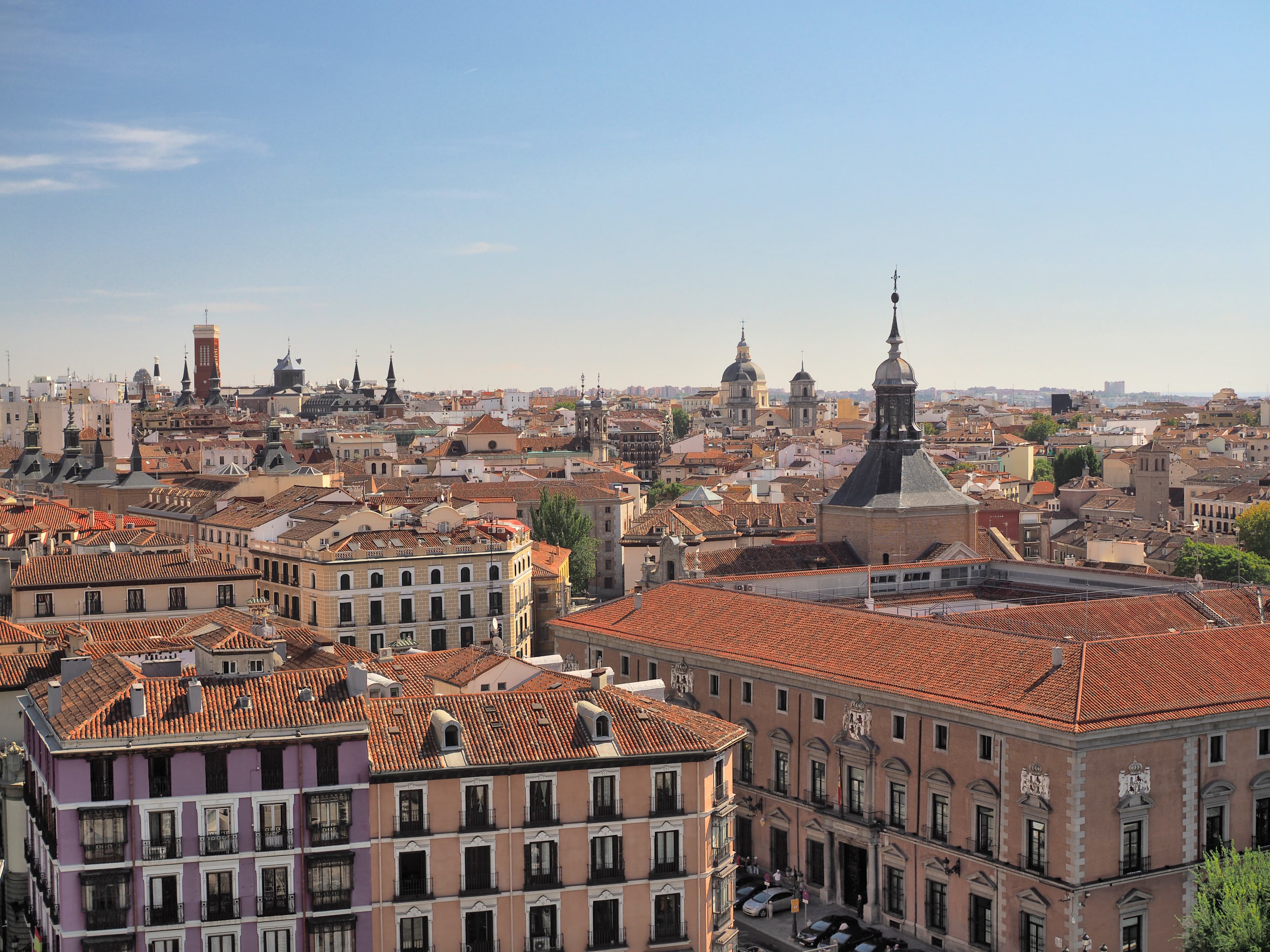

Spain
A plan for Madrid
Not a list of things to see in Madrid — a day-by-day plan somebody could actually follow, built from places we can point to a source for. Make your own in about a minute.
- 2 nights
- Couple
- Balanced pace
- Mid-range budget
Every place here was checked on 2026-10-27 or later, and each one says where it came from.
The plan, day by day
Day 1
09:30
You arrive
13:00
Mercado de San Fernando
Suggested because you chose food
- 1h
- Meal
14:30
Thyssen-Bornemisza Museum
Picked because you chose culture & museums + balanced energy
- 2h 30m
- Culture & museums
2h open
Nothing planned here. That was on purpose.
19:00
Casa Lucas
Suggested because you chose food
- 1h 30m
- Meal
20:30
Viva Madrid
Picked because you chose food and local experiences + balanced energy
- 1h 30m
- Food
Day 2
08:00
Café Ziryab (Tablao Flamenco)
Suggested because it fits a mid-range budget
- 45m
- Meal
45m open
Nothing planned here. That was on purpose.
09:30
Royal Academy of Fine Arts of San Fernando
Picked because you chose culture & museums + balanced energy
- 2h 30m
- Culture & museums
1h open
Nothing planned here. That was on purpose.
13:00
Casa Toni
Suggested because you chose food
- 1h
- Meal
14:30
Royal Botanic Garden of Madrid
Picked because you chose local experiences + balanced energy
- 2h 30m
- Local experiences
17:00
Madrid History Museum
Picked because you chose culture & museums and local experiences + balanced energy
- 2h 30m
- Culture & museums
19:30
La Casa del Abuelo
Suggested because you chose food
- 1h 30m
- Meal
21:00
Viva Chapata
Picked because you chose food and local experiences + balanced energy
- 1h 30m
- Food
Day 3
08:00
Museo del Jamón
Suggested because you chose food
- 45m
- Meal
45m open
Nothing planned here. That was on purpose.
09:30
Sorolla Museum
Picked because you chose culture & museums + balanced energy
- 2h 30m
- Culture & museums
1h open
Nothing planned here. That was on purpose.
13:00
Lamucca
Suggested because it fits a mid-range budget
- 1h
- Meal
14:30
You leave
Weather through the year
Monthly averages from NASA's 25-year climate record, day and night together.
Best months: May, June, August, and September
| January | Cold: 4°C, 38 mm |
|---|---|
| February | Cold: 5°C, 39 mm |
| March | Cold: 8°C, 48 mm |
| April | Mild, some rain: 11°C, 52 mm |
| May | Mild, some rain: 16°C, 43 mm |
| June | Mild and dry: 22°C, 22 mm |
| July | Warm and dry: 25°C, 9 mm |
| August | Warm and dry: 25°C, 14 mm |
| September | Mild and dry: 20°C, 24 mm |
| October | Mild, some rain: 14°C, 66 mm |
| November | Cold: 8°C, 54 mm |
| December | Cold: 4°C, 40 mm |
From the Wikivoyage guide
Quoted from the travel guide anyone can edit, as it read on the day we took it.
Understand
Madrid has over 3.4 million residents within the city limits and 7 million people live in the autonomous Community of Madrid region (as of 2025).
Location
Madrid is just northeast of the geographical centre of the Iberian Peninsula, in the middle of the Spanish central Castillian plateau (Meseta central), at an average altitude of 650 m (2,130 ft). Nearly all of the most famous tourist areas are in the centre of the city including Puerta del Sol, Plaza Mayor, Palacio Real, and Plaza de Colón. The major streets in Madrid include the Gran Via, Alcalá Street, and Paseo de la Castellana.
Climate
The climate of Madrid is continental, mainly dry and quite extreme at times. Madrid experiences a characteristically hot and dry summer, along with a fairly cold winter with frequent frosts during the night and occasional snowfalls. Spring and autumn are generally mild with the most rainfall concentrated in these seasons. Spring and autumn are definitely the best times to visit, especially the months of April, May, June, September and October. There is very little rainfall during summer and also less rainfall during winter. During winter, snow occurs sporadically; however, snow usually lasts only for a few days, but there is abundant snowfall in the adjacent mountain ranges nearby.
See
Individual listings can be found in Madrid's district articles
Madrid is one of the top addresses in the world for art, both contemporary and not-so-contemporary, with Goya's most famous works in the Prado, Picasso's Guernica in the Reina Sofía and countless other works in those two museums and the Thyssen-Bornemisza Museum. The Prado goes back to the royal art collection which - for a nation that was the world's leading superpower for two centuries - is of course quite impressive. The Reina Sofía was opened to house what the Prado "had no room for" with a dividing line based on era ultimately being drawn. Besides art, Madrid also boasts some impressive architecture courtesy of kings who had access to the wealth of two continents and no qualms in spending it for extravagant royal residences.
The following is a non-exclusive taste of what Madrid has to offer. Dive into the districts to find more!
1 Museum Triangle. This is Madrid's museum district, named for the three major art museums clustered along Paseo del Prado east of the old city: the Museo del Prado, one of the finest art museums in the world, the Thyssen-Bornemisza, a baron's collection of classical art, and the Reina Sofia, Madrid's modern art museum. However, a couple of smaller museums also occupy the neighbourhood which are well worth seeing as well.
2 Royal Palace. An enormous palace, one of the biggest in Europe, with scorching plains of concrete around it. Though it is the official residence of the King of Spain, the royal family does not actually reside here and it is generally used only for state ceremonies. The Royal Palace is considered to be one of the most emblematic and beautiful buildings in Madrid.
3 Plaza Mayor. Perhaps the best known plaza in Madrid, this impressive square is now one of the main stops on any tourist visit.
Do
Individual listings can be found in Madrid's district articles
Sports
Football: the men's national soccer team don't have a fixed stadium, but often play at Bernabéu and Metropolitano stadiums in Madrid. The best known clubs are Real Madrid and Atlético de Madrid, both based in the Northern Suburbs. They play in La Liga the top tier, and routinely qualify for European tournaments. Other teams include Rayo Vallecano in Vallecas and Getafe in the nearby suburbs, reached by Madrid Metro.
Basketball: Estudiantes and Real Madrid play at Palacio de los Deportes. Fuenlabrada, based in the Madrid suburb of the same name, play at Polideportivo Fernando Martín.
Rugby Union: the Spanish national XV play at Estadio Nacional Complutense on the university campus. Cisneros play there in División de Honor, the Spanish top tier. Alcobendas play near the airport, also in the top tier.
Handball is also played in Madrid but no longer in the top tier, making BM Alcobendas the highest ranked team.
Cultural venues
Flamenco shows can be seen in numerous venues in Sol-Letras-Lavapiés, Moncloa and La Latina - Austrias.
Opera houses are spread through the city centre. In addition, several orchestras don't have a stable/home venue to play in:
Orquesta Nacional de España (Spanish National Orchestra), ☏ +34 902 224 949 (tickets), fax: +34 915 632 907. Tickets are sold at ticket offices in the Auditorio Nacional de Música, Teatro María Guerrero, Teatro de la Zarzuela, Teatro de la Comedia, and Teatro Valle-Inclán. (updated Feb 2017)
Orquesta Sinfónica de Madrid (Madrid Symphony Orchestra), C/ Barquillo, 8, ☏ +34 915 321 503, fax: +34 915 325 364, osm@osm.es. (updated Feb 2017)
Orquesta de la Comunidad de Madrid (Community of Madrid Orchestra), C/ Mar Caspio, 4, ☏ +34 913 820 680, fax: +34 917 643 236, info@orcam.org. (updated Feb 2017)
Banda Sinfónica Municipal de Madrid, ☏ +34 915 267 147, +34 915 267 158 (M-F 08:00-15:00), bsinfonica@madrid.es. Performs in El Retiro Park in the summer. Tickets can be purchased at the Teatro Monumental (listed above), at the tourist information centre in Plaza Mayor, and online. €5 (adults), €3 (seniors/youth/children).
Eat
Individual listings can be found in Madrid's district articles
Cuisine
Dishes popular throughout Spain are also widely served in Madrid.
In addition, Madrid has a number of typical regional dishes:
Gallinejas and entresijos – Lamb chitterlings fried in its fat. Very traditional and typical from Madrid city.
Callos a la madrileña – A hot pot of spicy beef tripe similar to those found in Turkey and the Balkans.
Cocido madrileño – Chickpea stew with meat and vegetables. The particularity of this stew is the way it is served. The soup, chickpeas and meat are served and eaten separately.
Oreja de cerdo – Pigs ears, fried in garlic. This popular dish is widely eaten throughout central Spain.
Sopa de ajo – Garlic soup is a rich and oily soup which generally includes paprika, grated Spanish ham, fried bread and a poached egg. A variation of this soup is known as sopa castellana.
Sobrino de Botín is the oldest restaurant in the world, continously running from 1725.
It is ironic that Madrid, in the centre of Spain, has higher quality seafood than many coastal regions. This quality comes at a price, and most Spaniards only occasionally shell out for a mariscada or seafood feast. Experiencing Madrid's seafood may be, for the visitor, an experience which will be worth the cost.
Fresh meat and meat products (jamón ibérico, morcilla, chorizo etc.) are of generally a very high quality in Madrid.
Restaurants
Many of the restaurants and cervecerías in the Sol and Plaza Mayor area have generic poster board advertisements on the sidewalks with pictures advertising various paella dishes. These paellas are usually of bad quality and should be avoided. If you are looking for good, authentic Spanish paella, it is usually best to find a more expensive, 'sit-down' type of restaurant that offers a variety of paella dishes.
A much better option is the La Latina neighbourhood just south of Plaza Mayor, especially along Calle Cava Baja. There are also a number of deli-like shops along Calle Arenal that offer food to go (para llevar).
Drink
Individual listings can be found in Madrid's district articles
Tapas bars
In the tapas bars, you should get free food with your drinks. The highest concentration of tapas bars is in La Latina and around Plaza Santa Ana in the barrio de las Letras, but you will find them all over the city, including Malasaña and Chueca as well as the western districts, where there are probably less overrun by tourists.
1 Calle Cava Baja (Metro: La Latina). This narrow street in La Latina is by far the most famous and popular place for tapas. (updated Jul 2017)
Cafés
Cafés and confectioneries can be found all over the city, but the highest concentration can be found around Puerta del Sol, barrio de las Austrias and Lavapiés, in the Old town and in Malasaña and Chueca. A very popular and typical local sweet that is sold both in cafés and by street vendors is Churros. These fried-dough pastries are distantly related to doughnuts, but have a more elongated shape and are a lot crispier. They are usually drizzled with sugar or chocolate.
Bars
Nightlife starts later in Madrid, with most people heading to the bars at 22:00-23:00. One of the best options to enjoy the nightlife is in the popular quarter Barrio de las Letras, especially on its main street, Calle Huertas, and other nearby streets. A great choice of bars is also available in the more traditional La Latina area as well as in the younger and alternative-flavoured Malasaña and Chueca districts.
Draught beer (cerveza) is usually ordered in cañas (200 ml), but may also come in dobles (400 ml) or jarras (mugs).
Clubs
Clubs generally open at about midnight. If you go in any earlier you may find it quite empty. Many clubs do not close until 06:00, and even then everyone is still full of life.
Nightlife areas
Alonso Martínez - Many pubs and small discos. Until about 03:00, a very young crowd, and if you′re around here before midnight, and over the age of 20, prepare to feel positively old. Most places close around 03:00, then people move to clubs in Gran Vía or Tribunal to continue partying.
Get around
By public transit
Madrid proudly sports one of the best public transportation networks in the world and the second largest metro network in Europe after London's. Buses and subways work with the same tickets, and operate within the integrated transit network of 6 CRTM (Plaza del Descubridor Diego de Ordás 3, M-F 08:00-20:00). With that said, be aware that Madrid's transportation infrastructure can appear complicated and daunting at first, so take extra time to know where to go and how to get there because it will not be as simple as in other European cities or what your map app is telling you.
A single ticket for Zone A costs €1.50 (max. 5 stations), but the cost goes up to €2 if you go more than 10 stations, and can be purchased from metro ticket vending machines or directly from the bus driver on entry. A ten-trip ticket Metrobús (10 viajes) costs €12.20 (€6.10 until July 2025) for Zone A (no transfers from one mode of transportation to another allowed); these tickets can be shared with other travellers. Children under the age of 4 may travel without a ticket, and children under 11 receive a 50% discount. Tickets can be purchased at metro stations, newsstands, and tobacconists. There are no longer any paper tickets in use in Madrid so, if you do not already have one, you will need to purchase a Multi Card which is a reloadable, contactless card for €2.50 (Jan 2025). It is an anonymous card so can be used for multiple people by passing back the card to the next person in your group. These card support most ticket types except season & concessionary. The Multi Card does not support local rail travel except the tourist tickets.
Stay safe
Madrid is a very safe city, with some of the lowest crime rates among Europe's largest cities. The police is highly visible, and the city is equipped with cameras. There are always people in the streets, even at night time, so you can walk across the city generally without fear. Travellers who remain aware of their surroundings, and keep an eye on their belongings, should have little to worry about. For police, medical, or fire emergencies, simply call 112. Operators usually speak English.
Neighbourhoods and suburbs
As with any place on earth, there are parts of Madrid and its metropolitan area that are less appealing and, consequently, less safe than others.
The Malasaña area, located north of Gran Via, is a lively bohemian neighbourhood, but it is also known to attract seedy crowds late at night.
Some districts in the south (Carabanchel, Puente De Vallecas, Villaverde) and east (Ciudad Lineal) are marginally less well-off than the rest of Madrid, and they can give off an uneasy vibe to those unfamiliar with these places. They are safer than many "bad neighbourhoods" in other western European countries, but be on your guard at night. Most places within reach of metro stations are safe.
Though - or rather because - it is the wealthiest district in Madrid, Salamanca has its share of pickpockets, namely in and around the Avenida de América station.
Several of Madrid's suburbs to the south (Móstoles, Alcorcón, Parla) and east (Alcalá de Henares) have fairly undeserved reputations to seediness. In reality, they are mostly safe, though it is always wise to stick to well-lit and crowded streets.
The areas surrounding the Chamartin train station in the north have started seeing homeless and refugee encampments. Squatters inhabiting these encampments rarely interact with strangers and passer-by, but watch yourself at night.
Practical facts for Spain
Taken from open data. Rules and numbers change, so check locally before you rely on them.
- Currency
- Euro (EUR)
- Languages
- European Spanish, Catalan, Galician, Basque, and 1 more
- Plugs and power
- Types C and F, 230 V at 50 Hz
- Traffic drives
- On the right
- Country calling code
- +34
- Time zones
- Africa/Ceuta, Atlantic/Canary, and Europe/Madrid
Official travel advice
Quoted from each government as published, with the date they last changed it. We do not add a verdict of our own.
UK Foreign, Commonwealth & Development Office
- No areas listed that it advises against travelling to
Read the full adviceHigh speed rail collision in Toledo
On 28 October, two high-speed trains collided between the towns of Mora and Orgaz, in the province of Toledo.
Significant disruption to rail services is expected.
If you need assistance or information about affected passengers, contact RENFE on +34 900 10 10 20.
If you are a British national and you or a family member have been affected by the accident and need consular support, call the nearest British embassy or consulate on +34 91 714 6300.
US Department of State
Level 2 of 4: Exercise increased caution
Read the full adviceExercise increased caution in Spain due to terrorism and unrest.
Terrorist groups continue plotting possible attacks in Spain. Terrorists may attack with little or no warning and target:
• Tourist locations
• Transportation centers like airports and train stations
• Markets and shopping malls
• Local government facilities
• Hotels, clubs, and restaurants
• Places of worship and educational institutions
• Parks
• Major sporting and cultural events
Demonstrations are common. They may take place in response to political or economic issues, on politically significant holidays, and during international events.
Reconsider travel to Ceuta due to unrest.
Entry and visas
Entry rules depend on your passport and change without notice. Check the official pages before you book.
Sources