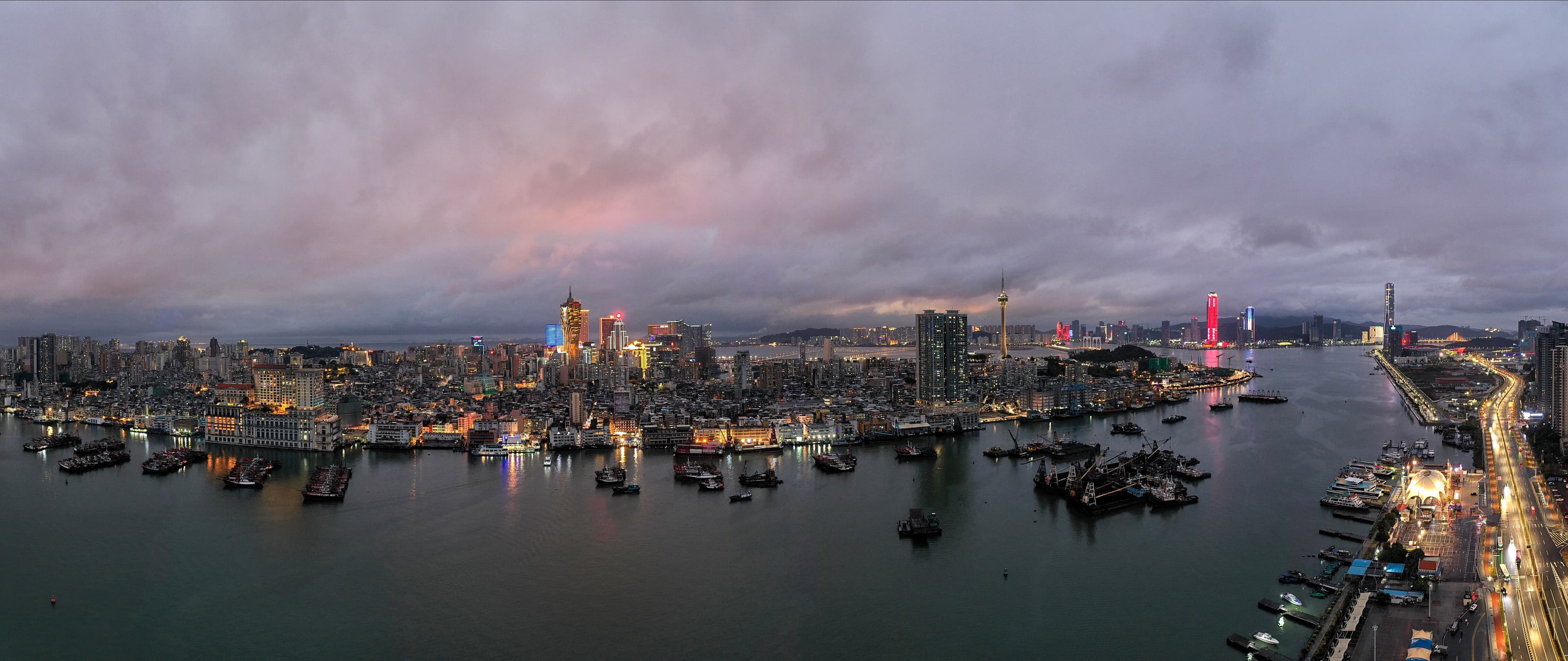

Macao SAR China
A plan for Macau
Not a list of things to see in Macau — a day-by-day plan somebody could actually follow, built from places we can point to a source for. Make your own in about a minute.
- 2 nights
- Couple
- Balanced pace
- Mid-range budget
Every place here was checked on 2026-10-27 or later, and each one says where it came from.
The plan, day by day
Day 1
09:30
You arrive
13:00
台山街市市政綜合大樓 Complexo Municipal do Mercado de Tamagnini Barbosa
Suggested because you chose food
- 1h
- Meal
14:30
Museum of Macau
Picked because you chose culture & museums + balanced energy
- 2h 30m
- Culture & museums
2h open
Nothing planned here. That was on purpose.
19:00
Clube militar
Suggested because you chose food
- 1h 30m
- Meal
20:30
Macao Cultural Centre
Picked because you chose culture & museums + balanced energy
- 2h 30m
- Culture & museums
Day 2
08:00
Lord Stow's Bakery
Suggested because you chose food
- 45m
- Meal
45m open
Nothing planned here. That was on purpose.
09:30
Macau Maritime Museum
Picked because you chose culture & museums + balanced energy
- 2h 30m
- Culture & museums
1h open
Nothing planned here. That was on purpose.
13:00
營地街市市政綜合大樓 Complexo Municipal de Sao Domingos
Suggested because you chose food
- 1h
- Meal
14:30
Communications Museum
Picked because you chose culture & museums + balanced energy
- 2h 30m
- Culture & museums
17:00
Taipa Houses–Museum
Picked because you chose culture & museums + balanced energy
- 2h 30m
- Culture & museums
19:30
瑪嘉烈蛋撻店 Cafe e Nata Margaret's
Suggested because you chose food
- 1h 30m
- Meal
21:00
The Roadhouse Macau
Picked because you chose food and local experiences + balanced energy
- 1h 30m
- Food
Day 3
08:00
Brew Lab
Suggested because it fits a mid-range budget
- 45m
- Meal
45m open
Nothing planned here. That was on purpose.
09:30
Museum of Taipa and Coloane History
Picked because you chose culture & museums + balanced energy
- 2h 30m
- Culture & museums
1h open
Nothing planned here. That was on purpose.
13:00
雀仔園街市 Mercado da Horta da Mitra
Suggested because you chose food
- 1h
- Meal
14:30
You leave
Weather through the year
Monthly averages from NASA's 25-year climate record, day and night together.
Best months: January, February, November, and December
| January | Mild, some rain: 17°C, 40 mm |
|---|---|
| February | Mild and dry: 18°C, 31 mm |
| March | Mild, some rain: 20°C, 85 mm |
| April | Rainy: 23°C, 112 mm |
| May | Wet season: 26°C, 247 mm |
| June | Wet season: 28°C, 294 mm |
| July | Wet season: 29°C, 216 mm |
| August | Wet season: 29°C, 253 mm |
| September | Rainy: 28°C, 195 mm |
| October | Mild, some rain: 26°C, 69 mm |
| November | Mild and dry: 23°C, 32 mm |
| December | Mild and dry: 19°C, 26 mm |
From the Wikivoyage guide
Quoted from the travel guide anyone can edit, as it read on the day we took it.
Understand
As the first and last European colony in East Asia, Macau has more visible colonial history than Hong Kong. The buildings and cobblestone or patterned brick streets in many parts of the city, particularly the center of the old city and Coloane, look much like somewhere in Mediterranean Europe. However, the people and the Chinese-language signage indicate Asia. The Portuguese and Macanese population continues to maintain a presence, but most of the population is ethnically Chinese.
Like neighbouring Hong Kong, Macau operates under a "One Country, Two Systems" principle, retaining most laws and governing structures from colonial times. Although part of China, Macau has its own border control, currency, legal system and postal service, so for most tourists it feels like visiting a different country.
Macau is unique in many ways, but it also has many close cultural and economic ties with Hong Kong and the Pearl River Delta region across the border.
Geography
Besides the city (Macau/Peninsula), Macau includes the islands of Taipa and Coloane, which are connected to the peninsula by bridges and to each other by a causeway. The area between the two islands has been reclaimed from the sea and built up into the Cotai Strip; that has become an area of intense development with many new casinos and hotels.
The mainland Chinese city of Zhuhai borders Macau to the north and west, and the border crossing carries heavy two-way vehicular and pedestrian traffic. The Zhuhai Special Economic Zone extends south to Hengqin Island, an area west of Taipa, Cotai and Coloane; the Lotus Bridge from Cotai connects to that area.
Macau is subtropical with hot summers and mild winters. Although winter is generally mild, there are occasional cold fronts which could make temperatures drop 10°C (18°F) in a day. Air conditioning is widespread.
See
Individual listings can be found in Macau's district articles
Although best known for gambling, Macau is extremely rich in attractions and oozing with atmosphere, thanks to hundreds of years of fusion between European and Chinese cultures.
Macau is a fascinating place to just walk around as the place is packed with churches, temples, fortresses and other old buildings bearing an interesting mix of Portuguese and Chinese characteristics. Besides buildings, there are also hundreds of narrow alleyways forming a maze in the old part of Macau where the people of Macau carry out businesses and work. If the sheer density of humans gets to you, take a break and enjoy several pretty gardens or head south to the islands.
One of the interesting things to see in Macau is a statue of the Bodhisatta Avalokitesvara (known as 觀音 kwoon yam in Cantonese) next to the sea near the Sands Casino and MGM Grand at the end of Dr. Carlos d' Assumpção Park. Despite being a Chinese deity, the statue is distinctly European in design and resembles the statues of the Virgin Mary you can find in Europe.
And if history is not your thing, there is the Macau Tower of awesome views and adventure sports, or Fisherman's Wharf to enjoy some theme-park activities and shopping.
You'll find most of the attractions in Macau Peninsula, but Taipa and Coloane, each with a pretty village, also draw hordes of visitors. Visit the Cotai reclaimed land area to see its transformation into the "Las Vegas Strip of the East". The Venetian is the most famous with its Venice-styled shopping mall with canals running through, and is also the largest casino in the world. The City of Dreams, not much smaller, high end fashion shops, three hotels and the world's most expensive theatre show (see below).
Heritage
A large section of Macau Peninsula has been designated a UNESCO World Heritage site and 25 buildings and sites within the area have been deemed to have cultural and historic significance. One of the best ways to cover the sights is to do the Macau Heritage Walk circuit. The heritage buildings, the Sao Paulo Cathedral, the Fort and the Macau Museum are adjacent to each other and can be conveniently seen individually even if one cannot catch the Heritage walk timing.
Do
Individual listings can be found in Macau's district articles
Casinos
Gambling is Macau's biggest industry and busloads arrive daily from mainland China to try their luck. In addition, many Hong Kongers arrive on weekends with the same aim. For decades, the Casino Lisboa was the largest and most famous, a landmark well-known to people outside Macau, but many more casinos have sprung up. Nevertheless, the original Casino Lisboa is still worth a visit as its halls contain many original antiques on display from the private collection of gambling tycoon Stanley Ho.
The old casino area is along the waterfront on the southern side of Macau Peninsula. North of the Lisboa is a strip with many smaller casinos, a number of hotels and bars, and quite a few restaurants. This can be one of the more interesting areas of Macau; among other things it has quite a good Indian restaurant and several Portuguese ones. However, parts of it are also fairly sleazy, with lots of sex workers and touts, so some caution is in order. New casinos have also opened in the area called NAPE south of Avenida de Amizade, including Wynn Macau and Sands Macau.
The old area has been overtaken by development on the Cotai Strip, which has become "The Las Vegas Strip of the East". The biggest casino in the world, Venetian Macao, opened its doors in August 2007, the not-much-smaller City of Dreams followed in 2009, and many have since followed. There are also several casinos on Taipa, including the Altira Macau (formerly Crown Macau).
There are ATMs available at any casino, and many other forex facilities to change your money. Gamblers are required to be at least 21 years of age to be allowed to play. Interestingly, local civil servants are not allowed to enter the casinos with the exception of the first three days of the Chinese new year.
For the full listing of casinos, see the respective district pages.
Shows
Macau has an increasing variety of performances.
The City of Dreams in Cotai hosts The House of Dancing Water, the world's most expensive theatre show, costing US$250 million to produce. The stage holds five Olympic swimming pools worth of water, and ushers give the front few rows of the audience towels.
Eat
Individual listings can be found in Macau's district articles
Macau is famous for excellent restaurants, unique cuisine and mellow bars. Above all, the city is famous for two cuisines: Portuguese and Macanese.
Portuguese food (cozinha portuguesa), brought in by its Portuguese colonizers, is hearty, salty, straightforward fare. While many restaurants claim to serve the stuff, fully authentic fare is mostly limited to a few high-end restaurants, especially the cluster at the southwestern tip of the Peninsula. Typical Portuguese dishes include:
bacalhau (salted cod), traditionally served with potatoes and veggies
caldo verde, a soup of potato, chopped kale and chouriço sausage
feijoada (kidney-bean stew), a Brazilian staple common in Macau as well
pastéis de nata (egg tarts), crispy and flaky on the outside and soft and sweet on the inside
serradura ("sawdust" pudding), a dessert made with whipped cream topped with crumbled biscuits
Macanese food (comida de Macau) was created when Portuguese and Chinese influences were mixed together with spices brought from Africa, India and Southeast Asia by traders, and many restaurants advertising "Portuguese" food in fact serve up mostly Macanese dishes. Seafood and barbecue specialist Fernando's on Coloane's Hac Sa Beach is probably the best-known Macanese restaurant.
almond cookies. Dry Chinese-style cookies flavoured with almond. Macau's top souvenir, they're compact, durable and hence sold pretty much everywhere.
galinha à africana (African-style chicken). Barbecued chicken coated in spicy piri-piri sauce.
galinha à portuguesa (Portuguese-style chicken). Chicken in a coconutty curry; despite the name, this is not a Portuguese dish at all, but a purely Macanese invention.
pato de cabidela (bloody duck), a stew of duck with blood and herbs, served with rice; sounds and looks somewhat scary, but it's excellent when well done. Based on the Portuguese dish cabidela, but the Macanese version uses duck instead of chicken.
minchi, a dish made of minced pork with potatoes and onions that has been seasoned in various sauces and stir fried.
Drink
Individual listings can be found in Macau's district articles
Similar to neighbouring Hong Kong, the legal drinking age in Macau is 18. Alcohol vendors have the power to demand identity documents to prove your age.
Reasonably priced Portuguese wine is widely available. A glass in a restaurant is around MOP$20, while bottles start from under MOP$100, and a crisp glass of vinho verde ("green wine", but actually just a young white) goes very well with salty Macanese food. As elsewhere in China, though, locals tend to prefer cognacs and whisky. Macau Beer is passable and widely available, as is the Filipino brand San Miguel which has a brewery in Hong Kong. There is also a wine museum in which you can have the opportunity to taste over 50 varieties of wine.
There is a buzzing nightlife in Macau. There are a variety of bars and clubs along the Avenida Sun Yat Sen close to the Kum Iam Statue and the Cultural Centre where you can have a good night out. Locals, especially younger people, prefer to meet up with their friends in western style cafes or places that serve 'bubble tea', tea served with tapioca balls and often fruit-flavoured that can be served either hot or cold. The shops in the town centre (near Senado Square) are often open until late at night and are often crowded. The casinos have also become a big hit for entertainment, offering performances of international level (advance booking advised) and comprehensive shopping malls for those less interested in trying their luck with the machines. For ladies who want to pamper themselves after a shopping spree, there are spas available in almost all respectable hotels. These are different from "saunas", which are thinly disguised brothels (prostitution is legal in Macau), but these can be easily distinguished by their shop appearance.
Get around
Unlike in mainland China, Google Maps is not blocked and can be used in Macau. Owing to privacy concerns, Macau's street views in Google Maps have not been updated since they were taken in 2008, so it's very outdated.
On foot
This is arguably the best way to get around the Macau Peninsula, which is small, compact and full of things to discover. Many roads are also one way so there is quite a chance that it won't be slower than to take road transport which may need to make a long loop to reach the destination. Most streets have a pedestrian sidewalk making walking easy, although you will have to fight the crowds going in all directions. Cars are more mindful of pedestrians than in mainland China, but traffic rules are still not very well adhered to. Moreover, during the annual Grand Prix during October to November, barriers are installed on the racetracks, which impair pedestrian visibility significantly. You should look both ways before crossing and be careful of large vehicles in narrow roadways.
In and around the Senado Square, you can see the characteristic Portuguese pavement, consisting of hand-laid limestone pieces made into simple designs, something that will surely catch your attention. Macau is also hilly, be prepared to struggle up and down steep lanes and steps.
Especially in the old city, the city streets do not seem to run in any particular pattern and you'll most likely get lost at some stage, which is part of the fun of exploring Macau.
In the Cotai strip, distances are large but sidewalks are pretty consistently present. It is now fairly easy to walk between the Galaxy, Venetian and City Dreams casinos, and it is easy to walk between Galaxy and Taipa Village. It is more interesting to take a walk after dark to take a glimpse of the casinos' illuminated façades. Many of the hotels are connected to each other by indoor walkways lined with expensive shops.
Stay safe
Law enforcement
Similar to Portugal and other ex-Portuguese colonies, Macau has 2 distinct police forces, namely the Public Security Police Force (Chinese: 治安警察局/治安警, Portuguese: Corpo de Polícia de Segurança Pública, CPSP) and Judiciary Police (Chinese: 司法警察局/司警, Portuguese: Polícia Judiciária, PJ).
In rare major operations, you may also observe plainclothes agents from the Unified Police Service (Chinese: 警察總局, Portuguese: Serviços de Polícia Unitários), the agency overseeing the previous two agencies. The Customs Service (Chinese: 海關, Portuguese: Serviços de Alfândega) patrols the territorial sea of Macau and performs other customs duties.
The Public Security Police is tasked with crime prevention and deterrence, traffic control, and immigration duties. Public Security Police officers wear light blue uniforms, and have badges on their uniform. Their police vehicles are painted in dark-blue. In an emergency, particularly imminent crimes against persons, they can be contacted by 999, the unified emergency number for police, fire services and medical emergencies. If you are deaf or have speech impairment, you can report your emergencies by SMS to ☏ 6330-9999 (domestic)Country code missing, which requires pre-registration at the Macau Deaf Association, Macau Association of the Hearing Impaired, or Social Welfare Bureau.
Meanwhile, the Judiciary Police deals with most crimes, though they have increased presence in prominent public spaces. Judiciary Police officers are plain clothed, and should wear a vest showing their police identity. In an emergency, they can be reached by 993. Though the Public Security Police will also refer cases to the Judiciary Police, it is better to directly contact the Judiciary Police in case of crimes.
Respect
Social etiquette in Macau is very similar to neighbouring Hong Kong.
People in Macau are generally friendly to foreigners (given the fact that Macau had hundreds of years of Portuguese colonial rule, the locals, even the older population are used to living side by side with Westerners). However, do not assume the locals speak English (or Portuguese); a few essential Cantonese phrases are always helpful.
Politics is in general not as sensitive an issue in Macau as it is in Hong Kong; there is no active Macau independence movement, and most residents have welcomed the "One Country, Two Systems" arrangement. Similarly, the use of Mandarin is not as politically charged in Macau as it is in Hong Kong. Unlike in Hong Kong, locals in Macau have largely fully embraced the "Chinese" identity.
Binge-drinking or drunken behavior is not tolerated in Macau.
Business
Just as in Hong Kong, people meeting for the first time greet each other with a firm handshake. When giving and receiving business cards, be sure to do so with both hands and a slight dip of the head. Giving or receiving a business card with only one hand is regarded to be very rude.
Religion
Contemporary Macau is largely secular in daily life, with religion playing almost no role in people's work or political affiliations. That said, most of the ethnic Chinese majority still follows a mix of Buddhism and traditional Chinese folk religions to some extent. When visiting Chinese temples, basic respect should be shown. For instance, you should not point at the statues of deities using your index finger as it is considered to be very rude; use your thumb or an up-facing open palm instead. However, taking photos is usually allowed and you don't need to ask for permission as long as there isn't a no-photography sign posted.
As a legacy of Portuguese rule, Roman Catholicism is practised by a significant minority, including most of the ethnic Macanese community, and there are numerous churches catering to them. The Roman Catholic church is allowed to operate freely in Macau.
The Falun Gong religion is allowed in Macau, and its followers occasionally stage protests against the Chinese government.
Practical facts for Macao SAR China
Taken from open data. Rules and numbers change, so check locally before you rely on them.
- Currency
- Macanese Pataca (MOP)
- Languages
- Chinese, Chinese (Macao SAR China), and Portuguese
- Plugs and power
- Types D, F, and G, 220 V at 50 Hz
- Traffic drives
- On the left
- Emergency numbers
- Any emergency999
- Country calling code
- +853
- Time zone
- Asia/Macau
Official travel advice
Quoted from each government as published, with the date they last changed it. We do not add a verdict of our own.
UK Foreign, Commonwealth & Development Office
- No areas listed that it advises against travelling to
Read the full adviceThis travel advice covers the Macao Special Administrative Region (SAR). For mainland China, see travel advice for China.
Dual Chinese-British nationality
Macao does not recognise dual nationality. If you have both British and Chinese nationality, the local authorities may treat you as a Chinese citizen, even if you enter Macao on a full “British citizen” passport. If this is the case, the British Consulate-General may not be able to offer you consular help.
If you have formally renounced Chinese citizenship, carry evidence that you have done so.
See guidance on nationality in China.
US Department of State
Level 3 of 4: Reconsider travel
Read the full adviceReconsider travel to Macau SAR due to a limited ability to provide emergency consular services and arbitrary enforcement of local laws.
Reconsider travel to Macau SAR due to a limited ability to provide emergency consular services and arbitrary enforcement of local laws.
• Reconsider travel due to limited ability for the U.S. government to provide emergency consular services. There are travel restrictions imposed on U.S. diplomatic personnel.
• Reconsider travel due to arbitrary enforcement of local laws.
• U.S. government employees must follow the policies established by their Department or Agency regarding official or personal travel to China, including to Macau SAR.
Entry and visas
Entry rules depend on your passport and change without notice. Check the official pages before you book.
Sources