
South Africa
A plan for Johannesburg
Not a list of things to see in Johannesburg — a day-by-day plan somebody could actually follow, built from places we can point to a source for. Make your own in about a minute.
- 2 nights
- Couple
- Balanced pace
- Mid-range budget
Every place here was checked on 2026-10-27 or later, and each one says where it came from.
The plan, day by day
Day 1
09:30
You arrive
13:00
Kwa Mai-Mai
Suggested because you chose food
- 1h
- Meal
14:30
Mandela House
Picked because you chose culture & museums + balanced energy
- 2h 30m
- Culture & museums
2h open
Nothing planned here. That was on purpose.
19:00
Radium Beer Hall
Suggested because you chose food
- 1h 30m
- Meal
20:30
Market Theatre
Picked because you chose culture & museums + balanced energy
- 2h 30m
- Culture & museums
Day 2
08:00
tashas
Suggested because it fits a mid-range budget
- 45m
- Meal
45m open
Nothing planned here. That was on purpose.
09:30
Apartheid Museum
Picked because you chose culture & museums + balanced energy
- 2h 30m
- Culture & museums
1h open
Nothing planned here. That was on purpose.
13:00
Kitchener's Carvery Bar
Suggested because you chose food
- 1h
- Meal
14:30
Liliesleaf Farm
Picked because you chose culture & museums and local experiences + balanced energy
- 2h 30m
- Culture & museums
17:00
Fietas Museum
Picked because you chose culture & museums and local experiences + balanced energy
- 2h 30m
- Culture & museums
19:30
Mangrove
Suggested because you chose food
- 1h 30m
- Meal
21:00
Tin Town Theatre
Picked because you chose culture & museums + balanced energy
- 2h 30m
- Culture & museums
Day 3
08:00
Tashas
Suggested because it fits a mid-range budget
- 45m
- Meal
45m open
Nothing planned here. That was on purpose.
09:30
Hector Pieterson Museum
Picked because you chose culture & museums + balanced energy
- 2h 30m
- Culture & museums
1h open
Nothing planned here. That was on purpose.
13:00
Mexican Fresh
Suggested because you chose food
- 1h
- Meal
14:30
You leave
Weather through the year
Monthly averages from NASA's 25-year climate record, day and night together.
Best months: March, April, September, and October
| January | Rainy: 22°C, 123 mm |
|---|---|
| February | Mild, some rain: 21°C, 82 mm |
| March | Mild, some rain: 20°C, 73 mm |
| April | Mild, some rain: 17°C, 43 mm |
| May | Cool and dry: 13°C, 16 mm |
| June | Cold: 10°C, 7 mm |
| July | Cold: 10°C, 3 mm |
| August | Cool and dry: 13°C, 7 mm |
| September | Mild and dry: 17°C, 16 mm |
| October | Mild, some rain: 20°C, 57 mm |
| November | Mild, some rain: 21°C, 89 mm |
| December | Rainy: 22°C, 127 mm |
From the Wikivoyage guide
Quoted from the travel guide anyone can edit, as it read on the day we took it.
Understand
Johannesburg has a population of about 5.6 million people in the urban area (2023), half of whom live in Soweto and adjacent suburbs. Three quarters of the population is formed by South Africa's black residents who mostly live in Soweto, while white residents amount to about 12% (2019). The remaining 11% are of other descent, including Africa's largest ethnic Chinese community. The city is home to two Chinatowns; the original one on Commissioner Street has shrunk dramatically since its heyday, but still has a few shops and business run by the small community of South African Chinese, while a newer and larger Chinatown in the suburb of Cyrildene is largely populated by immigrants and expatriates from China. Unlike other South African cities, no language group dominates, although English is the established lingua franca.
The city is the economic hub of South Africa, and to some extent, the rest of Africa. Yet the city's wealth is unequally distributed among its inhabitants, causing the city to have living conditions varying from first world to third world conditions. The contrast between rich and poor has led to one of the highest crime rates in the world. The more affluent tend to live in houses with high security by western standards, whilst the less affluent live in less desirable housing conditions. That said, crime rarely deters from daily life, especially for visitors who have little reason to visit the city's rough areas. Many South Africans choose to live here over other, safer parts of the country.
See
Inner City
The poor reputation of the Central Business District (CBD) is no longer deserved. There are numerous galleries and art spaces popping up across the CBD. The city centre is the most-visited part of Johannesburg for African tourists, particularly the traders who come to shop at Johannesburg's wholesale outlets.
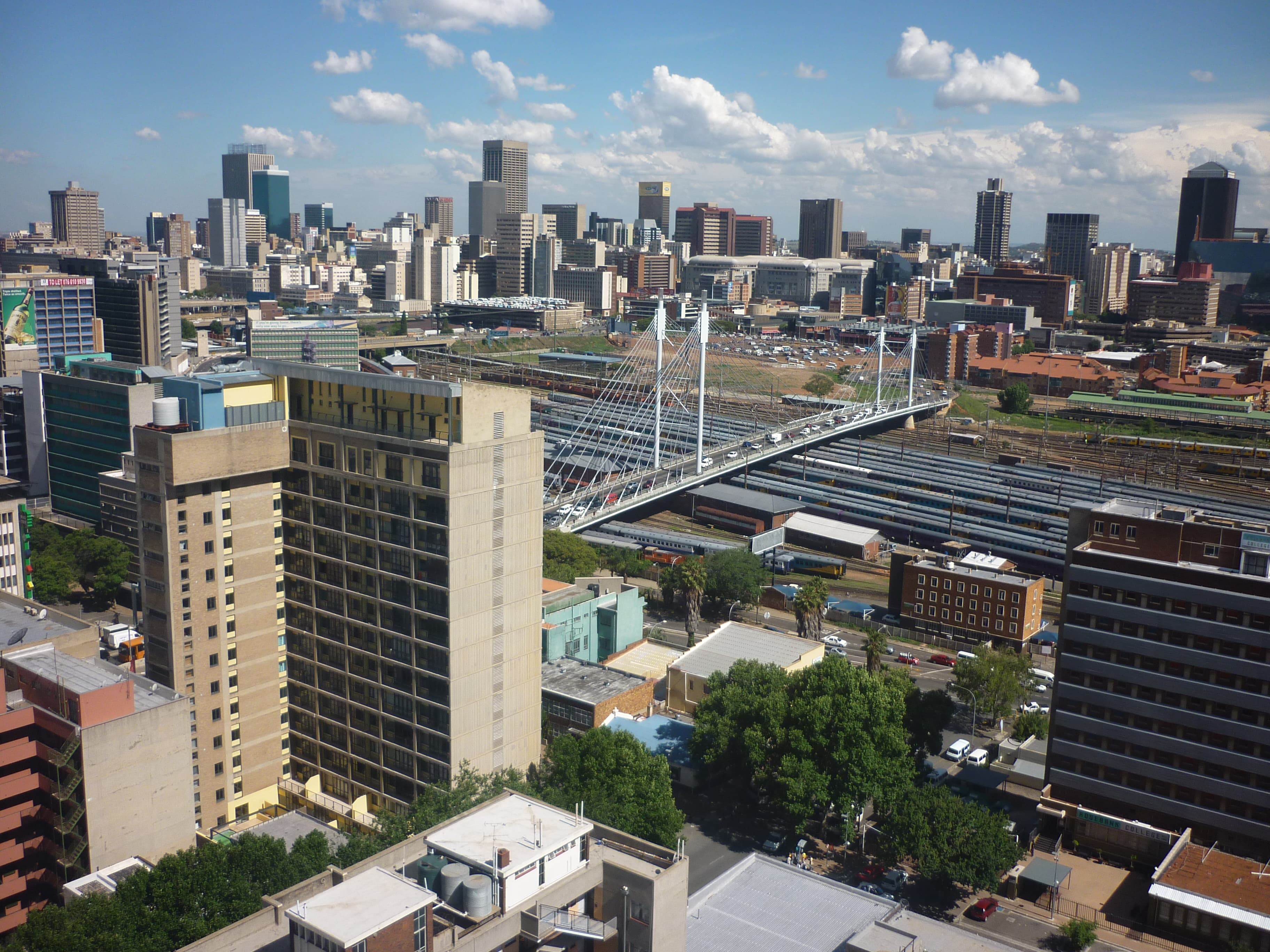
Newtown and the Market Theatre area (the city's cultural precinct) is now easily accessible from the highway and Mandela Bridge and very fun; here you will find live music venues and bars too.
Braamfontein, the university area, has a great Saturday market, lively night life, is very artsy. By day there's nothing here.
On the east side of the city, Main Street Life, Maboneng Precinct and Arts on Main (especially the Sunday market and The Bioscope independent cinema). The Maboneng area has 24-hr security so you can freely walk around the streets, just be sure not to stray away too far. Troyeville has a fantastic restaurant at the Troyeville Hotel, an art centre and all the main sport stadiums (football, tennis, athletics, rugby).
On the west side, Fordsburg is the formerly-Indian now known as “little Somalia” and “ Ethiopia Town” part of central Joburg and has some Indian and Pakistani restaurants as well as African street food, shops and markets. Good food is to be found in this neighbourhood, which, by Johannesburg's standards, shows signs of street life in the evenings, and more so on Friday and Saturday. Most places are halal, and so no alcohol is served. The Oriental Plaza shopping mall is here and has good bargains.
In the centre of town, between Jeppe St and Bree Street at Delvers Street, look up and see the Amharic script which denotes that you are in the Ethiopian/Somali part of town. There are Ethiopian restaurants and coffee shops in the Africa Mall and Johannesburg Mall. Best to arrive before 14:00.
To the north east, Yeoville is known as Le Petit Kinshasa and is home to many of the Francophone African diaspora in Johannesburg. Lots of Cameroonian restaurants and Congolese bars.
Do
City tours
There are several operators of tours in Johannesburg, with a broad range of options. They can be a good way to get around the city and learn about its history and features. You can also do guided tours from Johannesburg to a wide range of nearby locations.
Due to Johannesburg's reputation for crime, there are also providers who essentially offer an escort service around various tourist sites with hotel pick ups and drop offs. Do your research before booking these, as they can be unnecessary: for instance, you do not need an escort or guide to visit the Apartheid Museum (a modern museum located in a highly secure location), but many providers offer this.
City Sightseeing, in the pedestrian mall at the "Zone Shopping center" in Oxford road, Rosebank (next to Hamley's Toys with the main bus stop nearby). Its red buses operate in Johannesburg. A very safe and convenient way to see the inner city. Hop-on hop-off city tour R299, plus Soweto tour R679. (updated Dec 2024)
Dlala Nje. Offers well-regarded tours of the inner city of Johannesburg, and often recommended as the best way to visit Hillbrow. The company is located in the Ponte Tower and also offers tours of this building, which has a highly unusual history. Around R480 for adults and R380 for children and pensioners. (updated Oct 2026)
Johannesburg Heritage Foundation. The Johannesburg Heritage Foundation runs very interesting tours of historic sites in Johannesburg most weekends, including walking tours and visits to buildings. This is a great way to get off the tourist track and meet locals, and can also provide a way to safely visit locations in the inner city. Tours are advertised on the Foundation's website and social media. Around R300 per tour. (updated Oct 2026)
Sports
Cricket: Wanderers Stadium in Illovo near Sandton hosts international and domestic matches.
Golf: the premier course is Glendower in Edenvale to the east. It often hosts the South African Open.
Eat
Johannesburg has a wide variety of places to eat and you'll be sure to find something to suit your taste buds, be it local delicacies or international cuisines. In addition to standard South African shopping mall restaurants Johannesburg is one of the few cities with various 'restaurant streets' scattered around the suburbs offering a more European dining experience.
Restaurant streets
7th Street, Melville - Traditionally Melville has been where most people head to for an evening meal - however, it now caters to students more than the moneyed middle classes. Melville offers a small pocket of culture, with street vendors often selling their own artworks, and charity shops abound.
Gleneagles Road, Greenside makes a good destination (north of Melville - head to where the M71 crosses the M20, Green Way) and there is a good collection of cafes and restaurants which won't be full of tourists.
Grant Avenue, Norwood is becoming more popular since Melville started catering more to students. A collection of uncomplicated restaurants, including numerous sushi places and simple pizza and pasta Italian restaurants. Pick of the crop is probably Sharwarma, with serves South African flavored Lebanese food, and also serves good steak and fish.
Tyrone Avenue, Parkview has a collection of coffee shops and restaurants
4th Avenue, Parkhurst boosts a handful of restaurants and shops along the street. The area is very safe so you can walk the street without any problems.
Queen's Street, Kensington to the east of the CBD has a handful of restaurants near the crossing with Northumberland.
Derrick Avenue, Cyrildene near Eastgate is a local Chinatown, and has numerous excellent Asian restaurants.
Drink
Good pubs and clubs are available in the Melville student district, Braamfontein, Rosebank and the Newtown cultural precinct. Posh and upmarket clubbing happens in the Rivonia and Sandton area.
Get around
Johannesburg was a city built for the car and so public transport is in the development process. The Gautrain (a speed train not part of the metro system) is a good, clean and safe way to jump fast between the airport, Malboro, Midrand, Rosebank, Pretoria and Centurion. There are buses and minicabs on the streets, but there tends to be no designated stops, so buses may be flagged down on main roads such as Oxford street and Jan Smuts. They can be unsafe, but larger double decker metro bus are easy to use all along Oxford, starting in Gandhi Square, going through Killarney, Rosebank, Illovo, Sandton, Rivonia and Sunninghill (bus no. 5C and 5D). Generally, it is a bad idea to make use of minibus taxis unless accompanied by locals. The other bus alternatives, are orange putco buses, coming more regularly than the metro buses and it's slightly more expensive. Lastly there are the Gautrain feeder buses connected to the Gautrain, these have quite extensive routes from each station - these can be found easily on the gautrain website or mobi site.
The problem is that buses are quite problematic on weekends and public holidays, Gautrain buses do not run, Metro buses have two route runs, and putco buses are at a complete halt. This is when the train would be a good alternative, or rent a car.
Renting a car will give you the best flexibility and opportunity to tour the city, however driving is fast paced, but by no means difficult as long as you stay alert. Heavy traffic into Sandton in the morning (06:30 to 09:00) from all directions leading towards Sandton and in the afternoon all routes leading out of Sandton (15:30 to 18:30) in all directions could delay your journey by up to 2 hours, so plan accordingly.
Stay safe
Johannesburg has stubbornly high crime levels. Armed security guards (not necessarily the police) are a common sight in the city. Ask local people, such as your hotel staff, on what to do and when to do it.
Johannesburg earned its lawless reputation during the 1980s when the apartheid regime was collapsing. However things have improved enormously since those days with in large part all communities residing peacefully and in unity, although the advice you may receive from some Johannesburg residents may not match today’s reality. Nevertheless you should keep security in mind and tourists must remain alert at all times when in unfamiliar surroundings.
Tourists' exposure to crime in Johannesburg is generally limited. Most tourist attractions are well protected, and are often literally behind walls, and hotels aimed at tourists and business travellers are almost always located in relatively safe districts. As a result, Johannesburg is not generally an especially risky place to visit, despite its reputation.
When on the street (this doesn’t apply to shopping malls and other secure environments) best general advice is to try your best to look like a local and to avoid displaying any form of wealth. Keep your cellphone hidden, leave your jewellery at the hotel and avoid carrying backpacks, daypacks, cameras or purses. Use a cheap plastic bag, keep your valuables at the hotel and take only the amount of money that you really need. Never use a purse, but put loose coins or notes in your pockets. Limit the credit and debit cards you carry to ones with low limits/balances and set appropriate withdrawal limits in case you are robbed at gunpoint at ATMs. Be mindful of your shoes - you may be able to dress down, but if you only have a new pair of sneakers, don't be surprised if you're still a target.
Should you be a victim of robbery, it is best to cooperate with your assailants, surrender your valuables, do not attempt to negotiate, do not look them in the eye. More importantly, do not resist, as the assailants may be armed. You should then report the robbery to the police immediately.
Practical facts for South Africa
Taken from open data. Rules and numbers change, so check locally before you rely on them.
- Currency
- South African Rand (ZAR)
- Languages
- Zulu, Xhosa, Afrikaans, Northern Sotho, and 7 more
- Plugs and power
- Types C, D, and N, 230 V at 50 Hz
- Traffic drives
- On the left
- Country calling code
- +27
- Time zone
- Africa/Johannesburg
Official travel advice
Quoted from each government as published, with the date they last changed it. We do not add a verdict of our own.
UK Foreign, Commonwealth & Development Office
- No areas listed that it advises against travelling to
US Department of State
Level 2 of 4: Exercise increased caution
Read the full adviceExercise increased caution in South Africa due to crime, terrorism, unrest, and kidnapping.
• Violent crime is common and includes robbery, rape, carjacking and mugging. There are also "smash-and-grab" attacks on vehicles.
• Violent crime is more common in the downtown areas of big cities, especially after dark.
• Kidnapping is a threat in South Africa. Kidnappers target U.S. citizens and other foreign travelers to steal money.
• Captors often force victims to withdraw cash or give online account passwords before they are let go. Though rare, some kidnappings involve demanding ransom from families.
Entry and visas
Entry rules depend on your passport and change without notice. Check the official pages before you book.
Sources