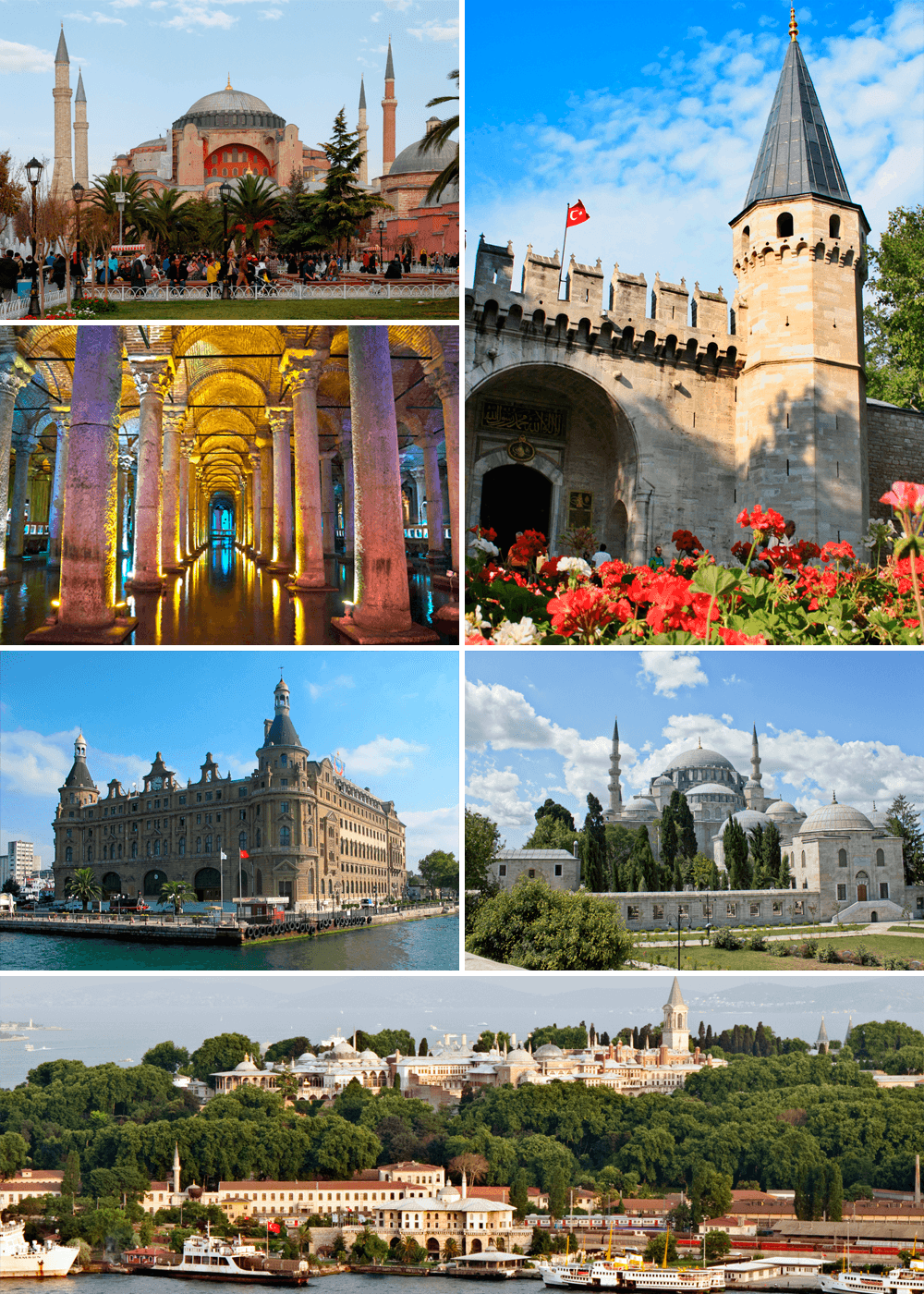

Türkiye
A plan for Istanbul
Not a list of things to see in Istanbul — a day-by-day plan somebody could actually follow, built from places we can point to a source for. Make your own in about a minute.
- 2 nights
- Couple
- Balanced pace
- Mid-range budget
Every place here was checked on 2026-10-27 or later, and each one says where it came from.
The plan, day by day
Day 1
09:30
You arrive
13:00
Nevizade
Suggested because you chose food
- 1h
- Meal
14:30
Galatasaray Museum
Picked because you chose culture & museums and local experiences + balanced energy
- 2h 30m
- Culture & museums
2h open
Nothing planned here. That was on purpose.
19:00
Karaköy Lokantası
Suggested because you chose food
- 1h 30m
- Meal
20:30
Celtic Irish Pub
Picked because you chose food and local experiences + balanced energy
- 1h 30m
- Food
Day 2
08:00
Sarayburnu Aile Çay Bahçesi
Suggested because it fits a mid-range budget
- 45m
- Meal
45m open
Nothing planned here. That was on purpose.
09:30
Rahmi M. Koç Museum
Picked because you chose culture & museums + balanced energy
- 2h 30m
- Culture & museums
1h open
Nothing planned here. That was on purpose.
13:00
Pandeli
Suggested because you chose food
- 1h
- Meal
14:30
Atatürk Cultural Center
Picked because you chose culture & museums and local experiences + balanced energy
- 2h 30m
- Culture & museums
17:00
Tiled Kiosk
Picked because you chose culture & museums + balanced energy
- 2h 30m
- Culture & museums
19:30
Mahir Lokantası
Suggested because you chose food
- 1h 30m
- Meal
21:00
Irish Pub The James Joyce
Picked because you chose local experiences + balanced energy
- 1h 30m
- Local experiences
Day 3
08:00
Vanilya
Suggested because you chose food
- 45m
- Meal
45m open
Nothing planned here. That was on purpose.
09:30
Istanbul Museum of the History of Science and Technology in Islam
Picked because you chose culture & museums + balanced energy
- 2h 30m
- Culture & museums
1h open
Nothing planned here. That was on purpose.
13:00
Hayvore
Suggested because you chose food
- 1h
- Meal
14:30
You leave
Weather through the year
Monthly averages from NASA's 25-year climate record, day and night together.
Best months: May, June, September, and October
| January | Cold: 6°C, 79 mm |
|---|---|
| February | Cold: 7°C, 68 mm |
| March | Cold: 9°C, 53 mm |
| April | Mild, some rain: 12°C, 42 mm |
| May | Mild and dry: 17°C, 35 mm |
| June | Mild and dry: 22°C, 36 mm |
| July | Warm and dry: 25°C, 20 mm |
| August | Warm and dry: 26°C, 22 mm |
| September | Mild, some rain: 22°C, 54 mm |
| October | Mild, some rain: 17°C, 70 mm |
| November | Mild, some rain: 12°C, 63 mm |
| December | Cold: 8°C, 82 mm |
From the Wikivoyage guide
Quoted from the travel guide anyone can edit, as it read on the day we took it.
Understand
History
While relics of prehistoric human settlement were found in the Yarımburgaz Cave near the Küçükçekmece Lake and during the construction of a subway station in Yenikapı, Greek colonists from Megara, directed by their legendary leader Byzas, have been traditionally accepted as the founders of Istanbul. Expanding the ancient Greek colony of Byzantium by the order of the Roman Emperor Constantine the Great, the imperial city of Constantinople was for nearly a thousand years the heavily-fortified capital of the Eastern Roman (later termed Byzantine) Empire. To this day, the Ecumenical Patriarch, head of the Eastern Orthodox Church continues to be the Archbishop of Constantinople, who is still based in Istanbul. It was finally conquered by the Ottoman Sultan Mehmed II on 29 May 1453, an event sometimes used to mark the end of the Middle Ages. It was the nerve centre for military campaigns that were to enlarge the Ottoman Empire dramatically. By the mid-1500s, Istanbul, with a population of almost half a million, was a major cultural, political, and commercial centre. Ottoman rule continued until it was defeated in the first World War and Istanbul was occupied by the allies.
When the Republic of Turkey was born in 1923 after the War of Independence, Kemal Atatürk moved its capital to the city of Ankara, strategically located in the centre of the new republic. However, Istanbul has continued to expand dramatically; today its population is approximately 14 million and increases at an estimated 400,000 immigrants per year. Industry has expanded even as tourism has grown. It continues to be a city that creates its own history at the intersection where both continents meet.
See
Museum Pass
The Turkish government offers a museum pass for Istanbul's many sights and museums, and key spots on Sultanahmet, for €105 as of April 2025. The pass can be bought at the entrance of many museums or online. Check out what is included, and buy it if it makes sense for you. Numerous sights can still be seen for free and the biggest joy is probably just walking around and sucking in the atmosphere.
The non-transferable pass is valid for five days from the date of the first visit, and allows one free entry to each of these museums:
Topkapı Palace and Harem
Hagia Irene
Istanbul Archaeological Museums
Istanbul Mosaic Museum
Museum for the History of Science and Technology in Islam
Museum of Turkey and Islamic Arts
Galata Mevlevi House Museum
Rumeli Hisar Museum
Galata Tower (Galata Kulesi Museum)
Notably, the Hagia Sophia is not included, and tickets cost an extra €25 as of March 2024.
In addition to saving money when visiting these sites, the card allows you to skip the queue for tickets and go straight to the gates at some sites (Galata Tower is the notable exception). Most museums in Istanbul are closed on Mondays or Wednesdays, so checking the website first or ringing is a sensible option before setting off.
Alternatively, you can consider buying the much more expensive Istanbul Tourist Pass, 2-day pass costs €150, 3-day pass €180, 5-day pass €210, 7-day pass €235 as of March 2024. It includes entrance to all of the above museums, a couple of boat tours, three days mobile internet, and even a one-way discounted Istanbul airport transfer (€20). However, it consistently receives negative reviews due to bad organisation and intermittent problems with accessing some of its included services.
There are also some city passes (see below), which offer a limited more tour-oriented selection of activities and sights.
Do
Individual listings can be found in Istanbul's district articles
Hamam – Sultanahmet has many historical hamams. Some are very extravagant and cater mainly to tourists.
Waterpipe – Most of the places where you can smoke a nargile are in Yeniçeriler Caddesi, near the Kapalı Çarşı (Grand Bazaar). Çorlulu Ali Paşa and Koca Sinan Paşa Türbesi are both in secluded internal courts, just around the corner from some tomb yards, while Rumeli Kahvesi is actually inside the cemetery of an old medrese, though it’s not as spooky as you might think. In the south of Sultanahmet, near the sea, is Yeni Marmara (Çayıroğlu Sokak), where you can also sit in the terrace and enjoy the view. In Beyoğlu, at the Ortakahve (Büyükparmakkapı), there’s even the choice of a wide range of flavors. Another area with few big good looking places is the Rıhtım Caddesi, between Galata bridge and Istanbul Modern Museum.
Walking tours
Museums and such: Haghia Sophia, then on to the Topkapı museum (these two should take at least three to five hours), preferably along the road in the back of the Haghia Sophia, where there are some nicely restored houses. Then on to the Blue Mosque and the square with the obelisks on it (At Meydani). Along its side is the very good Museum of Islam Art. Descend slightly and find the small Haghia Sophia with its nice garden (it was under restoration, but you probably can get in). Then uphill to the Sokollu Mehmet mosque complex, top notch tiles inside.
Eat
Individual listings can be found in Istanbul's district articles
For a full-on culinary experience, one should look for esnaf lokantası restaurants. They are essentially old-school canteens with a variety of traditional selections from soups to main courses to desserts.
Snacks
Balık-Ekmek. Balik-Ekmek (literally "fish and bread") consists of freshly grilled fish, typically mackerel, served in a crusty bread roll with lettuce, onions, and sometimes tomatoes, often accompanied by a squeeze of lemon and a sprinkle of spices. It’s a flavorful and iconic snack often enjoyed by the waterfront.
Boiled and roasted corn on the cob is sold from carts around the city, and is a fantastic snack to walk around. Price varies from cart to cart and area of the city.
Döner: A beloved Turkish dish made from seasoned meat (such as lamb, chicken, or beef) cooked on a vertical rotisserie. Thin slices are shaved off as the outer layer roasts and are served in various forms—wrapped in flatbread (dürüm), stuffed into a sandwich, or plated with rice and salad. It's a staple of Turkish cuisine and a global street food favorite.
Dürüm Kebap: Dürüm kebaps are a type of Turkish wrap where grilled meat, such as Adana (spiced minced meat), ciğer (liver) or şiş (skewered chunks), is wrapped in thin flatbread, like lavash or yufka. They're typically accompanied by vegetables, herbs, and sauces, offering a convenient and flavorful way to enjoy kebabs on the go.
Freshly squeezed juice and juice blends are sold from stands and small shops all around the city and are a refreshing treat (especially in the warmer months). The combinations range from a simple orange juice to the rarer options like pomegranate or kiwi. Price varies from shop to shop, area of the city and complexity of your order.
Islak Hamburger & Patso Islak or 'Wet' Burger is a Turkish street food classic featuring a soft bun and a meat patty drenched in a garlicky, tomato-based sauce, then steamed to give it a moist, flavorful texture. Patso is a popular Turkish snack, consisting of a sandwich filled with French fries, often accompanied by ketchup, mayonnaise, or sausage slices, making it a simple yet satisfying fast-food treat.
Drink
Individual listings can be found in Istanbul's district articles
Meyhanes are taverns which originated in Ottoman times. They come in both 'traditional' and 'modern' accents, some even with some belly dancing. One could find them mostly on the seaside districts of both sides.
Bebek is a small town on the European Bosphorus, 10 km north of downtown, with fancy restaurants and bars. Great place to have a walk on the seaside after a nice dinner.
Bağdat Caddesi is a very long avenue full of good restaurants, boutiques and high-end stores on the south Anatolia side of Istanbul.
Beyoğlu has lively night life, with cafes and bars with live music.
Kadıköy also has a compact nightlife scene, serving mostly locals of this part of the city. It's easy-going, with local pubs and wine houses.
Karaköy is the rising star of the city, with its underground parties with views over the Marmara Sea.
Nişantaşı is the place for young entrepreneurs and artists, but prices are higher than in Taksim.
Nightclubs are found all over the city, but most popular ones are in Pera and Ortaköy.
Get around
İETT (or just toplu taşıma) is the municipality's public transportation company. Istanbul's public transit system can be difficult to figure out. However, if you put some effort into it, you can avoid taxis and not walk too much.
Unless you use the Istanbulkart, each time you use a tram, metro, bus, or boat on the public transport system, you will need to use a ticket or pass. They can be bought at various vending machines at bus, railway and metro stations or authorized ticket/Istanbulkart sellers (usually newspaper kiosks). Ticket fares across buses, trams and metros differ. Only cash in Turkish lira is accepted at ticket kiosks of public transport, no credit cards or foreign currency. The Istanbul subway system does not offer transfer tickets: each change to a new line requires a new fare.
When travelling to Istanbul by air, it is much cheaper (and more fun) to use the bus (or metro system once it is extended) to get as close to your accommodation as possible before walking and/or taking a taxi to where you are staying. Although the public transport may be slightly confusing, taxis/charter buses from the airport are notoriously overpriced.
If public transport is your choice of getting around, consider using smartphone public transportation applications so that you can easily see stops, stations and terminals nearby or see alternate routes for your planned destination.
İstanbulkart
The İstanbulkart is Istanbul's public transport smart card, which can be used as a ticket on buses, trams, suburban trains, metro, local ferries, etc. If you are in Istanbul for more than a day or two and intend to use public transport, it will pay for itself in a few trips. It can be purchased at a number of small corner shops throughout the city, or from the machines located at most stations, where it can also be recharged, using notes or a credit card.
An alternative to the physical card is the Mobile İstanbulkart, which is an app you can load on your phone. However, as of 2024, signing up requires a Turkish mobile phone number, so unless you have one, you will be out of luck.
Stay safe
In Istanbul, most drivers won't abide any rules. Even if you have priority on a road junction, crosswalk, or even during green light, always be aware of your surroundings. Even if you are in a one way road, check both sides before crossing the road. It is common for Turkish drivers to use shortcuts.
A major earthquake with epicenter in the nearby Sea of Marmara is expected within the next few decades, so read the earthquake safety article before you arrive.
If prices are not on display, always ask beforehand (even for a tea) instead of just ordering something like in Europe. This can be fatal in Istanbul because tourists are constantly overcharged. Unfortunately, often prices are not on display, like in sweet shops or even restaurants. Skip these places or ask for a price knowing what the approximate or fair price is.
Istanbul is home to three of the biggest clubs in Turkey and maybe European football: Beşiktaş, Fenerbahçe, and Galatasaray. It is advisable not to wear your jersey on the days of matches between the sides due to the fearsome rivalry they share. If you are supporting the away team whenever the Turkish national team plays in Istanbul, be very careful as violent attacks on fans and players of the opposing team have been known to occur.
Scams
Bar and club scams
High-drink price scams encountered in so-called night-clubs mostly located in Aksaray, Beyazit and Taksim areas. These clubs usually charge overpriced bills, based on a replica of the original menu, or simply on the menu that had been standing upside down on the table. Two or three drinks can already produce a fantasy bill.
Practical facts for Türkiye
Taken from open data. Rules and numbers change, so check locally before you rely on them.
- Currency
- Turkish Lira (TRY)
- Languages
- Turkish (Türkiye), Kurdish, Zaza, Azerbaijani, and 1 more
- Plugs and power
- Types C and F, 230 V at 50 Hz
- Traffic drives
- On the right
- Country calling code
- +90
- Time zone
- Europe/Istanbul
Official travel advice
Quoted from each government as published, with the date they last changed it. We do not add a verdict of our own.
UK Foreign, Commonwealth & Development Office
- Advises against all travel to parts of the country
Read the full adviceAreas where FCDO advises against travel
Turkey-Syria border
FCDO advises against all travel to within 10km of the border with Syria due to fighting and a heightened risk of terrorism. If you are in Syria, follow FCDO Travel Advice for Syria. The FCDO cannot facilitate entry for British nationals into Turkey from Syria.
Find out more about why FCDO advises against travel.
Support from the UK government
While 24-hour consular assistance is available by phone or online, in-person consular support is severely limited in areas where we advise against travel.
Regional tensions
The context in the Middle East remains deeply unpredictable and the risk of sudden escalation is high. Since conflict began in early 2026, Iran has stated its intention to target locations associated with the US and Israel, including, but not limited to, organisations, businesses, facilities, and institutions. There have been strikes and retaliatory attacks by Iran and others across the region against civilian and US military infrastructure.
British nationals in, or planning to travel through, the Middle East should be prepared for possible flight cancellations, airspace closures, and travel disruptions. You should:
• read If you’re affected by a crisis abroad - GOV.UK. This includes guidance on “how to prepare for a crisis” with suggestions on what you might include in your emergency supplies and “what to do in a crisis”
US Department of State
Level 2 of 4: Exercise increased caution
Read the full adviceExercise increased caution Exercise increased caution in Türkiye due to terrorism, armed conflict, and arbitrary detentions. Some areas have increased risk. Read the entire Travel Advisory.
Exercise caution in crowded public spaces including transportation hubs, markets, malls, government buildings, hotels, restaurants, clubs, places of worship, educational institutions, parks, airports, and major events.
Terrorism
There is risk of terrorist violence, including terrorist attacks and other activity in Türkiye. Visit the U.S. Department of State’s country reports on terrorism to learn more.
• Terrorist groups continue plotting possible attacks in Türkiye.
Entry and visas
Entry rules depend on your passport and change without notice. Check the official pages before you book.
Sources