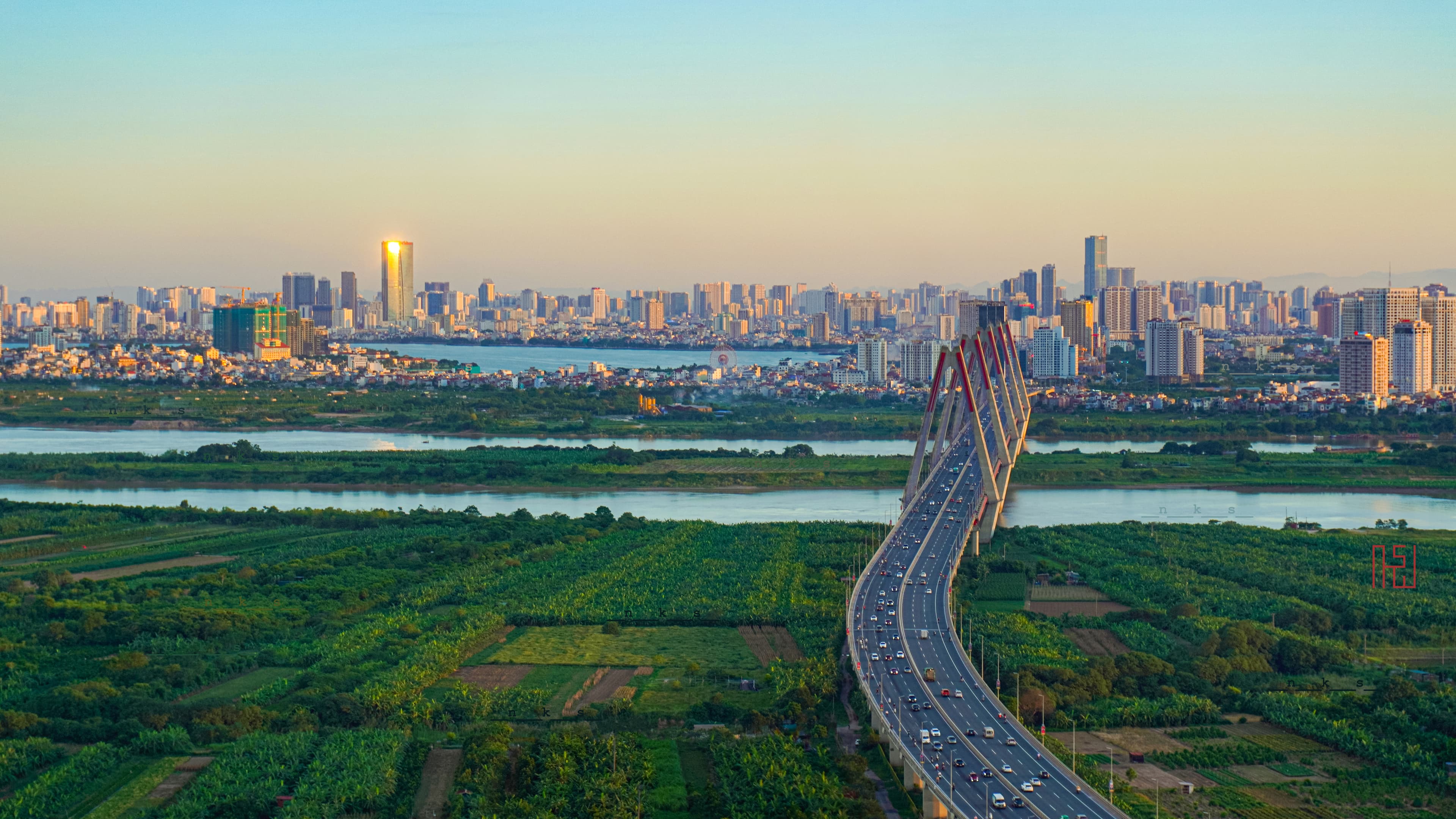

Vietnam
A plan for Hanoi
Not a list of things to see in Hanoi — a day-by-day plan somebody could actually follow, built from places we can point to a source for. Make your own in about a minute.
- 2 nights
- Couple
- Balanced pace
- Mid-range budget
Every place here was checked on 2026-10-27 or later, and each one says where it came from.
The plan, day by day
Day 1
09:30
You arrive
13:00
Chợ Nhà Xanh
Suggested because you chose food
- 1h
- Meal
14:30
Vietnam Military History Museum
Picked because you chose culture & museums + balanced energy
- 2h 30m
- Culture & museums
2h open
Nothing planned here. That was on purpose.
19:00
Pepe la Poule
Suggested because you chose food
- 1h 30m
- Meal
20:30
Hanoi Opera House
Picked because you chose culture & museums and local experiences + balanced energy
- 2h 30m
- Culture & museums
Day 2
08:00
Kem Tràng Tiền
Suggested because you chose food
- 45m
- Meal
45m open
Nothing planned here. That was on purpose.
09:30
Hỏa Lò Prison
Picked because you chose culture & museums + balanced energy
- 2h 30m
- Culture & museums
1h open
Nothing planned here. That was on purpose.
13:00
O Bun Cha
Suggested because you chose food
- 1h
- Meal
14:30
Ho Chi Minh Museum
Picked because you chose culture & museums + balanced energy
- 2h 30m
- Culture & museums
17:00
National Museum of Vietnamese History
Picked because you chose culture & museums + balanced energy
- 2h 30m
- Culture & museums
19:30
Cơm Chay Nàng Tấm
Suggested because you chose food
- 1h 30m
- Meal
21:00
Nhà hát Tuổi trẻ
Picked because you chose culture & museums + balanced energy
- 2h 30m
- Culture & museums
Day 3
08:00
Miên Man Cafe
Suggested because you chose food
- 45m
- Meal
45m open
Nothing planned here. That was on purpose.
09:30
Vietnam Museum of Revolution
Picked because you chose culture & museums + balanced energy
- 2h 30m
- Culture & museums
1h open
Nothing planned here. That was on purpose.
13:00
Nhà Hàng Dragoncello
Suggested because you chose food
- 1h
- Meal
14:30
You leave
Weather through the year
Monthly averages from NASA's 25-year climate record, day and night together.
Best months: February, March, November, and December
| January | Cool and dry: 15°C, 32 mm |
|---|---|
| February | Mild and dry: 18°C, 22 mm |
| March | Mild, some rain: 21°C, 49 mm |
| April | Mild, some rain: 25°C, 78 mm |
| May | Rainy: 28°C, 179 mm |
| June | Wet season: 29°C, 201 mm |
| July | Wet season: 28°C, 300 mm |
| August | Wet season: 28°C, 322 mm |
| September | Wet season: 27°C, 223 mm |
| October | Rainy: 24°C, 124 mm |
| November | Mild, some rain: 20°C, 52 mm |
| December | Mild and dry: 16°C, 25 mm |
From the Wikivoyage guide
Quoted from the travel guide anyone can edit, as it read on the day we took it.
Understand
Invading forces from every direction agree: Hanoi makes a fine capital. It has held that title for more than a thousand years, through several invasions, occupations, restorations, and name changes. The Chinese conquered the imperial city of Đại La in 1408 and renamed it Tống Bình. Le Loi repelled the invaders in 1428 and applied the name of Lê Thái Tổ (黎太祖). For his efforts, he received the crown and a slew of legends about his heroic exploits, many centred around Hoan Kiem Lake. The Nguyen Dynasty gave the city its modern name of Ha Noi in 1831, but they had transferred power to Hue by then. Hue remained the capital until 1887, when the French made Hanoi the capital of all Indochina. It changed hands again in 1954, when it was ceded to Ho Chi Minh and the Viet Minh after almost a decade of fighting, and it became the capital of North Vietnam. Upon reunification in 1975, it assumed that title for the entire country. (See also: Indochina Wars).
Hanoi retains much of its older colonial charm, despite the battles that have raged over it. Conflict had the effect of making it largely oblivious to modern architecture, and as a result, few buildings in the city center are higher than five stories. The Old Quarter, the area around and north of Hoan Kiem Lake, is second only to Hoi An for uninterrupted stretches of colonial and pre-colonial architecture, well-preserved on dense warrens of narrow, wonderfully atmospheric streets.
The first Western-style universities in Vietnam were founded in Hanoi, and today, it is the leading centre of scientific study and research in the country. It trades the commercial boom and sprawl of Ho Chi Minh City in the south for a more understated charm, worth enjoying for an extra day or two; and with countless transport options and travel agents, it makes a perfect base for exploration of the North.
See
Museums
Near the city center
1 Fine Arts Museum (Bảo Tàng Mỹ Thuật), 66 Nguyen Thai Hoc St (opposite Temple of Literature), ☏ +84 24 3733-2131. Daily 08:30-17:00. Only party-approved art is shown here with information in English and Vietnamese. On three floors of a colonial building, with another three galleries in the west wing. Pieces include soldiers on boats depicted on prehistoric bronze drums, Buddhist art, and revolutionary art of the 20th century wars. Also some interesting lacquer and silk paintings. Adult 40,000 dong. (updated Aug 2025)
2 Hồ Chí Minh Mausoleum. Tue-Thu 06:30–10:30 Sat Sun 07:30-11:30. The city down south may have his name, but only Hanoi has the man himself, entombed in distinctly Lenin-esque fashion. Against his wishes, but that's how it goes. No talking, revealing clothing (shorts should be knee length and no exposed shoulders), or other signs of disrespect allowed while viewing; photos are allowed only from outside, in the grand Ba Dinh Square. Purses are allowed into the tomb, but expect them to be searched by several bored soldiers along the way. Left luggage is handled in a complicated scheme: there is an office near the street for large bags, with separate windows for Vietnamese and foreigners, and a further office for cameras, which will be transported to a third office right outside the exit of the mausoleum. Items checked in at the first office, however, will stay there. The mausoleum is closed for a couple months around the end of the year, when the body is taken abroad for maintenance. It is closed in the afternoons for maintenance. Free. (updated Aug 2025)
Do
Flavors of Hanoi, 25 Hang Be, Hoan Kiem, Hanoi, ☏ +84 967 258 586, ✉ hello@flavorsofhanoi.com. 09:00-21:00. A local foodie experiences provider, they offer personal street food tours to help visitors explore Hanoi’s Old Quarter and French Quarter through their taste buds.
Cinemas
August Movie Theater (Rap Thang 8) (On Hang Bai St, 5 min away from Trang Tien Plaza and the commercial area, such as Pho Hue, Hai Ba Trung and Trang Tien St). Renovated into a Nightclub (updated Jul 2024)
CGV Cinemas (formerly Megastar), 191 Ba Trieu (on the 6th floor of the Vincom City Towers). The movies are relatively new, perhaps one or two months later than in the US. The movies are not dubbed although there are subtitles so both non-Vietnamese speakers and locals can enjoy them. 70,000-115,000 dong for 2D movies depending on day and time. 90,000-230,000 dong for 3D movies. (updated Mar 2017)
Cooking classes
EZ Cooking Class, 49 Lane, 49 Huynh Thuc Khang St.
EDUMA, 94 Lane, 49 Lo Duc St.
Hanoi Cooking Centre, 44 Chau Long St (close to Truc Bac lake), ☏ +84 24 3715-0088. Cooking school, retail outlet and beautiful courtyard cafe with an excellent menu of Asian and Western favourites. Hands-on cooking classes and short courses in a relaxed atmosphere.
Hidden Hanoi, 137 Nghi Tam Rd (aka Duong An Duong Vuong), Tay Ho (on the bund road in the Tay Ho District), info@hiddenhanoi.com.vn. Hidden Hanoi runs walking tours and cooking classes. There are many options including the 1-hr walking tour of the local market, followed by the 3-hr cooking class. Cooking class menus change daily, and there are other walking tours available. They also run language classes, and there is a dance school in the same building.
Vietnam Culinary School, hanoiculinaryclass@gmail.com. Fully equipped facilities to learn Vietnamese cooking. A typical day will commence with a visit to the morning market accompanied by an instructor to select ingredients for your cooking lesson. The class will be followed by a meal in a restaurant sampling your own cooking as well as traditional Vietnamese dishes.
Eat
Hanoi's most famous (and prevalent) dish is phở soup: "phở gà" (chicken noodle soup), "phở bò" (beef noodle soup), or "phở chay" (tofu noodle soup). Another local specialty is bún chả, grilled fatty pork over a plate of white rice noodles and herbs with dipping sauce.
There are hundreds of street restaurants in small kiosks on the sidewalk, with plastic tables and chairs on the pavement. Eating at these restaurants is a great way to experience the local food and culture. It is worth mentioning that food quality, freshness, and hygiene can vary greatly. On average, a bowl of noodle soup goes for 40-60,000 dong (June 2024) and market food stalls offer fruit portions, sausages, doughnuts and other foods. Check your change as a few vendors seem to forget to give it, and learn a little Vietnamese because vendors often will not speak any or much English (e.g. "bao nhiêu ?", meaning "how much?").
Exotic treats
Next to Beijing, Hanoi is probably the second in the running to the world's exotic food paradise.
Snake Restaurants (about ten minutes across the river from the city centre, take Bus 10, 15 or 17 and get off at the large mall" just beyond Gia Lâm station, and walk 500 m down the road at the right of the mall). The suburb of Le Mat (aka Snake Village) has numerous restaurants specializing in cobra foodstuffs. Live cobras are stored on the premises much the same way one would find live lobsters at a Western seafood restaurant. If one orders cobra blood wine from the menu, the waiter will take a live cobra, kill it on the spot, drain the blood into a shot glass of rice wine and top it off with the cobra's still beating heart for you to gulp down. Not for animal lovers or the ecologically-minded. Cobras are not cheap, but one snake becomes a dozen unique dishes, and enough to share between 3-4 people. Rượu rắn is cobra steeped whole in rice wine – or, especially in tourist areas, perhaps a cheaper, non-poisonous snake with similar coloring whose body has been stretched to give it the expected shape. Carefully investigate customs restrictions before deciding to bring a few bottles home, as some of the snakes used are endangered species.
Drink
Bia hơi is abundant in the streets of the Old Quarter. At the crossing of Ta Hien and Luong Ngoc Quyen, commonly known as Beer Street, five separate venues fill up with travellers in the evenings. You can get more local atmosphere on some of the side streets.
Hanoi is a lively city on the weekends, but the Old Quarter closes relatively early (at midnight) on weekdays, so you might want to start your night early. Other places outside the Old Quarter stay open later and vary in closing times. Local young people gather around the cathedral located in Ly Quoc Su to have lemon ice tea (tra chanh) and sunflower seeds in street bars. After dark it gets quite crowded.
Sit on a plastic chair in front of one of the bia hoi (fresh beer) establishments which are invariably on the corners of many of Hanoi's Old Quarter streets. This preservative-free light beer is the perfect drink to sip as you watch the city's frenetic bustle. The beer costs less than 5,000 dong and gives you an excuse to relax and take photos of the passing local characters: should not be missed. In the Old Quarter, you will find that almost every corner is filled with stalls selling pho (Vietnamese noodle) and cafe (the name is not limited only to coffee, but also tea, sweets and grocery items, and even to pho).
On Tô Tich, a small street connecting Hang Quat and Hang Gai, you can help yourself to a refreshing fruit milkshake (sinh tố) at one of the stalls.
Get around
Getting around Hanoi can be a challenge: traffic slows to a crawl for most of the day, and the public transport system has not kept up with the city's explosive growth.
By train
Metro Line 2A connects Cát Linh (west of the Old Quarter) to Yên Nghĩa in the southwestern suburbs. Metro Line 3 connects Cầu Giấy to Nhổn in the northwestern suburbs. The lines are not connected but this will change when the underground stretch between Cầu Giấy and Hanoi Station opens around 2027. Metro Line 2A is useful for getting to Vincom Mega Mall Royal City, one of Hanoi's largest shopping malls, which is within walking distance of Thượng Đình station.
Tickets are distance-based, ranging from 8,000 to 15,000 VND. You can pay by tapping a contactless Mastercard or Visa on the fare gates, including those linked to Apple Pay and Google Pay. Daily and monthly tickets are available from ticket windows at all stations. Single journey tickets and reloadable smart cards are available from ticket machines at all stations.
By bus
Scam-free, cheap but a bit difficult to comprehend at first, the buses in Hanoi are relatively fast, air-conditioned and surprisingly comfortable.
Find you way:
Download the BusMap Hà Nội mobile app (Google Play, Apple Store) for directions and live time estimates (not very accurate).
Pick up a physical map with printed bus lines at the Trang Tien street (the book street by the Opera house).
Find your bus stop (there are usually blue signs) and wait for the bus to arrive. Go and sit in the bus, the bus assistant will come to you. Tickets range from 7,000 to 12,000 VND (the price is fixed and depends on the line). If necessary, they should have enough cash for change (but it might be better to avoid paying with larger bills). If you are unfamiliar with the city, make sure to inform the mostly helpful conductor where you want to get off. Or, use your phone's GPS and Google Maps to track your location. Keep in mind that traffic jams make schedules unreliable.
By taxi
The easiest way to get around is by using the Grab app (Android, iOS). The English user interface makes navigation a cinch, fares are fixed and typically cheaper, and you can pay by cash or credit card.
Stay safe
Traffic
The simple act of walking can be intimidating, especially in the narrow streets around the Old Quarter. As is the case everywhere in Vietnam, traffic in Hanoi is dominated by an incredible number of motorbikes, all of which seem to be making a mad, desperate dash for something just out of reach, all of the time. There is no such thing as one-directional traffic in Vietnam.
When you leave the curb, look not only left and right, but to the front and back. Even up and down would not be amiss. Take each step deliberately but resolutely. Patiently allow the motorbikes to pass. Don't rush and don't make any erratic movements. Stop in place if necessary but never walk backwards. This way the drivers are aware of you, and can anticipate your behavior (along with all of the other motorbikes). As a rule of thumb, motorbikes will swerve around you, but cars and trucks will run you over. It may look chaotic, but be patient and pay attention and you'll be fine.
Hustles and scams
Be vigilant when taking a taxi. Drivers have been known to jump out at the destination and remove most of the bags from the trunk. While the passenger is busy putting on a rucksack the driver takes off with the remaining bags. Ask your hotel what taxi companies are reliable.
Be careful of hustler hawkers. In Vietnam, there is a two-tier pricing system, for locals and for foreigners. No other place in Vietnam is this practised more emphatically than in Hanoi (and in Ho Chi Minh City's Ben Thanh Market) where vendors charge differently according to how they gauge your net worth.
Practical facts for Vietnam
Taken from open data. Rules and numbers change, so check locally before you rely on them.
- Currency
- Vietnamese Dong (VND)
- Languages
- Vietnamese, English, French, Chinese, and 1 more
- Plugs and power
- Types A, C, F, and G, 220 V at 50 Hz
- Traffic drives
- On the right
- Country calling code
- +84
- Time zone
- Asia/Ho Chi Minh
Official travel advice
Quoted from each government as published, with the date they last changed it. We do not add a verdict of our own.
UK Foreign, Commonwealth & Development Office
- No areas listed that it advises against travelling to
Read the full adviceTropical storm season
The tropical storm season runs from May to November. Tropical storms can cause serious travel disruption. Follow and monitor local and international weather updates from the National Centre for Hydro-Meteorological Forecasting and Japan Meteorological Agency and follow the advice of local authorities.
See Extreme weather and natural disasters.
For more regular updates, English-news versions of local newspapers are available at VNexpress and Vietnam News
Global travel impacts due to escalation in the Middle East
Escalation in the Middle East has caused widespread travel disruption, including airspace closures, delayed and cancelled flights.
US Department of State
Level 1 of 4: Exercise normal precautions
Read the full adviceExercise normal precaution in Vietnam.
• Vietnam is generally a safe destination for travelers. Petty crime is common, especially in popular tourist locations. Stay aware of your surroundings.
• Landmines and unexploded ordnance exist in Vietnam. Areas of greatest risk are construction sites. Landmine risk is low in urban and populated areas, including tourist destinations. The locations of landmines and unexploded ordnance are often unmarked and difficult to recognize. Do not pick up or approach unknown metal objects in the ground.
• Review our Travel Guidance for Vietnam to learn how to prepare for a safe trip.
Entry and visas
Entry rules depend on your passport and change without notice. Check the official pages before you book.
Sources