
Sweden
A plan for Gothenburg
Not a list of things to see in Gothenburg — a day-by-day plan somebody could actually follow, built from places we can point to a source for. Make your own in about a minute.
- 2 nights
- Couple
- Balanced pace
- Mid-range budget
Every place here was checked on 2026-10-27 or later, and each one says where it came from.
The plan, day by day
Day 1
09:30
You arrive
13:00
Restaurang 28+
Suggested because you chose food
- 1h
- Meal
14:30
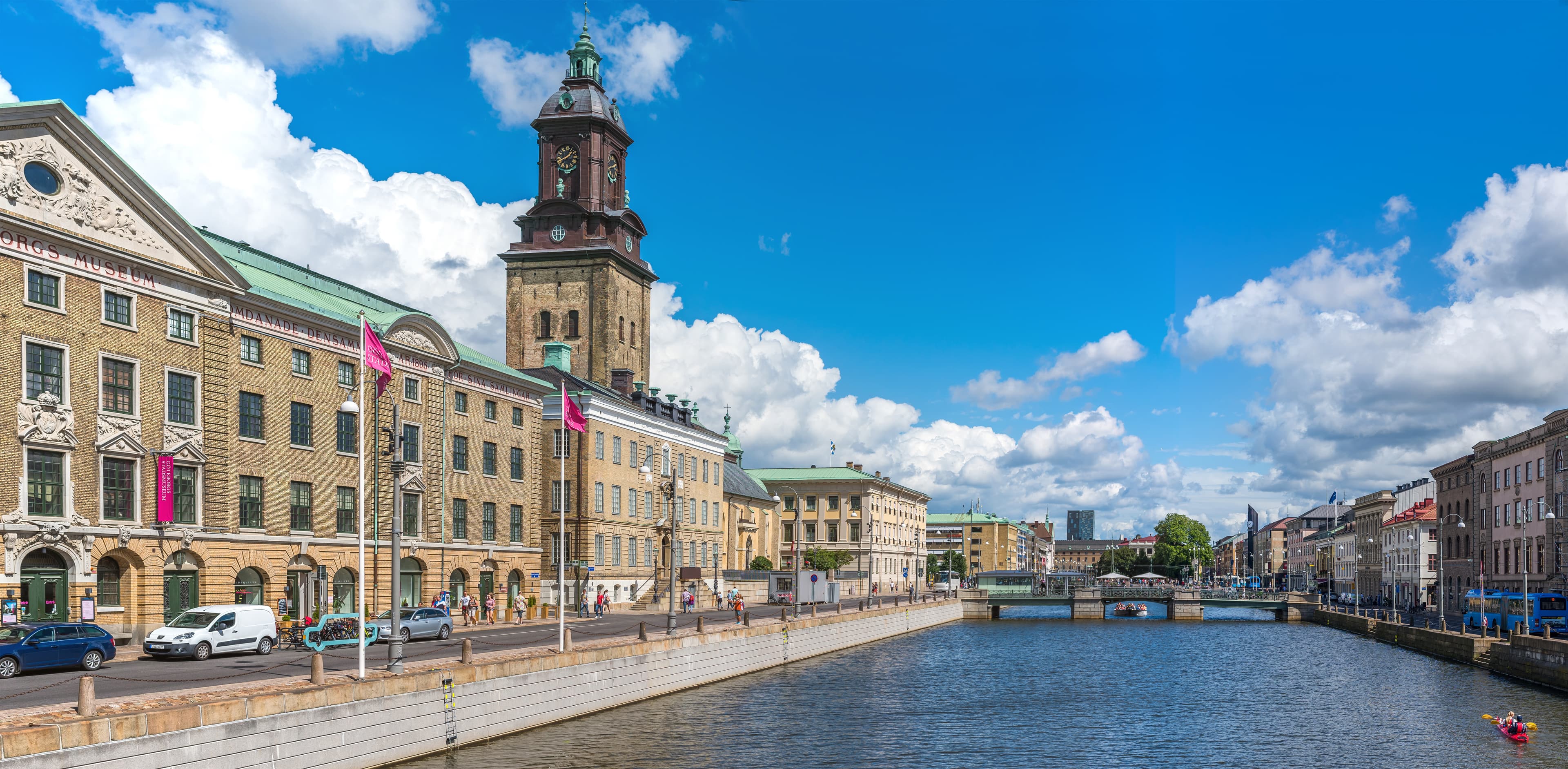
Museum of Gothenburg
Picked because you chose culture & museums and local experiences + balanced energy
- 2h 30m
- Culture & museums
2h open
Nothing planned here. That was on purpose.
19:00
Trädgår'n
Suggested because you chose food
- 1h 30m
- Meal
20:30
Göteborgsoperan
Picked because you chose culture & museums + balanced energy
- 2h 30m
- Culture & museums
Day 2
08:00
Bar Centro
Suggested because you chose food
- 45m
- Meal
45m open
Nothing planned here. That was on purpose.
09:30
Brännö museum
Picked because you chose culture & museums and local experiences + balanced energy
- 2h 30m
- Culture & museums
1h open
Nothing planned here. That was on purpose.
13:00
Govindas
Suggested because you chose food
- 1h
- Meal
14:30
HSwMS Hugin
Picked because you chose local experiences + balanced energy
- 2h 30m
- History
2h open
Nothing planned here. That was on purpose.
19:00
Berzelius Bar & Matsal
Suggested because you chose food
- 1h 30m
- Meal
20:30
Folkteatern
Picked because you chose culture & museums + balanced energy
- 2h 30m
- Culture & museums
Day 3
08:00
Café Hängmattan
Suggested because it fits a mid-range budget
- 45m
- Meal
45m open
Nothing planned here. That was on purpose.
09:30
Änggården
Picked because you chose culture & museums and local experiences + balanced energy
- 2h 30m
- Culture & museums
1h open
Nothing planned here. That was on purpose.
13:00
Pasta Plus
Suggested because you chose food
- 1h
- Meal
14:30
You leave
Weather through the year
Monthly averages from NASA's 25-year climate record, day and night together.
Best months: June, July, August, and September
| January | Cold: 1°C, 94 mm |
|---|---|
| February | Cold: 0°C, 68 mm |
| March | Cold: 2°C, 60 mm |
| April | Cold: 7°C, 54 mm |
| May | Mild, some rain: 11°C, 64 mm |
| June | Mild, some rain: 15°C, 90 mm |
| July | Mild, some rain: 17°C, 95 mm |
| August | Rainy: 17°C, 108 mm |
| September | Mild, some rain: 14°C, 85 mm |
| October | Cold: 9°C, 113 mm |
| November | Cold: 6°C, 100 mm |
| December | Cold: 2°C, 102 mm |
From the Wikivoyage guide
Quoted from the travel guide anyone can edit, as it read on the day we took it.
Understand
Gothenburg is a fairly green city with parks, which is divided by the Göta River. Built after being founded by royal decree in 1621 it was modelled after the Dutch city style, with plenty of canals. By far the largest non-capital city of the Nordic countries, the city has a strong local identity, and many nicknames that allude to its canals, such as "little London", "little Amsterdam", and "little Venice". Early, on Gothenburg was famous for its port and trade, has prominently hosted the Swedish East-India Company, and is one of few Swedish cities referred to by an English name.
Due to its historically industrial character Gothenburg has had strong working class associations, being known for its friendly yet brusque "goa gubbar". This together with its large port has given rise to the moniker "Marseille of the North".
Today, with over 50,000 students in the city and two major universities it has a young side with plenty of bars and night clubs. Gothenburg has a reputation for being a very friendly place, and more welcoming than Stockholm, the Swedish capital.
History
Gothenburg is at the mouth of the river Göta älv. Lödöse, some 40 km (25 mi) upstream from Gothenburg was one of the largest cities in Sweden during the Middle Ages, and is considered a precursor to Gothenburg. During the Middle Ages the mouth of Göta älv was controlled by Sweden, while Bohuslän immediately north of it was Norwegian and Halland to its immediate south was Danish. The area thus became a tripoint of the three kingdoms. In order to consolidate Swedish control of the area, the fortress of Älvsborg was constructed near modern-day Gothenburg. Several failed attempts were also made to build a city in the area.
See
Notable buildings
1 Gothenburg Cathedral (Göteborgs Domkyrka), Kyrkogatan 28. Built in 1815, in the centre of old town. The seat of the Diocese of Gothenburg. It is the third church standing there – the earlier two burned down in city fires. Domkyrkoplan, the park surrounding the church, used to be the cemetery of the second church. (updated Nov 2019)
2 Christinæ Church (Deutsche Kirchengemeinde Göteborg), Norra Hamngatan 16. The church of Gothenburg's German community, built in 1748. This church is likewise the third church standing here, as the earlier ones have burned down. (updated Nov 2019)
3 Crown House (Kronhuset), Postgatan. Built in 1643-1655, and briefly home of the Swedish Parliament. It houses Göteborgs Musik, and the surrounding buildings are now cafes and crafts workshops. It is Gothenburg’s oldest still-standing non-religious building. (updated Dec 2017)
4 Feskekôrka, Rosenlundsgatan (by the canal near the harbour). Tue-Fri 10:00-18:00; Sat 10:00-15:00. The indoor Fish Market, called "Feskekôrka" (Fish Church) because of the shape of the building and Gothenburgers mythical devotion to fish. (updated Dec 2017)
5 Haga (close to Skansen Kronan). A city district with picturesque wooden houses from the 19th century. Don't forget to explore the more bohemian Långgatan streets (Första, Andra, Tredje and Fjärde Långgatan) nearby and to visit the Haga Church (Hagakyrkan). (updated Nov 2019)
6 Oscar Fredrik Church (Oscar Fredriks kyrka), Värmlandsgatan. This Neo-Gothic brick church with a tower about 70 meters high is the largest and most well decorated church in Gothenburg. Built 1893 and named after then-Swedish king Oscar II, it has been renovated four times afterwards. (updated Nov 2019)
7 Gothenburg Synagogue (Göteborgs synagoga). The city's main synagogue, built in 1855. (updated Aug 2026)
8 Skansen Kronan (Crown Keep), Leijonsparres väg 15 (Skansberget). A hilltop fortification, south-west of the city centre, built in the 17th century. In the 19th century it served as a prison, and now houses a military museum. Its twin Skansen Lejonet (Lion Keep) unfortunately finds itself in the middle of a railroad and industrial area but guided tours are held the first and third Sunday of every month. (updated Nov 2019)
Do
1 Liseberg. The biggest amusement park in all of Scandinavia, with lots of different rides for all ages. Be sure to try Balder, the wooden roller-coaster. Liseberg is the number one attraction in Sweden by number of visitors. A new indoor water park, Oceana, will open 2026/2027. (updated Nov 2023)
Lisebergslinjen. A vintage tram line that runs during summer from the central station to Liseberg. Adults 30 kr, children 20 kr, small children free. (updated Feb 2024)
2 Ale Vikingagård, Vikingavägen (25 km north of Gothenburg along E45, a few km south of Älvängen), alevikingagard@gmail.com. Irregular hours, not daily. A Viking farm. Events throughout the year including feasts and markets in the spring (early May), autumn after harvest time in late October to early November and around Jul, a Norse pagan celebration at Christmas time.
Boating
There are many ways of seeing Gothenburg and surroundings from the water, as the city is not only where the Göta älv river flows into the sea but there are canals as well. For a low price one can visit the islands in the southern archipelago with regular passenger boats. These islands are car free and very picturesque. The boats go from the tram stop "Saltholmen". It is difficult to park there. Tram tickets are valid on the boat too. Other option are a chartered yacht or kayaks.
3 Paddan, Kungsportsplatsen. The tourist boats run in the city canals and in the harbour. 240 kr. (updated Jan 2023)
4 Delsjön Canoeing (Delsjön Kanotcentral), Alfred Gärdes väg 110 (6 km south-east of the city center). In summer, you can go canoeing in or walking around the lake Delsjön. It can be a good way to experience nature.
Börjessons. Does tourist boat tours in the archipelago every day in the summer and is very popular.
Eat
The main restaurant street in Gothenburg is Linnégatan running from Järntorget to Linnéplatsen. It has a high concentration of good restaurants of all kinds in the low to moderate price range.
Most restaurants offer lunch menus in the range 90-130 kr. Mostly they are served between 11:30 and 14:00.
Most restaurants are closed on Mondays, so you need to plan in advance if you want a nice dinner
It can be worth to take out an intro subscription to the local paper Göteborgs-Posten that has a dedicated restaurant section to read their reviews
Food markets
The market hall Saluhallen, listed in Buy above, also hosts a range of eateries.
1 Feskekörka, Fisktorget 4. The historical fish market – the "fish church" – has reopened after a major renovation in the early 2020s. Now there are just a couple of restaurants and shops (formerly there was a much larger number of them), though the place is still all about fish and seafood. (updated Jun 2024)
Budget
2 Alexandras Grekiska Soppkök (Alexandra's Soup Kitchen), Stora Saluhallen, Kungstorget. This small soup kitchen located in Saluhallen delivers a wide range of Greek food. Among the most popular dishes is the excellent lentil soup served with fresh bread. The dishes are for 80–90 kr. (updated Jan 2022)
3 Baguetten, Södra Vägen 57. Sandwiches: baguettes and panini. 25-75 kr. (updated May 2022)
4 Franks, Burggrevgatan 1. 11:00 to 22:00 mostly. A hamburger and hot dog stand right in front of the Gothenburg Central Station. 100 to 150 kr. (updated May 2026)
Drink
In the summertime there are outdoor serving along Avenyn and Linnégatan.
You can pick up the free Nöjesguiden and Djungeltrumman magazines in various stores to read more about Gothenburg's nightlife. They are only available in Swedish though.
The Bishops Arms. A chain of English pubs. In Gothenburg there are three located at Kungsportsavenyn 36, Västra Hamngatan 3 and Järntorget. Good selection of beer on tap and fine single malt whiskey. A bit pricier than other pubs.
1 Kellys, Andra Långgatan 28. Cheap beer. Lots of vegan food. Mixed crowd of middle-aged regulars and young people.
2 King's Head, Andra Långgatan 32A, ☏ +46 31 24-20-40. On this street well known for its cheap pubs and porn stores, this pub is an alternative for those who wants to spend time in a little more sophisticated environment. The clientele is more well adjusted in this place. Beer 32 kr.
3 Heaven 23, Mässans gata 22 (Gothia Towers at Korsvägen). One of the finest bars in town if you want cocktails and a nice view. You can also have dinner here.
4 Rockbaren, Kristinelundsgatan 14 (in a parallel street to Avenyn, just across from Dancin Dingo). A traditional rock bar
5 Sejdeln, Andra Långgatan 28. When Kellys is packed Sejdeln is a perfectly adequate option, it's right next to Kellys and has even cheaper beer and roughly the same clientele.
6 Steampunk Bar, Kungsgatan 7, ☏ +46 31 361-88-08, info@atsteampunkbar.se. Mon-Thu 16:00 - late, Fr 16:00 - even later, Sat 14:00 - even later, Sun 16:00 - a little earlier than late. Scandinavia's first Steampunk-themed restaurant and bar. Has one of Gothenburg's widest selections of drinks, gin & tonic, as well as a unique atmosphere. (updated Jun 2019)
7 Tre Små Rum, Kristinelundsgatan 4, ☏ +46 31 18-19-04. Mon–Sat 16:00–. The top priority is the well-selected beers both draft and bottled, in combination with carefully selected jazz that flows from the speakers
8 Ölhallen 7:an, Kungstorget 7, ☏ +46 31 13-60-79. One of the best places for good beer, and the only traditional "Beer-hall" left in the city. It is situated next to Saluhallen
9 Ölrepubliken, Kronhusgatan 2B. A good selection of beers on tap with a bias toward British and Belgian beers, this pub is an excellent alternative to the mid centre locations. Found not far from Kronhusbodarna a couple of hundred meters from Nordstan.
Get around
Public transportation within Gothenburg (and the west of Sweden) is operated by Västtrafik and consists of trams, buses and ferries. You can find more information about tickets and a journey planner on their homepage.
Public transport in Gothenburg can be fairly slow: For example, to cross one side of the city to the other (20 km) can take up to an hour. It can be a good idea to look up alternative routes, with some of the express buses being considerably faster, and it sometimes being possible to save many minutes by walking a few hundred meters to a tram-stop located on a different line. Inside the central area, transport is fairly rapid, as the tram tracks generally are separated from normal car lanes.
The local transport company (Västtrafik) has removed maps from just about all the tram stops; be prepared and have a map ready before you get there. The phone app or web site is very handy when wanting to find routes, but will not ask you to walk any distance in order to save time — for this Google maps is better.
Västtrafik's ticket system
If you travel inside Gothenburg's zone A you can simple tap on contactless card readers to buy a single ticket. See ticket page for the current ticket options
Day Ticket
Tourists and others planning to travel every day are advised to buy a 1- or 3-day ticket. A blue card called the Västtrafik card is charged with ticket information. They are bought at Västtrafik's service centres or from Seven-Eleven or Pressbyrån or some other stores. They cost 120 kr (24 hours) or 240 kr (72 hours) inside Gothenburg's zone A which includes the archipelago (as of May 2026). Longer period tickets (30 or 365 days) can be loaded onto a västtrafik card.
Single ticket
If you only travel occasionally, you can either buy tickets at 7-Eleven, the Västtrafik "Tidpunkten" customer service centres, the Pressbyrån shops, from the blue ticket machines on the trams – which accepts coins or major credit cards, online via the Travel planner, or via a phone app if you have a Swedish credit card. During daytime the cost is 41 kr for an adult within the city zone (34 kr with app ticket).
Stay safe
Most crimes against tourists are crimes of opportunity, such as pick-pocketing, bicycle theft, auto theft and auto vandalism. Pickpockets converge in Gothenburg during the summer months so beware. As always, do not leave valuable items in your car or in a cloakroom, and watch your bag in crowded places. Take special care of your belongings at the central train station and the bus terminal. Most shops and all major taxi companies accept credit and debit cards, so there is no need to carry a lot of cash.
Downtown Gothenburg is plagued by illegal taxis by night, and they are considered very unsafe, especially for women. Check the taxi rate, which should be on a yellow window sticker; the preferred price should be in the range of 300–350 kr. Generally speaking, crime rates in Gothenburg are quite low from an international perspective.
Practical facts for Sweden
Taken from open data. Rules and numbers change, so check locally before you rely on them.
- Currency
- Swedish Krona (SEK)
- Languages
- Swedish (Sweden), Northern Sami, Southern Sami, and Finnish (Sweden)
- Plugs and power
- Types C and F, 230 V at 50 Hz
- Traffic drives
- On the right
- Emergency numbers
- Any emergency112
- Country calling code
- +46
- Time zone
- Europe/Stockholm
Official travel advice
Quoted from each government as published, with the date they last changed it. We do not add a verdict of our own.
UK Foreign, Commonwealth & Development Office
- No areas listed that it advises against travelling to
US Department of State
Level 2 of 4: Exercise increased caution
Read the full adviceExercise increased caution in Sweden due to terrorism.
There is risk of terrorist violence, including terrorist attacks and other activity in Sweden. Visit the U.S. Department of State's country reports on terrorism to learn more.
Terrorists may attack without warning and target:
• Tourist locations
• Transportation hubs (airports)
• Markets and shopping malls
• Local government facilities
• Hotels, clubs, and restaurants
• Places of worship and religious sites
• Parks
• Major sporting and cultural events
• Educational institutions
• Other public areas
• Review our travel guidance for Sweden to learn how to prepare for a safe trip.
Entry and visas
Entry rules depend on your passport and change without notice. Check the official pages before you book.
Sources