
United Arab Emirates
A plan for Dubai
Not a list of things to see in Dubai — a day-by-day plan somebody could actually follow, built from places we can point to a source for. Make your own in about a minute.
- 2 nights
- Couple
- Balanced pace
- Mid-range budget
Every place here was checked on 2026-10-27 or later, and each one says where it came from.
The plan, day by day
Day 1
09:30
You arrive
13:00
Deira Gold Souk
Suggested because you chose food
- 1h
- Meal
14:30
Dubai Frame
Picked because you chose culture & museums + balanced energy
- 2h 30m
- Culture & museums
2h open
Nothing planned here. That was on purpose.
19:00
Kiku
Suggested because you chose food
- 1h 30m
- Meal
20:30
Ain Dubai
Picked because you chose culture & museums and local experiences + balanced energy
- 1h 30m
- Culture & museums
Day 2
08:00
At.Mosphere Burj Khalifa
Suggested because you chose food
- 45m
- Meal
45m open
Nothing planned here. That was on purpose.
09:30
Museum of the Future
Picked because you chose culture & museums + balanced energy
- 2h 30m
- Culture & museums
1h open
Nothing planned here. That was on purpose.
13:00
Al Fresco Italian
Suggested because you chose food
- 1h
- Meal
14:30
Saeed Al Maktoum House
Picked because you chose culture & museums + balanced energy
- 2h 30m
- Culture & museums
17:00
Al Bastakiya
Picked because you chose local experiences + balanced energy
- 2h 30m
- History
19:30
The Observatory
Suggested because you chose food
- 1h 30m
- Meal
21:00
Jumeirah Mosque
Picked because you chose culture & museums and local experiences + balanced energy
- 1h 30m
- Culture & museums
Day 3
08:00
Alchemy
Suggested because it fits a mid-range budget
- 45m
- Meal
45m open
Nothing planned here. That was on purpose.
09:30
Majlis Ghorfat Umm Al Sheif
Picked because you chose culture & museums + balanced energy
- 2h 30m
- Culture & museums
1h open
Nothing planned here. That was on purpose.
13:00
Shang Palace
Suggested because it fits a mid-range budget
- 1h
- Meal
14:30
You leave
Weather through the year
Monthly averages from NASA's 25-year climate record, day and night together.
Best months: January, February, March, and December
| January | Mild and dry: 20°C, 17 mm |
|---|---|
| February | Mild and dry: 21°C, 8 mm |
| March | Mild and dry: 23°C, 16 mm |
| April | Warm and dry: 27°C, 9 mm |
| May | Hot: 31°C, 4 mm |
| June | Hot: 33°C, 4 mm |
| July | Hot: 35°C, 1 mm |
| August | Hot: 35°C, 1 mm |
| September | Hot: 34°C, 2 mm |
| October | Hot: 31°C, 1 mm |
| November | Warm and dry: 27°C, 8 mm |
| December | Mild and dry: 23°C, 14 mm |
From the Wikivoyage guide
Quoted from the travel guide anyone can edit, as it read on the day we took it.
Understand
History
Dubai began as a small fishing village on the coast of the eastern Arabian Peninsula. At the beginning, the town made its income as a small pearl diving town. However, as expanding trade boomed across the gulf, it became a trading hub between Iran and India and gained a lot of notoriety for its imported goods from the East. In fact, the currency of Dubai used to be the Indian rupee historically.
Dubai was also used as a smuggling town to smuggle gold from Africa and elsewhere and import it to India, this made Dubai a well-known point in the map for various traders. When oil companies looked for oil around the Trucial States, Dubai was shown to not have any significant oil reserves compared to Abu Dhabi. Sheikh Rashid Al Maktoum, then the leader and Sheikh of Dubai, continued on the booming expansion of trade in Dubai instead of relying on any oil income. He welcomed Indian traders, Iranian traders, and even Western officials and travelers to his hometown.
The open policy of commerce and tolerance of foreigners made Dubai a willing destination for any non-Arab or non-Muslim, in stark contrast to other cities in the Arabian Peninsula, which viewed non-Muslims with suspicion. Sheikh Rashid's son, Sheikh Mohammed, had a vision of establishing Dubai as a Middle Eastern tourist destination. In his memoir, when he met with other GCC heads of state after the British withdrawal from the Gulf and proposed on making Dubai a tourist destination, the rest of the Sheikhs laughed at him. They told him nobody would like to come and visit a barren desert. Nevertheless, Sheikh Mohammed made the effort to hire experts and change the entire infrastructure of the city to welcome tourists, established free-zones with no taxes, invested in major tourism projects and opened the city for everyone regardless of race or religion. Multiple Western companies and institutions, wanting to expand their influence in the Middle East, welcomed Dubai's tax-free open-arm invitation.
See
Individual listings can be found in Dubai's district articles
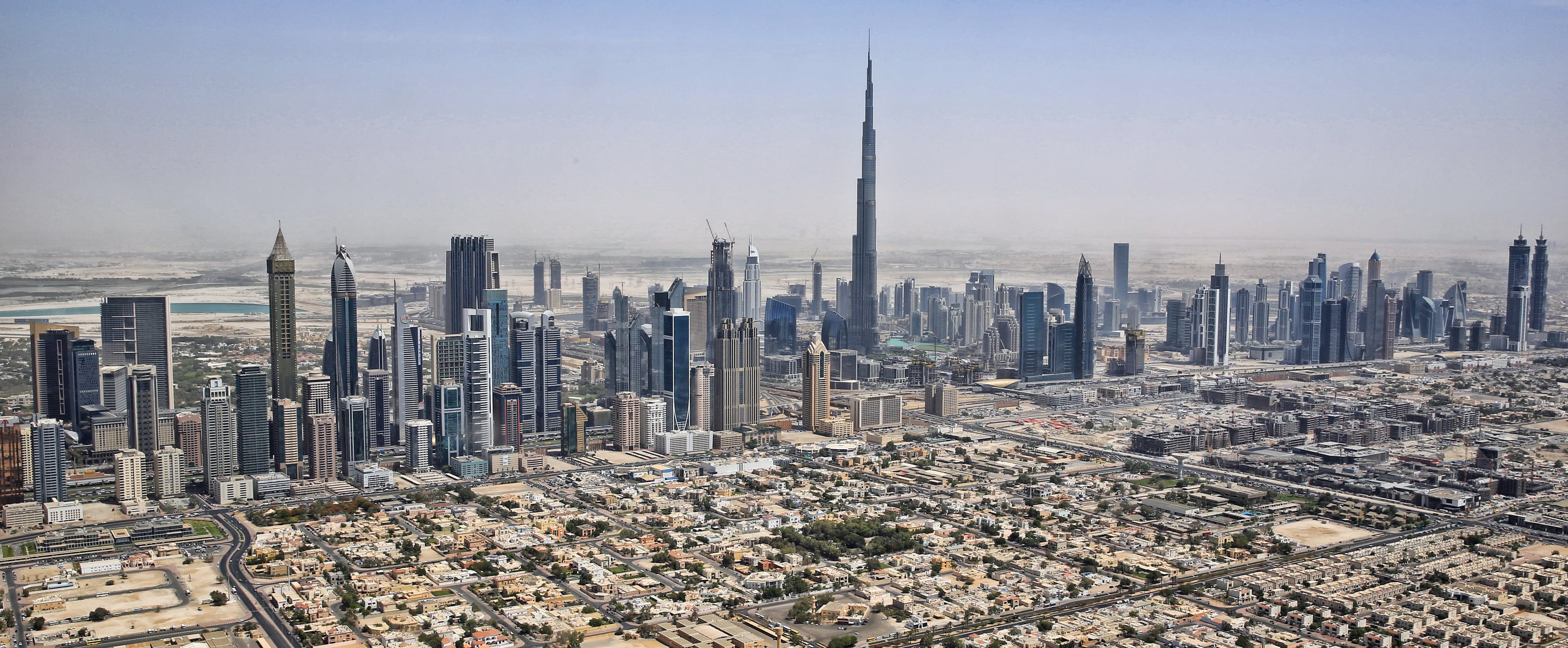
Dubai is a mixture of old and new, traditional and modern. From old traditional souks and historical buildings (now being preserved for cultural reasons or already part of the national heritage) to modern Dubai's overwhelming shopping malls, incredible artificial islands and giant modern skyscrapers that include the world's tallest building, Dubai is a world in itself and offers plenty of wonderful attractions.
The city has numerous museums and historical buildings, but Dubai Museum is a must see for a first-time traveller to the Emirates. It provides a glimpse of the old life of Dubai, its people and their culture and heritage. A number of other museums are located in nearby Sharjah.
Dubai has a justified reputation as a concrete jungle, but there are nice pockets of greenery within the city, such as Safa Park. The city parks are modern and very well-maintained, with the most popular located in Jumeirah.
Do
Individual listings can be found in Dubai's district articles
Abra ride. A boat ride is best done at night in the cool weather and to enjoy the city lights. Abras can be hired for a private tour (for a price negotiable with the driver, but usually very cheap). This is quite a popular activity at sunset on a clear day, particularly if the driver is able to enliven the tour with stories about the structures on either side of the Creek. Just make sure that the purpose of one's abra hire is made clear at the outset, otherwise, you will be in for a very expensive cross-river trip or a crowded private tour.
Beaches and sea. There are endless water sports opportunities as Dubai has some of the whitest and sandiest beaches in the world. Ocean temperatures range from 22 °C (72 °F) in winter up to 35 °C (95 °F) in summer, there are few wave breaks and the strong winds can make swimming difficult. The water is also very salty so many prefer to use their hotel swimming pool. Diving activities have been severely affected by offshore construction work for the Palms and The World; consequently, long boat trips are necessary to reach wreck sites. Alternatively, one can make the 90-minute road journey to the East coast Emirate of Fujairah or the Sharjah enclave, Khor Fakkan, for top-class diving on coral reefs supporting extensive marine life.
Camel race track. One of the more unusual attractions, with races being held on Thursday and Friday in the winter. You can watch the races, and you'll have the opportunity to visit the paddocks. Vendors sell everything from beads to rugs and blankets, so you can purchase souvenirs.
Eat
Individual listings can be found in Dubai's district articles
Shawarma is the most available food item on almost all streets (and cheap) in Dubai. It is the Arabic equivalent of the burger. It is meat that has been cooked on a skewer and then cut into thin strips and placed into a kuhbus (pita) bread with vegetables and dressing. There is the plain-jane variety and the more exotic Lebanese and Iranian varieties. The shawarma sold by Indian restaurants are arguably the cheapest.
Another local snack is fala-fil (felafel, falafel), which is as cheap as shawarma.
Traditional Emirati food normally involves rice and meat/chicken cooked with different spices. As such, mandi is a very popular meal and generally affordable, except when served in high end restaurants. Emirati restaurants can be mostly found in areas with local residents, such as Deira, Bur Dubai and Jumeirah. Traditional desserts are also worth trying. Search for luqaimat, deep fried dough balls tossed with date syrup on top. You'll find it at any Emirati restaurant as well as some small cafeterias or street markets.
Most of the American fast food chains have set up shop, including KFC, Chillis, TGI Fridays, Starbucks, and McDonalds. The beauty of the food in Dubai is that you will probably find cuisine for every taste. All food is halal.
Dubai has a big selection of budget Indian food. Dosa, vada, idlee, samosa, chapaati/roti, with generous servings of sabji (cooked vegetable stew) are available for cheap. Bur Dubai (particularly Meena Bazaar area) and Karama are the places that abound in these restaurants. Most of them are open from 07:00 to 22:00 or 23:00 throughout the week.
Pork is eaten here mostly by non-Muslim Filipinos and Europeans. Pork sections exclusive for non-Muslims are found in Spinneys (numerous branches, including ones in Jumeirah and Dubai Marina), Al Maya Lal's (generally caters to Filipinos; there's a branch in Satwa) New Westzone Supermarket (has a branch in Satwa that's bigger than nearby rival Al Maya Lal's), Choithrams and Waitrose.
Drink
Individual listings can be found in Dubai's district articles
Dubai has supercharged the nightlife in the last decade and most international known brands have a sister location in town. Most 3-5 star hotels have bars and nightclubs for those interested in the nightlife. World-class DJs frequent Dubai's nightclubs, and many A-list musical celebrities are adding Dubai to their list of tour dates. There is nothing missing and during the high tides of the party time, the impression of being in Ibiza is not misleading. Most of the night life is geared at the beaches of Jumeirah or the Dubai Marina. Bur Dubai is more family-oriented (e.g. Dubai Fountain), while Deira was able in parts to maintain its more Arabic focussed style. Dubai is very popular with Arabic travellers, so an Arabic blend is added quite often.
Dubai has several laws regarding alcohol which travelers should be aware of:
Alcohol is available only at licensed premises, usually attached to hotels (most nightclubs and bars are in or attached to hotels, though they may have separate entrances). As of 2023 there is one public cinema that serves alcohol (Cinema City's Azul Lounge & Theatre), as well as a few private cinemas that can be booked for groups.
Alcohol is not sold on religious holidays. From 2016, it can be sold during Ramadan.
It is illegal to drink alcohol in public places, and there is a zero-tolerance policy on drunk driving. Anyone involved in a collision found with alcohol in their blood will usually get a month's jail sentence and fine.
Alcohol can be bought only for home consumption at certain outlets in Dubai, and an alcohol license is required. Supermarkets only stock non-alcoholic beers. Even food items containing alcohol are not sold in supermarkets.
Remember to carry some sort of identification when visiting a bar if you are young, as you will not be let in otherwise. The law prohibits anyone below 21 to enter.
Get around
Dubai's public transport system is one of the best in the Middle East, especially after the launch of the metro, but most visitors end up taking taxis quite often. Using the public transport is a viable option during the winter months, as long as you avoid the rush hour on the red metro line. In the summer, due to the intense heat, taking a taxi is more practical, even if it's just to get to the nearest metro station.
The timetables of the public transport are integrated into Google Maps. In the app, the routes of the metro and tram can be displayed permanently as a map layer.
There are different types of transportation cards. In most cases the NOL Silver Card stored-value card is the right option for you. The card gives a discount on the single fares and transfers are not charged. The silver (and gold) card can also be topped up using the app called nol Pay together with an NFC capable smartphone and a credit card.
Paying a single fare with the NOL Red Ticket is for passengers who want to use the public transport no more than 5 times altogether during their stay in Dubai, and don't want to transfer to another means of transport on their journey. The red ticket can only be recharged at metro stations and bigger bus stations, so have that in mind if you want to start your journey from a small local bus stop. The one-day pass, valid for unlimited rides on the metro, tram and buses, can only be bought with a red ticket.
All mentioned transportation cards are available at metro stations, major bus stations and at both Dubai airports. Tap out at the end of your trip in buses - even with a day pass.
Fares
By metro
Dubai Metro has two lines which are open as of 2025:
The Red Line is 52 km (32 mi) long and opened in September 2009. It's the second metro in the Arab world after Cairo. While the line does not serve the old city centre, it's handy for zipping along Dubai's long coastline and includes stops at the airport, Burj Khalifa and the Mall of the Emirates. The track 2020 expo - an extension of the Red Line - was completed in 2020.
Stay safe
Dubai is one of the safest cities in the world with regard to street crime. Call 999 if you need police attention. If you heard the sound of cannon fire, don't panic! It actually marks the time to break the fasting during Ramadan. This tradition started in Dubai since 1960. This is because most mosques in the UAE did not have loudspeakers several decades ago, so they used a cannon instead - which had a loud sound - to inform local residents that the fasting time was over.
Traffic
Driving and pedestrian safety has also been an issue given the different nationalities that share the road. Do not jaywalk or cross where there are no clear pedestrian markings. Speeding is common here, and the odds of you being hit by a car are quite high unless you follow the rules. Avoid driving on the extreme left lane of highways to avoid being "flashed" and being forced to move a lane over. Road rage is also starting to become an issue given the increase in traffic jams and poor driving courtesy.
Rude hand gestures (the "finger", etc.) and profanity can lead to fines and jail times if reported, so keep your cool if you are cut off or are behind an erratic driver. In general, you will find those gestures and actions that some may find only slightly offensive in your home country, or perhaps not offensive at all, can at times be extremely offensive to the Dubai locals. Therefore, err on the side of caution and keep your cool.
Islamic laws
The United Arab Emirates may have more relaxed laws than their other Arab counterparts, but the laws are still very different from most Western countries, and their laws are strictly enforced. Having an alcoholic drink in the wrong place or even losing your temper could land you a month or more in prison. Exercise caution and common sense when visiting, and make sure you are aware of all their laws or expect severe consequences that could seriously ruin your visit.
Dubai follows Islamic laws which should be respected by all visitors. Islam is the official religion, therefore do not publicly criticize or distribute material against it.
Practical facts for United Arab Emirates
Taken from open data. Rules and numbers change, so check locally before you rely on them.
- Currency
- United Arab Emirates Dirham (AED)
- Languages
- Arabic (United Arab Emirates), Persian, English, Hindi, and 1 more
- Plugs and power
- Types C and G, 220 V at 50 Hz
- Traffic drives
- On the right
- Country calling code
- +971
- Time zone
- Asia/Dubai
Official travel advice
Quoted from each government as published, with the date they last changed it. We do not add a verdict of our own.
UK Foreign, Commonwealth & Development Office
- No areas listed that it advises against travelling to
Read the full adviceRegional tensions
The context in the Middle East remains deeply unpredictable and the risk of sudden escalation is high. Since conflict began in early 2026, Iran has stated its intention to target locations associated with the US and Israel, including, but not limited to, organisations, businesses, facilities, and institutions. There have been strikes and retaliatory attacks by Iran and others across the region against civilian and US military infrastructure.
British nationals in, or planning to travel through, the Middle East should be prepared for possible flight cancellations, airspace closures, and travel disruptions. You should:
• read If you’re affected by a crisis abroad - GOV.UK. This includes guidance on “how to prepare for a crisis” with suggestions on what you might include in your emergency supplies and “what to do in a crisis”
US Department of State
Level 3 of 4: Reconsider travel
Read the full adviceReconsider travel to the United Arab Emirates due to terrorism and armed conflict.
U.S. government employee travel restrictions
U.S. government employees working in the UAE need special authorization to travel to military bases and critical energy infrastructure sites due to UAE government restrictions and potential security risks. Additional staffing posture adjustments may be imposed on U.S. personnel under Chief of Mission security responsibility due to evolving security issues.
Entry and visas
Entry rules depend on your passport and change without notice. Check the official pages before you book.
Sources