
Thailand
A plan for Chiang Mai
Not a list of things to see in Chiang Mai — a day-by-day plan somebody could actually follow, built from places we can point to a source for. Make your own in about a minute.
- 2 nights
- Couple
- Balanced pace
- Mid-range budget
Every place here was checked on 2026-10-27 or later, and each one says where it came from.
The plan, day by day
Day 1
09:30
You arrive
13:00
The Red Lion
Suggested because you chose food
- 1h
- Meal
14:30
Chiang Mai House of Photography
Picked because you chose culture & museums + balanced energy
- 2h 30m
- Culture & museums
2h open
Nothing planned here. That was on purpose.
19:00
Chiang Mai Saloon
Suggested because you chose food
- 1h 30m
- Meal
20:30
Number 1 Cafe Bistro
Picked because you chose food and local experiences + balanced energy
- 1h 30m
- Food
Day 2
08:00
Cafe de Thaan Aoan
Suggested because it fits a mid-range budget
- 45m
- Meal
45m open
Nothing planned here. That was on purpose.
09:30
Chiang Mai Historical Centre
Picked because you chose culture & museums + balanced energy
- 2h 30m
- Culture & museums
1h open
Nothing planned here. That was on purpose.
13:00
Zoe in Yellow Garden
Suggested because you chose food
- 1h
- Meal
14:30
Kalm Village Chiang Mai
Picked because you chose culture & museums and local experiences + balanced energy
- 1h 30m
- Culture & museums
3h open
Nothing planned here. That was on purpose.
19:00
Archers
Suggested because you chose food
- 1h 30m
- Meal
20:30
Ram Bar
Picked because you chose food + balanced energy
- 1h 30m
- Food
Day 3
08:00
Love at First Bite
Suggested because it fits a mid-range budget
- 45m
- Meal
45m open
Nothing planned here. That was on purpose.
09:30
พิพิธภัณฑ์พื้นถิ่นล้านนา
Picked because you chose culture & museums + balanced energy
- 2h 30m
- Culture & museums
1h open
Nothing planned here. That was on purpose.
13:00
By Hand Pizza Cafe
Suggested because it fits a mid-range budget
- 1h
- Meal
14:30
You leave
Weather through the year
Monthly averages from NASA's 25-year climate record, day and night together.
Best months: January, February, November, and December
| January | Mild and dry: 19°C, 15 mm |
|---|---|
| February | Mild and dry: 22°C, 5 mm |
| March | Warm and dry: 25°C, 23 mm |
| April | Mild, some rain: 27°C, 63 mm |
| May | Rainy: 26°C, 189 mm |
| June | Rainy: 25°C, 141 mm |
| July | Rainy: 24°C, 178 mm |
| August | Wet season: 24°C, 237 mm |
| September | Wet season: 24°C, 222 mm |
| October | Rainy: 23°C, 123 mm |
| November | Mild and dry: 21°C, 37 mm |
| December | Mild and dry: 19°C, 13 mm |
From the Wikivoyage guide
Quoted from the travel guide anyone can edit, as it read on the day we took it.
Understand
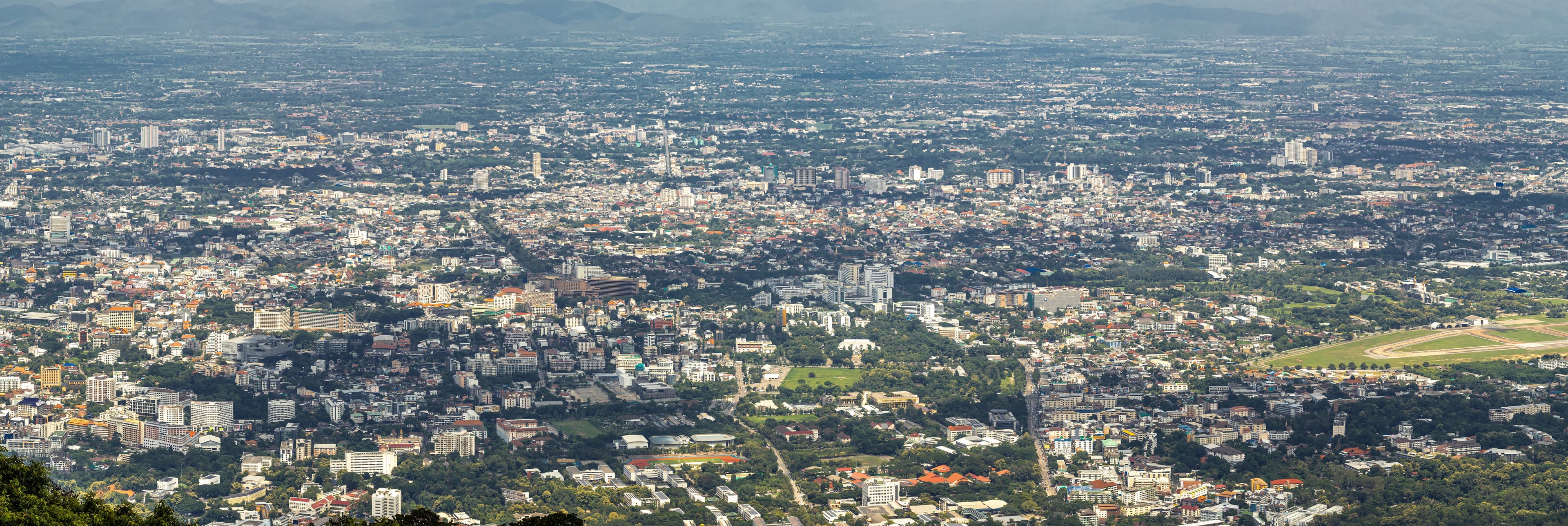
With a population of over 127,000 registered residents in the city municipality (as of 2016), and 1.2 million in the urban city area as of 2022, it is Thailand's second-largest city.
Founded in 1296 CE, Chiang Mai is a culturally and historically interesting city, at one time the capital of the ancient Lanna kingdom. In the rolling foothills of the Himalayas 700 km north of Bangkok, until the 1920s it could only be reached by an arduous river journey or an elephant trek. This isolation helped preserve Chiang Mai's distinctive charm, which remains intact.
Chiang Mai's historical centre is the walled city ("city" is chiang in the northern Thai dialect while mai is "new", hence Chiang Mai translates as "new city"). Sections of the wall dating to their restoration a few decades ago remain at the gates and corners, but of the rest only the moat remains.
Inside Chiang Mai's remaining city walls are more than 30 temples dating back to the founding of the principality, in a combination of Burmese, Sri Lankan, and Lanna Thai styles, decorated with beautiful wood carvings, Naga staircases, leonine and angelic guardians, gilded umbrellas and pagodas laced with gold filigree. The most famous is Wat Phrathat Doi Suthep, which overlooks the city from a mountainside 13 km away.
Modern-day Chiang Mai has expanded in all directions, but particularly to the east to the banks of the Ping River (Mae Nam Ping), where Changklan Rd, the famous Night Bazaar, and the bulk of Chiang Mai's hotels and guest houses are located. Loi Kroh Rd (ถนนลอยเคราะห์) is the centre of the city's (tourist) night life.
Locals say you've not experienced Chiang Mai until you've seen the view from Doi Suthep, eaten a bowl of kao soi and purchased an umbrella from Bo Sang. Of course this is touristic blather, but kao soi, Bo Sang umbrellas and Doi Suthep are important cultural icons for the locals.
See
Gardens and nature
1 Chiang Mai Foreign Cemetery, Chiang Mai-Lamphun Rd (about 800 m north of the Holiday Inn, east side of the Ping River). A place of history and remembrance. A statue of Queen Victoria is overlooking the place.
2 Chiang Mai Zoo & Aquarium, 100 Huay Kaew Rd (at the foot of Doi Suthep), ☏ +66 53-893111. Daily 09:00-17:00. A large park with over 400 species of animals, extremely popular with Thai tourists, and long queues may be encountered during Thai holidays. While better than some zoos, many animals are nevertheless kept in small enclosures. The zoo operates a dual pricing system wherein non-Thais are charged approximately double the price of Thai nationals. Additional charges are applied for the aquarium. Many of the animals can be fed for a charge of 10 or 20 baht. The park is pretty large, and expect plenty of hills if you want to walk the complete route, so taking the "tram," which is an open-air cart, is a faster and more convenient way to get around, though the last tram starts at 16:30. It's possible to drive through with your car, and there are parking spots next to the animal exhibits. If you have a rental scooter or bike, definitely bring it though. The zoo closes at 17:00, but many visitors wander to the exit gate well past closing time.
Do
Festivals
The most important festivals
Chiang Mai Flower Festival. It is a three day festival staged every year starting the first Friday in February (in 2026, due to elections one week later). The city is awash with vibrant colours ranging from the electric orange and lilac colours of the bougainvillea to the velvety blossoms of petunias in all shades of pink, white, and purple. The strident red of the poinsettias, bought by many at Christmas and New Year, is echoed by beds of scarlet salvias. Homes and shop owners alike line the city streets with colourful flower boxes. The sheer profusion of colour that the flower festival and carnival brings to Chiang Mai aptly gives the city its name "Rose of the North". On all three days of the festival, prize blooms are on display at Nong Buak Had Park near the city centre. Many types of flower, miniature trees and orchida are put on display for the judges to choose the best of the species. Landscape specialists put on an elaborate display, which includes patios and waterfalls with exotic decorative plants and flowers. The best part of the flower festival is on Saturday.
The parade lines up from the train station to Nawarat Bridge so the police close most of Charoen Muang Rd around 08:00. The VIP viewing stand is right next to the bridge in front of the Chiang Mai Governor's home. The parade route goes up Tha Phae Rd to the gate and turns left and follows the moat to Nong Buak Had Park. The parade moves at a slow pace and stops several times so there is plenty of time to take pictures of the colourful floats, pretty girls and hill tribe people in native costume. The paraders hand out roses to spectators lining the road. When the parade finishes everyone heads to Nong Buak Had where all the floats, award-winning flower growers and landscape projects are all on display. There are plenty of food stalls in the park, and in the late afternoon the Miss Chiang Mai Flower Festival starts. The party goes well into the evening until the new Flower Festival Queen has been chosen. This is a great time to visit Chiang Mai, as the air is cool and the evenings fresh and clear. If you want to see the festival make sure you book your hotels and flights well in advance.
Eat
Chiang Mai's restaurants offer a wide range of food, second only to Bangkok. Naturally it's a good place to sample northern Thai food: in particular, hunt down some khao soi, yellow wheat noodles in curry broth, traditionally served with chicken (kai) or beef (nuea), but available some places as vegetarian or with seafood. Another local specialty is hang ley, Lanna-style pork curry. The area is also a home to a type of pork sausage called sai ua, which is favoured using chilli and various Thai herbs such as lemongrass, galangal and Kaffir lime. For those tired of eating rice or noodles there's also a wide range of excellent international food restaurants, from cheap hamburger stands to elaborate Italian restaurants.
When you come to Chiang Mai you should try a khantoke dinner and show. Although these are just for tourists it is still a nice way to spend an evening. The first khantoke dinner was held in 1953 by Professor Kraisi Nimanhemin who wanted to host a special event for 2 friends leaving Chiang Mai. Two more such dinners were held, both in 1953, thus "khantoke" dinners are not "historic", but rather a relatively recent invention. Khantoke literally means small bowl, low table (khan = small bowl. tok = low table) There are also many garden restaurants where you can enjoy an excellent Thai meal in a beautiful setting.
The range and value of Western food in Chiang Mai is unsurpassed in Northern Thailand and there is a full range of restaurants from Australian/British/Irish, through French and German to Italian, Spanish, American and Mexican. Considering how remote Chiang Mai is from the major centres of population in Asia, there are a remarkable number of Western restaurants.
Drink
Chiang Mai's nightlife is the most happening in the north, although still a far cry from Bangkok's hot spots. The busiest night life zones are near Tha Phae Gate, Loi Kroh Rd and along Charoen Rat Rd on the east bank of the Ping River.
Coffee
Chiang Mai is one of the top destinations for coffee tourism in Asia, and attracts visitors from many countries.
1 Akha Ama, Moon Muang Rd, Soi 9 (NE corner of the old city). 08:00-17:00, closed Wed. Moved to this new location from the Santitham area.
2 Akha Ama Phrasingh, 175/2 Ratchadamnoen Rd (inside moat, near Wat Phra Sing). 08:00-17:30. Now next door at a bigger location, having two floors.
3 Chapter 2W0, 90 Thapae Road, ☏ +66 90 323 4991, Pratchayatoo@gmail.com. Daily 06:00-17:00. A gem of a cafe set in a sprawling garden. Excellent coffee and juice concoctions. Mouthwatering breads and desserts.
4 Cool Muang, Moon Muang Road 81, ☏ +66 8 9756 4321. Using 100% Thai Arabica coffee beans.
5 J. Ju Coffee, 52 Ratchamanka Rd. Run by "Oil", this little place has excellent espresso-based drinks, free Wi-Fi, or ten minutes on the computer with your coffee. Very modern design; seating in the front is open-air while the back is air conditioned. Oil speaks excellent English and is happy to give you the low-down.
6 Ristr8to, 15/3 Nimmanhaemin Rd (between Soi 3 and Soi 5). 08:00-23:00. A trendy art cafe featuring an award-winning barista (world champion latte art 2017), choices of single-origin beans and a varied drink menu. Very friendly atmosphere at much higher standard than is normally seen in Thailand. 89 baht for a doppio ristretto.
7 Sky Café, ☏ +66 86 587 4575. Nice situation on a busy road with across that road a pond where often horses are bathed around 11:00. Espresso is brewed very well, using good coffee beans. (updated Dec 2018)
8 The Baristro Coffee Roaster, 78 Pa Tan Alley (along the river, 850 m north of highway 11), ☏ +66 98 259 7926. 08:00-18:00. Small local chain of coffee places, this one is at the river with garden seats direct at the river. See their website for the other locations. (updated Dec 2024)
Get around
By bus
Chiang Mai has a limited bus service, not without the opposition of the songhthaew (see below) and tuk tuk drivers. The RTC Chiang Mai City Bus follows just a few routes so far, but they quite fit the average traveler's needs, including from/to the airport, and are air-conditioned. The ticket is 20 baht, pay in cash to the driver or else Rabbit card from Bangkok is also accepted. For those wishing to travel really hard, there's a Tourist card - 180 baht per day or 400 baht per 3 days unlimited trips.
By songthaew
The traditional way of getting around the city is by songthaew (สองแถว) which serve as buses and taxis. These covered pick-up trucks have two long bench seats in the back (songthaew means "two rows" in Thai), the seats are shared by multiple passengers and the songthaews stop en route to pick up other passengers who are going the same way.
The colour of the songthaew indicates its general route or usage. Most common by far are red songthaews (called rot daeng, red truck), which don't follow a specific route and roam the main streets around markets, temples, or the bus/train stations. These are the most convenient to take if you are going somewhere specific. Prices are fixed to 30 baht inside the city walls but the price must be negotiated outside the city walls, but expect to pay upwards of 40 baht outside. During peak season these prices can increase to 40 baht within the city walls and up to 200 baht outside - again, that's how much a tourist would pay. Because of the city's somewhat irrational road design, especially inside the old walls, the driver may be forced to take a circuitous route to get to a nearby destination, but it will make no difference to the fare.
Since mid 2017 songthaews have a sign stating "30 baht pp" above the windows of the car. However this is not a translation of the entire Thai text. It turns out to be the maximum, when reading the entire line. A second line, that is below the windows, gives the area for this tariffs: within the 2nd ringroad. Keep this in mind when you have to negotiate.
Stay safe
Emergency contacts
Fire: 053-241777
Police - emergencies: 191
Rescue Team: 053-218888
Tourist police: 1155, 053-278559
Crime
Chiang Mai, like most of Thailand, is quite safe, even at night. The dark streets can look forbidding but violent crime is rare and visitors shouldn't worry unduly. As always, travellers should take extra care in all poorly lit or more remote areas. Don't carry valuables in a bag after dark as the most common tourist related crime here is bag-snatching by youths on motorbikes. Mind your bag especially if you are walking on a dark street at night.
The safest approach is to act like your Thai hosts and wear reasonable clothing (shoulders and chest covered) medium-length skirts, long shorts or long pants, speak in a moderate tone of voice, and avoid flashing money or jewellery. Not only will respectable Thais appreciate your behaviour, you are much less likely to become a target of any criminal activity.
Scams
Some scams from Bangkok have started to rear their ugly heads in Chiang Mai. Two in particular are worth watching out for: the gem scam, where you are talked into buying near-worthless gems at far above their real value; and the tuk-tuk scam, where a smooth-talking tuk tuk driver tells you that the attraction you want to see is closed, and instead offers you a sightseeing tour for 20 baht (or some similarly unrealistic amount) - the tour will either consist of nothing but overpriced gift shops, or will smoothly segue into the gem scam. See the "Stay Safe" section of the Bangkok article for more details.
Practical facts for Thailand
Taken from open data. Rules and numbers change, so check locally before you rely on them.
- Currency
- Thai Baht (THB)
- Languages
- Thai and English
- Plugs and power
- Types A, B, C, and F, 220 V at 50 Hz
- Traffic drives
- On the left
- Country calling code
- +66
- Time zone
- Asia/Bangkok
Official travel advice
Quoted from each government as published, with the date they last changed it. We do not add a verdict of our own.
UK Foreign, Commonwealth & Development Office
- Advises against all but essential travel to parts of the country
Read the full adviceAreas where FCDO advises against travel
Thailand-Malaysia border
FCDO advises against all but essential travel to parts of the south, near the Thailand-Malaysia border:
• Pattani Province
• Yala Province
• Narathiwat Province
• The districts of Chana, Thepa, Na Thawi and Saba Yoi in southern Songkhla Province
FCDO also advises against all but essential travel on the Hat Yai to Padang Besar train line that runs through these provinces.
This is due to regular attacks in the provinces by the border with Malaysia. See Safety and security.
Thailand-Cambodia border
FCDO advises against all but essential travel to areas within 20km of the land border with Cambodia.
Fighting occurred along parts of the border in July 2025, and further clashes took place in early December, involving rocket and artillery fire. Land borders and crossings between Thailand and Cambodia remain suspended. Tourist sites close to the border, including the Khao Phra Wihan Preah Vihear temple, the Ta Kwai Ta Krabey temple and the Ta Muen Thom Tamone Thom temple, are closed. There are unexploded landmines in the area. Travel to affected border regions should be avoided.
Find out more about why FCDO advises against travel.
US Department of State
Level 1 of 4: Exercise normal precautions
Read the full adviceExercise normal precaution in Thailand. Some areas have increased risk. Read the entire Travel Advisory.
Thailand is generally a safe destination for travelers. Review our Travel Guidance for Thailand to learn how to prepare for a safe trip.
• Exercise Increased Caution near the Thai-Cambodian border due to the risk of armed conflict.
• Exercise Increased Caution in the Yala, Pattani, and Narathiwat provinces due to the risk of unrest.
Entry and visas
Entry rules depend on your passport and change without notice. Check the official pages before you book.
Source