
Colombia
A plan for Bogotá
Not a list of things to see in Bogotá — a day-by-day plan somebody could actually follow, built from places we can point to a source for. Make your own in about a minute.
- 2 nights
- Couple
- Balanced pace
- Mid-range budget
Every place here was checked on 2026-10-27 or later, and each one says where it came from.
The plan, day by day
Day 1
09:30
You arrive
13:00
Osaki
Suggested because you chose food
- 1h
- Meal
14:30
Bogotá Botanical Garden
Picked because you chose local experiences + balanced energy
- 2h 30m
- History
2h open
Nothing planned here. That was on purpose.
19:00
Aura
Suggested because you chose food
- 1h 30m
- Meal
20:30
Teatro de Garaje
Picked because you chose culture & museums + balanced energy
- 2h 30m
- Culture & museums
Day 2
08:00
Devachan
Suggested because you chose food
- 45m
- Meal
45m open
Nothing planned here. That was on purpose.
09:30
Colombian National Museum
Picked because you chose culture & museums + balanced energy
- 2h 30m
- Culture & museums
1h open
Nothing planned here. That was on purpose.
13:00
El Gato Gris
Suggested because you chose food
- 1h
- Meal
14:30
Botero Museum
Picked because you chose culture & museums + balanced energy
- 2h 30m
- Culture & museums
17:00
Museo Casa de Moneda
Picked because you chose culture & museums + balanced energy
- 2h 30m
- Culture & museums
19:30
De Una Travel
Suggested because you chose food
- 1h 30m
- Meal
21:00
Teatro Belarte
Picked because you chose culture & museums + balanced energy
- 2h 30m
- Culture & museums
Day 3
08:00
Don Benitez
Suggested because it fits a mid-range budget
- 45m
- Meal
45m open
Nothing planned here. That was on purpose.
09:30
Bogotá Museum of Modern Art
Picked because you chose culture & museums + balanced energy
- 2h 30m
- Culture & museums
1h open
Nothing planned here. That was on purpose.
13:00
Renata
Suggested because it fits a mid-range budget
- 1h
- Meal
14:30
You leave
Weather through the year
Monthly averages from NASA's 25-year climate record, day and night together.
Best months: January and February
| January | Mild, some rain: 19°C, 44 mm |
|---|---|
| February | Mild, some rain: 20°C, 71 mm |
| March | Rainy: 20°C, 132 mm |
| April | Wet season: 19°C, 209 mm |
| May | Wet season: 19°C, 207 mm |
| June | Rainy: 18°C, 162 mm |
| July | Rainy: 18°C, 134 mm |
| August | Rainy: 19°C, 108 mm |
| September | Rainy: 19°C, 103 mm |
| October | Rainy: 19°C, 186 mm |
| November | Rainy: 18°C, 165 mm |
| December | Rainy: 19°C, 103 mm |
From the Wikivoyage guide
Quoted from the travel guide anyone can edit, as it read on the day we took it.
Understand
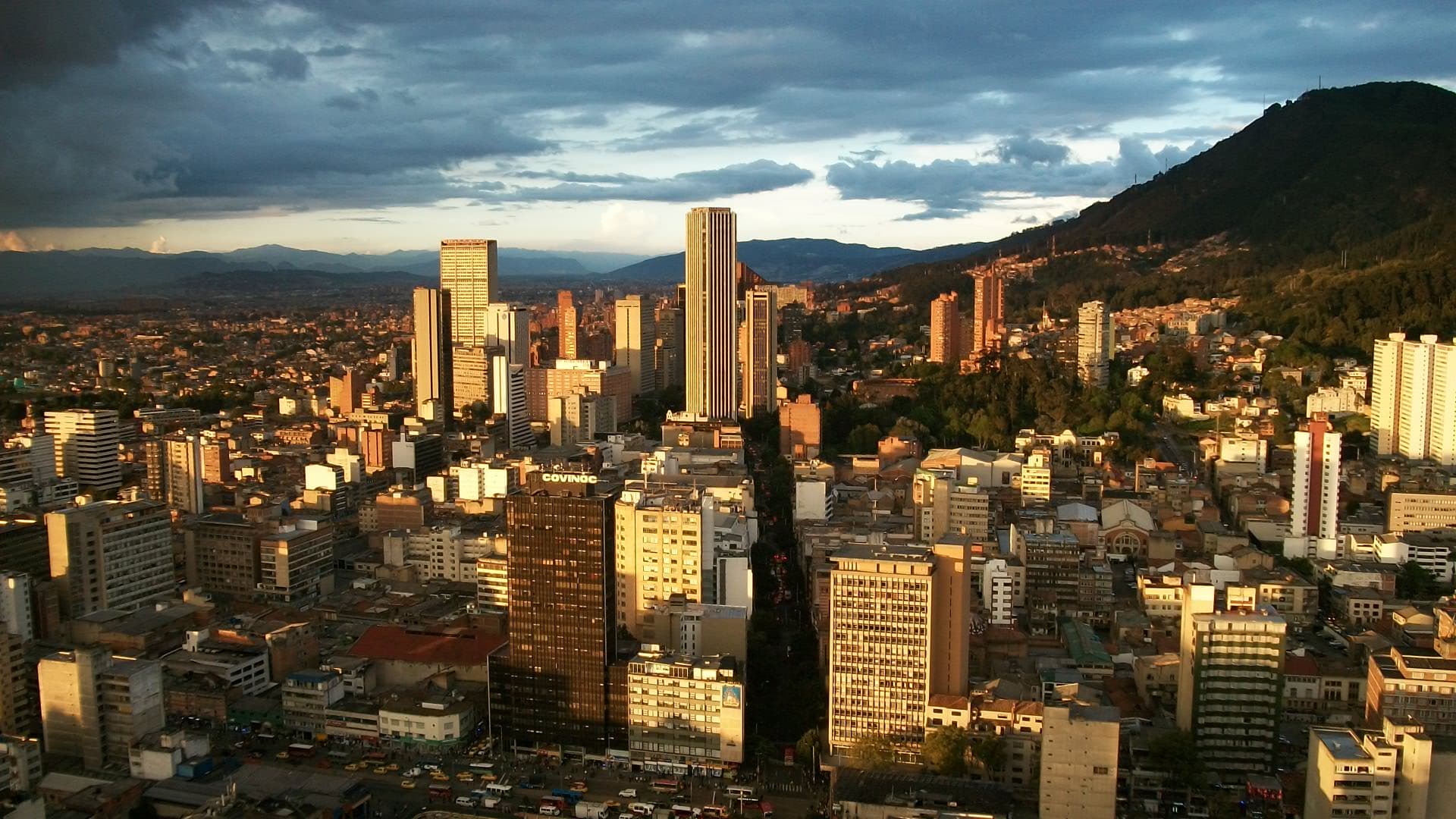
With a population of 15 million people, Bogota DC sits approximately 2,640 m (8,660 feet) above sea level in the Colombian Andes region. Its climate is cool year-round. Orientation is relatively easy, as the mountains located in the eastern parts of the city, are generally visible from most parts of the city.
Aside from being one of Latin America's great capital cities, Bogota is also one of the most modern, multicultural, and cosmopolitan cities on Earth. To understand the sheer size of this vast metropolis, consider that Mexico City and New York City are the only North American cities larger than the capital district. Bogota is the second most populous Spanish speaking city in the World and the fifth largest metropolitan area in the Western hemisphere.
Bogota is a city of many layers, and as such it offers a one-of-a-kind experience to its visitors. Described by the New York Times as one of the world's “greatest cities”', prepare to find a hectic balance between the new and the old; the avant-garde, the modern, and the historic. Encounter 500-year-old plazas overshadowed by towering skyscrapers. Find peaceful tree-lined bicycle routes running through the center dividers of 8-lane avenues. From internationally recognized universities and educational institutions to being one of the globe's leading financial, political, and cultural capitals, Bogota houses an endless number of museums, public parks, and cultural activities. Being the global and regional seat of hundreds of multinational companies, Bogotá is one of the planet's official capitals for business dealings. The city's exposure to European, North American, Middle-Eastern, and Asian influences, brought about by immigrants who came to the city from various parts of the world, ensures that anything from traditional dishes to a renowned steak or sushi restaurant can be found.
See
Many landmark events in the history of Colombian and South American independence took place in La Candelaria, the historic mid-16th-century colonial neighborhood that hosts the national government, including the near killing and escape of Simon Bolivar, the execution of revolutionary heroine Policarpa Salavarrieta, known as 'La Pola,' and the Grito de Libertad, known as the beginning of the region's revolution. The district is teeming with history, and there are a lot of interesting museums (arguably the best being the Gold Museum and the Botero Museum) and old churches. Some of its lovely streets are pedestrian-only. The most important places are Catedral Primada and Palacio de Nariño on Plaza de Bolívar, Iglesia del Carmen, Biblioteca Luis A Arango, the Colonial Art Museum, and the colonial architecture of the houses and buildings. Almost all the museums are free. La Candelaria also contains numerous Catholic churches, many of them centuries-old. The Colombian-American and Colombian-French cultural centers are located in La Candelaria, and a Colombian-Spanish cultural center is under construction.
Outside La Candelaria, the most famous site is up the mountains over Santa Fé at the Sanctuary of Monserrate, which you can see from virtually any place in the city. Take the funicular up, or if you are feeling brave and athletic, hike it. Santa Fé also is home to the National Museum and the Modern Art Museum.
The northern neighborhoods that are so popular for dining and nightlife really don't have all that much to see, in terms of traditional sightseeing, aside from the small colonial center in Usaquén. The park known as Parque 93 is rather pretty, though.
There are a couple interesting sights in Ciudad Salitre, for those either staying out there or those with plenty of time, including the Botanical Gardens and the Maloka Science Center.
Do
Performances and festivals
On some Friday nights, parts of Avenida Septima are closed in the Centro and you can see all sorts of street performers, live music, magic shows, buy crafts and street food. If you don't mind crowds it's worth a visit.
Check out the Iberoamerican Theater Festival, the biggest theater festival in the world (occurs every two years during Easter Week).
Other activities
Catch a football (soccer) game at El Campin Stadium. Easily accessible by Transmillenio and with a capacity of 48,000 spectators, it hosts games for the Colombian international squad as well as for professional league home teams Millionarios and Santa Fe. Avoid the north and south section for these home games which are populated by rival supporter groups; instead get a ticket for the eastern or western wings.
Take a cab or Transmilenio to a working-class neighborhood in the southside. Sit down in a 'panaderia' (bakery), order a "colombiana" brand soda and some good bread. Sit down and breathe the environment of the regular Colombian. Don't narrow yourself to the upscale Norte. Since picking out one of these neighborhoods can be dangerous, the best ones to do so: Santa Isabel, 20 de Julio, The Tunal area.
Go to Parque Simon Bolivar and chill like rolos (Bogota citizens) do, walk around the city's biggest park or ride the train.
Ciclovía. Every Sunday and national holiday from 7AM-2PM, major avenues are closed to cars and thousands of people turn out to bike, skate, jog and walk. You can join on foot or by renting a bicycle in the Candelaria neighborhood with Bogotravel tours.
Sabana de Bogotá. Who would have imagined that there exists a fascinating natural wonder right in the heart of Bogotá? The wetlands of the Sabana (savannah) de Bogotá is where the rivers slow down a bit to rest on the plateau and “clean up” after flowing down from mountains. The water then continues to flow into the valleys to rejoin with the rivers below, including the Bogotá and Magdalena rivers.
Eat
Bogotá's varied gastronomy includes Michelin-starred restaurants serving traditional and innovative Colombian dishes and other cuisines from all corners of the globe.
Local food
Arepas: Corn flour based pancakes, sometimes made with cheese or slightly salted.
Empanadas: The closest comparison would be pastries. These are popular all over South America, so generally each country/region has their own recipe. The filling usually consists of meat, potato, vegetables and rice wrapped in a corn flour crust.
Tamal: Usually eaten for breakfast. A mixture of meat, chicken, potato, vegetables and yellow corn wrapped in plantain leaves and then boiled. Should be accompanied by a large mug of hot chocolate.
Ajiaco: Traditional thick soup based on three kinds of potatoes, chicken, avocado, dairy cream, herbs, corn, among others, usually eaten for Christmas and other important festivals. Typically from the altiplano region, and considered the city's official dish.
Pizza and burgers. OK, can we really call these traditional Bogotá meals? One could surmise they're from here, seeing their omnipresence. The city does both quite well, and you just need to do a 360° turn to find some.
Casual dining
Options are many for casual dining, unsurprisingly for a Latin American city of seven million people. Bogotanos love food from all over, so you'll find a good mix of Colombian food, as well as cheap food from North America (especially pizza and burgers!) and Asia. Note that the Chinese food is almost always Colombianized, which can be pretty good anyway, but is almost never the real deal. Sushi is likewise easy to find, but usually of below-average quality. The clear exception is (upscale) Wok, which has several locations, and for a North American-price will serve you top-notch sushi and other authentic East and Southeast Asian dishes.
Drink
Nightlife in Bogotá is very diverse, and you can almost certainly find whatever experience it is you are looking for. There are English pubs, Latin dance halls, electronic music clubs, quiet storefront bars, wacky themed clubs, salsa clubs, a huge indie-rock scene (if Cali is salsa, Bogotá is rock n' roll), megaclubs, cocktail lounges, etc.
The cosmopolitan side of Bogotá nightlife is overwhelmingly to be found in Zona Rosa and Bogotá/Parque 93. It's a little more spread out and sparse, but you'll find similar places in Chapinero Central, Usaquén, and even Santa Fé and La Candelaria. Chapinero Central and La Candelaria tend to be more bohemian/hipster/artsy/young. Chapinero is also the center of gay nightlife.
Get around
By e-hailing
InDrive, Uber, Cabify and Didi cover the city. As of November 2015, Uber rides can take a while to reach you, particularly if you are in the La Candelaria area. You can also use Uber app to hail a taxi. Note that while rideshare apps are commonly used, they are officially illegal in Colombia, so drivers can be hesitant to drive to places where they may be hassled by police (e.g. bus stations). Drivers may ask you to sit in front so that you appear to be a "friend" of the driver instead of taking a passenger for profit through a ride-hailing app.
By taxi
While ubiquitous and affordable – the local yellow taxis are arguably the most visible representative to the world of Bogotá's worst side. Travelers used to being cheated by taxi drivers probably aren't yet acquainted with the paseo millionario, or "Millionaire Ride," where a taxi driver swings by to pick up well-armed accomplices who then rob you, possibly drug you, and almost certainly take you to multiple ATMs to forcibly withdraw a large sums of money. This rather extreme practice is actually pretty common. Taxis should not be hailed off the street—only called through dispatch. Nice restaurants and any place of lodging will be happy to do this for you, and will express genuine concern if they think you are going to try to hail one. Otherwise, call one yourself at 599-9999, 311-1111 or 411-1111. Sometimes it can take a while to get one, though, so it's good to have a back up. If public transit isn't your thing, consider keeping a private car service on hand. They are pretty good deal for the money, when all is considered, and your hotel or business should be able to recommend one.
Stay safe
Bogotá is not at all as dangerous as it once was and as it may occasionally have been portrayed in certain movies. Its once high murder rate has dropped to exceedingly low levels. Bombings and kidnappings are a thing of the past, and should not be a concern to visitors at all.
The principal safety concerns for travelers are pickpockets and the occasional taxi crime. Occasional pickpocketing is still present in the city. Mugging rates have gone down by tremendous levels, due to recent governments' new policies, but while they are not frequent they still occur occasionally. In the eventuality that they do happen (not very common) muggers are usually armed with knives or guns, and you should simply give them what they ask for without a fight—it's never anything worth risking your personal safety for. Most districts and neighborhoods that are frequented by travelers have no problems like this whatsoever. But there are certain areas in neighborhoods, that have a certain problem with pickpocketers and the occasional mugging, these include some areas of La Candelaria (after dark on weeknights—daytime walks and F-Sa nights are perfectly fine, no matter where you are), some very small parts of Santa Fé, and to a much lesser extent the more southern parts of Chapinero close to Avenida Caracas. Visitors need to be just a bit more careful in the South. Trust the locals if they tell you an area is unsafe or dangerous.
Practical facts for Colombia
Taken from open data. Rules and numbers change, so check locally before you rely on them.
- Currency
- Colombian Peso (COP)
- Language
- Spanish (Colombia)
- Plugs and power
- Types A and B, 110 V at 60 Hz
- Traffic drives
- On the right
- Emergency numbers
- Any emergency123
- Country calling code
- +57
- Time zone
- America/Bogota
Official travel advice
Quoted from each government as published, with the date they last changed it. We do not add a verdict of our own.
UK Foreign, Commonwealth & Development Office
- Advises against all but essential travel to parts of the country
Read the full adviceAreas where FCDO advises against all but essential travel
Colombia-Venezuela border and northern Colombia
FCDO advises against all but essential travel to:
• all of Norte de Santander Department, including Cúcuta.
• all of Arauca Department
• the municipality of Puerto Carreño in Vichada Department
• within 5km of the rest of the border with Venezuela.
FCDO currently advises against all travel to Venezuela’s border regions with Colombia. You should not use any of the Colombia-Venezuela land crossings.
US Department of State
Level 3 of 4: Reconsider travel
Read the full adviceReconsider travel to Colombia due to crime, terrorism, civil unrest, kidnapping, and natural disasters. Some areas have an increased risk. Read the entire Travel Advisory.
Violent crime is common in many areas of Colombia, including murder, assault, and robbery. Other crimes, such as drugging, extortion, kidnapping, and armed break-ins—including at hotels and other places tourists stay—also occur frequently in some regions.
Entry and visas
Entry rules depend on your passport and change without notice. Check the official pages before you book.
Sources