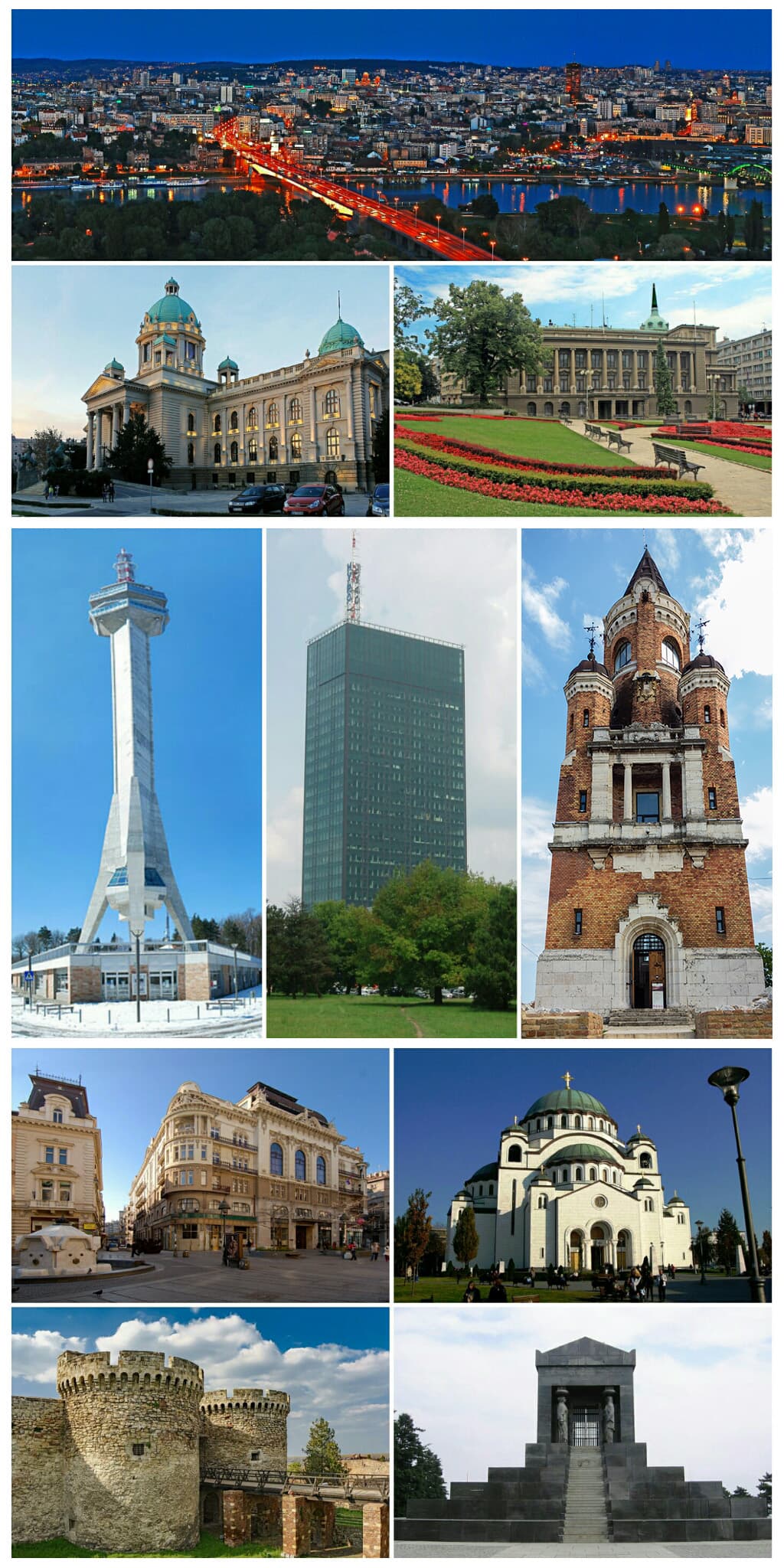

Serbia
A plan for Belgrade
Not a list of things to see in Belgrade — a day-by-day plan somebody could actually follow, built from places we can point to a source for. Make your own in about a minute.
- 2 nights
- Couple
- Balanced pace
- Mid-range budget
Every place here was checked on 2026-10-27 or later, and each one says where it came from.
The plan, day by day
Day 1
09:30
You arrive
13:00
Roll Bar
Suggested because you chose food
- 1h
- Meal
14:30
Nikola Tesla Museum, Belgrade, Serbia
Picked because you chose culture & museums + balanced energy
- 2h 30m
- Culture & museums
2h open
Nothing planned here. That was on purpose.
19:00
Lorenzo & Kakalamba
Suggested because you chose food
- 1h 30m
- Meal
20:30
National Theatre in Belgrade
Picked because you chose culture & museums + balanced energy
- 2h 30m
- Culture & museums
Day 2
08:00
Moon
Suggested because you chose food
- 45m
- Meal
45m open
Nothing planned here. That was on purpose.
09:30
National Museum of Serbia
Picked because you chose culture & museums + balanced energy
- 2h 30m
- Culture & museums
1h open
Nothing planned here. That was on purpose.
13:00
Zapata
Suggested because you chose food
- 1h
- Meal
14:30
Museum of Contemporary Art, Belgrade
Picked because you chose culture & museums + balanced energy
- 2h 30m
- Culture & museums
17:00
Museum of Yugoslav History
Picked because you chose culture & museums + balanced energy
- 2h 30m
- Culture & museums
19:30
Caruso
Suggested because you chose food
- 1h 30m
- Meal
21:00
Atelje 212
Picked because you chose culture & museums + balanced energy
- 2h 30m
- Culture & museums
Day 3
08:00
Amigo
Suggested because you chose food
- 45m
- Meal
45m open
Nothing planned here. That was on purpose.
09:30
Belgrade Military Museum
Picked because you chose culture & museums + balanced energy
- 2h 30m
- Culture & museums
1h open
Nothing planned here. That was on purpose.
13:00
Mika Alas
Suggested because you chose food
- 1h
- Meal
14:30
You leave
Weather through the year
Monthly averages from NASA's 25-year climate record, day and night together.
Best months: May, July, August, and September
| January | Cold: -0°C, 48 mm |
|---|---|
| February | Cold: 2°C, 46 mm |
| March | Cold: 7°C, 50 mm |
| April | Mild, some rain: 13°C, 50 mm |
| May | Mild, some rain: 18°C, 78 mm |
| June | Mild, some rain: 22°C, 83 mm |
| July | Mild, some rain: 24°C, 63 mm |
| August | Mild, some rain: 24°C, 55 mm |
| September | Mild, some rain: 19°C, 56 mm |
| October | Mild, some rain: 13°C, 54 mm |
| November | Cold: 7°C, 47 mm |
| December | Cold: 1°C, 47 mm |
From the Wikivoyage guide
Quoted from the travel guide anyone can edit, as it read on the day we took it.
Understand
The core of the city is on a bluff overlooking the confluence of the Sava and Danube. Both rivers are navigable by large vessels: the Sava up to Sisak in Croatia, and the Danube from the Black Sea all the way up to Kelheim in Bavaria. It's been inhabited at least since 6000 BC and the earliest recognisable town was the Celtic settlement of Singidūn. The bluff now called Kalmegdan was fortified and its environs grew into the White City, beo grad.
Belgrade has, however, suffered over 100 wars and was destroyed over 40 times. Those who've left their linguistic or cultural mark include the Slavs from 520 AD, the Ottoman Empire from 1521, and the Austro-Hungarian Empire from 1688. After the First World War, Belgrade became the seat of the Kingdom of Serbs, Croats and Slovenes, from 1929 known as Yugoslavia. That entity after the Second World War was under Tito's distinctive brand of communism until he died in 1980. The Balkans in the following years were roiled by internecine wars as Yugoslavia broke apart, and in 1999 NATO forces bombed Belgrade to force the independence of Kosovo.
Serbia has not sought to join the EU, eurozone or Schengen area, but Belgrade presents a friendly face to western travellers, with English and German widely understood, and their bank cards accepted. Its overlapping layers of history and capital status create a fascinating vibrant blend. It's easy to reach and relatively inexpensive.
The majority of places of interest are within 2 km of the citadel of Kalmegdan. Belgrade's extension north of the Danube, Kotež, is an ugly sprawl. Novi Beograd is a modern business district west of the Sava, with transport hubs, shopping and entertainment - this page uses its local name to avoid confusion with terms such as "New Belgrade bus station".
Belgrade has a temperate continental climate, with hot rainy summers and cold snowy winters. Keep an eye on the weather forecast when planning your day, and dress accordingly. Košava is the fierce summer wind that's destroyed umbrellas and picnics on a scale that the city's multiple conquerors would admire.
Tourist information is available within the city library at Kneza Mihaila 56, next to the entrance to Kalmegdan. It's open daily 09:00-20:00.
See
Stari Grad
The historic core of the city.
1 Kalemegdan. Is the fortress, park and earliest settlement of Belgrade, on a bluff overlooking the confluence of the Danube and Sava. It's free to access 24 hours. Within its bounds are multiple sites including the military museum, a couple of churches, and a zoo. (updated Oct 2026)
2 Military Museum (Војни Музеј) (within Fortress), ☏ +381 11 334 3441. Tue-Sun 10:00-17:00. Extensive collection of Serbia's military history. Good signage in English. Adult RSD350, con RSD250. (updated Nov 2025)
Ružica church within the Fortress dates to the 15th century, was destroyed in the 18th century, rebuilt and again destroyed in World War I by the Central Powers. The present version was created in 1925, embellished by bronze soldiers guards in front of it and the unusual chandeliers made out of bullet shells, swords and bayonets. "Ružica" means little rose, though it's clad in ivy.
Sveta Petka is a chapel next to Ružica built in 1937.
3 Belgrade Zoo, Mali Kalemegdan 8 (within Fortress), ☏ +381 11 262 4526. Daily Apr-Oct 08:00–20:30, Nov-Mar 08:00–17:00. Popular, but with a lot of animals in a small space. Adult RSD700, child RSD500. (updated Nov 2025)
4 Belgrade Cathedral (Саборна Црква Светог Архангела Михаила), Kneza Sime Markovića, ☏ +381 11 263 6684. Daily 07:00-20:00. The Cathedral Church of St Michael the Archangel is Orthodox, built 1837-40 in neoclassical style with a richly-decorated interior. Buried in front of the church are two notable Serbian linguists, Vuk Karadžić and Dositej Obradović. Free. (updated Nov 2025)
5 Museum of the Serbian Orthodox Church (Музеј Српске Православне Цркве), Kneza Sime Markovića 6 (opposite Cathedral), ☏ +381 11 263 8875. Mon-Fri 09:00-16:00. Museum of church history with frescoes, mosaics, and icons. Good signage in English. Adult RSD200. (updated Nov 2025)
Do
1 Belgrade Arena is a large multi-sports facility that also hosts concerts and similar events. It's on Blv Arsenija Čarnojevića west of the Sava in Novi Beograd.
2 Ada Ciganlija is a river island in the Sava extending 6 km east-west by 700 m north-south, fused to the city mainland since the 1960s and now a large park and recreation area. There are road links at its west and near its east end, while the east tip has a stairway to Ada Highway Bridge. The river loop on its south side between the road links is now a lake for bathing and water sports, with a gravel beach. The island has walking and cycling tracks, sports pitches, golf, and picnic and barbecue areas; camping is not permitted. No bus crosses onto the island but several run along the mainland shore.
Badminton Centar is a sports complex at the east tip.
Markoni Sport by the east road link hires bikes and has other sports gear.
Ice skating: Winter City Ada is by the east road link, see below for other city sites.
Veštačka Stena is a climbing wall 500 m west.
Aqua Ski is west end of the lake.
Ada Međica is a small river island 100 m north of Ada Ciganlija. No boats cross between them, you might find one from the north mainland bank.
(And see above for Great War Island, reached by pontoon bridge from Zemun.)
Luna Park is a chain of funfairs for younger children, with three sites in Belgrade: within Kalmegdan, on Zemun Quay west of the Sava, and 2 km southeast of the centre down Blv Kralja Aleksandra.
Public Observatory (within Fortress). Four small telescopes enable daytime viewing of the city. On F Sa evenings from 20:30 if the sky is clear you can use the 110/2050 mm refractor and 200/2000 mm reflector for night viewing, with commentary and guidance from staff. The regular observatory is 3 km southeast in Zvezdara Park, and occasionally has guided tours. Adult RSD400, child free. (updated Nov 2025)
National Theatre, Francuska 3 (next to National Museum), ☏ +381 11 328 1333. This puts on opera, ballet and theatre. The main hall is worth looking in at, decorated with gilt and artwork. (updated Nov 2025)
BITEF Theatre puts on contemporary and experimental work at Skver Mire Trailović, by Skadarlija Market.
Eat
For more on Serbian cuisine, see Serbia#Eat
Belgrade has restaurants for every budget, from traditional Serbian kafanas and neighbourhood bakeries to fine dining, international cuisine and vegan cafés. Prices are generally lower than in Western Europe, although some of the city's top restaurants are comparable to those in other European capitals.
Serbian cuisine is hearty and meat-heavy. You'll find grilled dishes such as ćevapi and pljeskavica almost everywhere, along with classics like karađorđeva šnicla, sarma (pickled cabbage leaves stuffed with minced meat and rice), podvarak (roasted sauerkraut with meat) and gulaš. Meals are often served with kajmak, ajvar, fresh bread and seasonal salads.
Being at the confluence of the Danube and Sava rivers, Belgrade also has a long tradition of freshwater fish. Many riverside restaurants and floating restaurants (splavovi), especially in Zemun, New Belgrade and around Ada Ciganlija, serve fish soup (riblja čorba), fish stew (riblji paprikaš), grilled carp, catfish, zander and perch. Some splavovi are quiet family restaurants during the day before turning into lively bars or clubs in the evening.
For breakfast or a quick meal, try burek (a flaky pastry filled with cheese, meat, spinach or potato), traditionally eaten with drinkable yoghurt. Bakeries (pekare) are everywhere and are a reliable option from early morning until late at night. Other popular street foods include pljeskavica, ćevapi, pizza by the slice and palačinke (crêpes).
A visit to a traditional kafana is as much about the atmosphere as the food. Many serve classic Serbian dishes accompanied by live folk or tamburica music in the evenings. The best-known concentration of traditional restaurants is in Skadarlija, although excellent kafanas can be found throughout the city.
If you have a sweet tooth, try krempita (custard slice), šampita (meringue cake), baklava, tulumbe or urmašice, all widely available in pastry shops and cafés.
Food markets
Zeleni Venac Market is a covered hall just south of Zeleni Venac bus station midtown, open M-Sa 07:00-19:00, Su 07:00-17:00.
Bajloni Market is a larger hall at the junction of Džordža Vašingtona with Skadarska, open daily 06:00-19:00.
Budget
Some places think that a vegetarian eats fish. If you don't, tell them bez mesa, bez ribe - without meat, without fish.
Drink
Belgrade's drinking scene ranges from traditional kafanas and rakija bars to pubs, specialist cocktail bars, craft-beer taprooms and late-night clubs. Indoor smoking is still common, so travellers who need a smoke-free venue should check before visiting; terraces are widespread in warmer months. Tap water is safe to drink.
The scene is spread across several areas rather than one strip. Skadarlija has traditional restaurants and live folk music, while the adjoining Cetinjska 15 complex has alternative bars and events. Dorćol and Stari Grad have cocktail, wine and craft-beer bars, and Obilićev Venac is a central pedestrian café and pub strip. Floating venues (splavovi) line the Sava and Danube; they range from daytime bars to late-night clubs, and names, programmes and seasonal opening can change, so confirm the exact location before setting out.
Rakija is Serbian fruit brandy. Common varieties include plum (šljivovica), quince (dunjevača), pear (viljamovka), apricot (kajsijevača) and grape (loza). Serbian craft beer is widely available, including at brewery taprooms and specialist bars. Serbian wines are widely available, both by the glass and by the bottle.
When toasting, make eye contact, clink glasses and say Živeli! (cheers). Coffee is normally served Serbian/Turkish-style unless another preparation is specified.
Cocktail and wine bars
1 Blaznavac, Kneginje Ljubice 18, ☏ +381 11 328 5857. Sun-Thu 09:00-00:00, Fri Sat 09:00-01:00. Courtyard café-bar with eclectic decoration, serving cocktails, beer and coffee. (updated Aug 2026)
2 Demokratija bar, Zetska 13, ☏ +381 63 835 2540. Sun 15:00-00:00, Mon 18:00-00:00, Tue-Thu 15:00-00:00, Fri Sat 15:00-01:00. Cocktail and wine bar serving cocktails and house infusions, with a smoke-free interior and outdoor seating. (updated Aug 2026)
3 Riddle Bar, Skadarska 9 (Ring the doorbell at the entrance.), ☏ +381 63 786 0103, bar@riddle.bar. Daily 18:00-02:00. Speakeasy-style cocktail bar without a fixed menu; bartenders suggest drinks based on the guest's preferences. (updated Aug 2026)
Pubs and craft beer
4 Black Turtle, Kosančićev Venac 30, ☏ +381 11 328 6656. Sun-Thu 09:00-00:00, Fri Sat 09:00-01:00. One of several Black Turtle brewery pubs. House beers include fruit-flavoured variants; this branch has outdoor tables with river views. (updated Aug 2026)
Get around
By public transport
Local public transport in Belgrade is free. This excludes trains, and express bus lines with an E route number.
GSP Beograde (ГСП) operates city buses, trams and trolleybuses. You can try to use their Beograd +plus app for timetables and live tracking, but it is a bit slow and cumbersome compared to your regular navigation app.
Buses are the mainstay of city transport, and you can get almost anywhere on them. Buses get very full at peak times, and some are full all day, notoriously the 26, 83 and 50. Their quality varies: those around the city centre or serving posh neighborhoods are usually newer air-conditioned vehicles, e.g. the Polish Solaris Urbino 18. Further out you may encounter some elderly specimens, e.g. the 30-year-old Ikarbus with wooden benches for seats.
There are two main bus terminals for local buses: the former intercity main bus station (Železnička 4; next to the disused railway station) for the west and southwest suburbs, and Zeleni Venac for the north (Zemun and Batajnica) and some western parts of the city (Banovo Brdo, Žarkovo, Čukarica). It's a steep ten-minute walk from the main bus station to Zeleni Venac, with no bus between.
Trams run along 11 routes. These all converge in the Slavija-Vukov Spomenik area except 11 and 13 which run to Novi Beograd. Line 2 orbits the centre. Some trams are modern from the 2020s, while others look like they're from the 1960s.
Trolleybuses follow 7 lines along two main corridors. One corridor is from Studentski trg (near Trg Republike) over Crveni Krst to Konjarnik and Medaković 3. The other is from Zvezdara to Banjica, plied by lines 40 (Banjica-Zvezdara), 41 (Studentski trg - Banjica) and 28 (Studentski trg - Zvezdara).
By train
The suburban railway is called '''BG:Voz''' ("BG Train"). Line 1 connects Batajnica with Ovča via Zemun, Novi Beograd, Beograd Centar (Prokop), Karađorđev Park and Vukov Spomenik. Line 2 runs south from Beograd Centar via Rakovica to Resnik. Frequencies vary by route, time of day and day of the week.
Belgrade's railway stations are also served by regional and intercity trains operated by '''Srbija Voz''', including '''Soko''' InterCity services to Novi Sad and Subotica. Timetables for BG:Voz, Soko and other Srbija Voz services across Serbia can be searched together at vozovi.rs, an independent timetable aggregator.
Stay safe
Overall, Belgrade is a pretty safe city, but like anywhere, you should always keep money, mobile phones, travel documents and other valuable personal items in secure places. Pickpocketers are known to operate in public transportation, and other crowded places so never wear a backpack or purse on your back and make sure that you have your wallet in one of your front pockets. If you own a car, it is preferable to have a security system. Traffic laws are usually observed although nervous drivers can change lanes suddenly or make dangerous turns when avoiding traffic during rush hour. So be cautious if you are a pedestrian or riding a bike. The taxi drivers are notorious for swerving in and out of lanes. Pay close attention to the traffic signals as a pedestrian.
Also try to avoid getting into conflicts. If you are staying out late in a bar or a club, there is always a small chance that someone will try to pick a fight especially if you are in a group and a single guy is showing hostility. That is a trap by local thugs looking for a brawl. Just ignore them and walk away no matter what they say or do. The chances that this will happen are very low, but stay alert. Do not try to make fun of the locals in your native language. Almost everyone has at least a basic understanding of English and is familiar with foul words and curses. Generally, common sense is the best way to stay safe in any city in Europe, and in Belgrade.
Practical facts for Serbia
Taken from open data. Rules and numbers change, so check locally before you rely on them.
- Currency
- Serbian Dinar (RSD)
- Languages
- Serbian, Hungarian, Bosnian, and Romany
- Plugs and power
- Types C and F, 230 V at 50 Hz
- Traffic drives
- On the right
- Country calling code
- +381
- Time zone
- Europe/Belgrade
Official travel advice
Quoted from each government as published, with the date they last changed it. We do not add a verdict of our own.
UK Foreign, Commonwealth & Development Office
- No areas listed that it advises against travelling to
Read the full adviceParliamentary elections
Parliamentary elections will take place in Serbia on Sunday 25 October 2026.
Political demonstrations and large gatherings are taking place in Belgrade and other towns and cities in the run up to the elections. Demonstrations may also take place on election day and the days after. They can be organised at short notice and cause significant disruption, including to public transport and mobile phone networks.
Plan ahead to avoid disruption. Check with your travel provider and monitor local and international media for the latest information. See political situation.
US Department of State
Level 2 of 4: Exercise increased caution
Read the full adviceExercise increased caution in Serbia due to crime.
Crime can occur anywhere in Serbia. Police may take longer to respond than they do in the United States.
Crime
• Violence associated with organized crime and high-profile sporting events is common.
• Petty crime is common, especially in popular tourist locations. Stay aware of your surroundings.
• Most crimes against foreigners are crimes of opportunity, like purse snatching and pickpocketing.
Entry and visas
Entry rules depend on your passport and change without notice. Check the official pages before you book.
Sources