
En plan for Lisbon
Ikke en liste over ting å se i Lisbon — en dag-for-dag-plan noen faktisk kunne følge, bygget av steder vi kan vise til en kilde for. Lag din egen på omtrent ett minutt.
- 2 netter
- Par
- Balansert tempo
- Mellomklassebudsjett
Hvert sted her ble sjekket 2026-10-13 eller senere, og hvert av dem sier hvor det kommer fra.
Dag 1
- 09:30
Du kommer fram
- 13:00
Half a dozen oysters at the counter of the fish market bar
Foreslått fordi du valgte mat
- 14:30
Museu Arpad Szenes - Vieira da Silva
Valgt fordi du valgte kultur og museer + balansert tempo
- 17:00
Ingenting er planlagt her. Det er med vilje.
- 19:00
Hotpot or table barbecue where you cook at the table
Foreslått fordi du valgte mat
- 20:30
Bertrand
Valgt fordi du valgte kultur og museer + balansert tempo
Dag 2
- 08:00
Breakfast at the market hall while the stalls are setting up
Foreslått fordi du valgte mat
- 08:45
Ingenting er planlagt her. Det er med vilje.
- 09:30
Livraria LeYa na Buchholz
Valgt fordi du valgte kultur og museer + balansert tempo
- 11:00
Ingenting er planlagt her. Det er med vilje.
- 13:00
The fixed-price lunch menu locals actually use
Foreslått fordi du valgte mat
- 14:30
Museu Nacional do Azulejo
Valgt fordi du valgte kultur og museer + balansert tempo
- 17:00
Ingenting er planlagt her. Det er med vilje.
- 19:00
The neighbourhood favourite you book on day one
Foreslått fordi du valgte mat
- 20:30
Zé dos Bois
Valgt fordi du valgte kultur og museer + balansert tempo
Dag 3
- 08:00
Dim sum and tea in a hall full of families
Foreslått fordi du valgte mat
- 08:45
Ingenting er planlagt her. Det er med vilje.
- 09:30
Museu da Carris
Valgt fordi du valgte kultur og museer + balansert tempo
- 12:00
Ingenting er planlagt her. Det er med vilje.
- 13:00
Food hall lunch where everyone picks their own stall
Foreslått fordi det passer et moderat budsjett
- 14:30
Du drar
Været gjennom året
Månedssnitt fra NASAs klimadata for de siste 25 årene, dag og natt sammen.
Beste måneder: juni, juli, august og september
| januar | Mildt, noe regn: 13 °C, 65 mm |
|---|---|
| februar | Mildt, noe regn: 13 °C, 51 mm |
| mars | Mildt, noe regn: 14 °C, 60 mm |
| april | Mildt, noe regn: 15 °C, 54 mm |
| mai | Mildt og tørt: 17 °C, 31 mm |
| juni | Mildt og tørt: 19 °C, 11 mm |
| juli | Mildt og tørt: 20 °C, 3 mm |
| august | Mildt og tørt: 21 °C, 6 mm |
| september | Mildt og tørt: 20 °C, 25 mm |
| oktober | Mildt, noe regn: 19 °C, 79 mm |
| november | Mildt, noe regn: 16 °C, 92 mm |
| desember | Mildt, noe regn: 14 °C, 65 mm |
Fra reiseguiden på Wikivoyage
Sitert fra den åpne reiseguiden slik den så ut den dagen vi hentet den.
Forstå
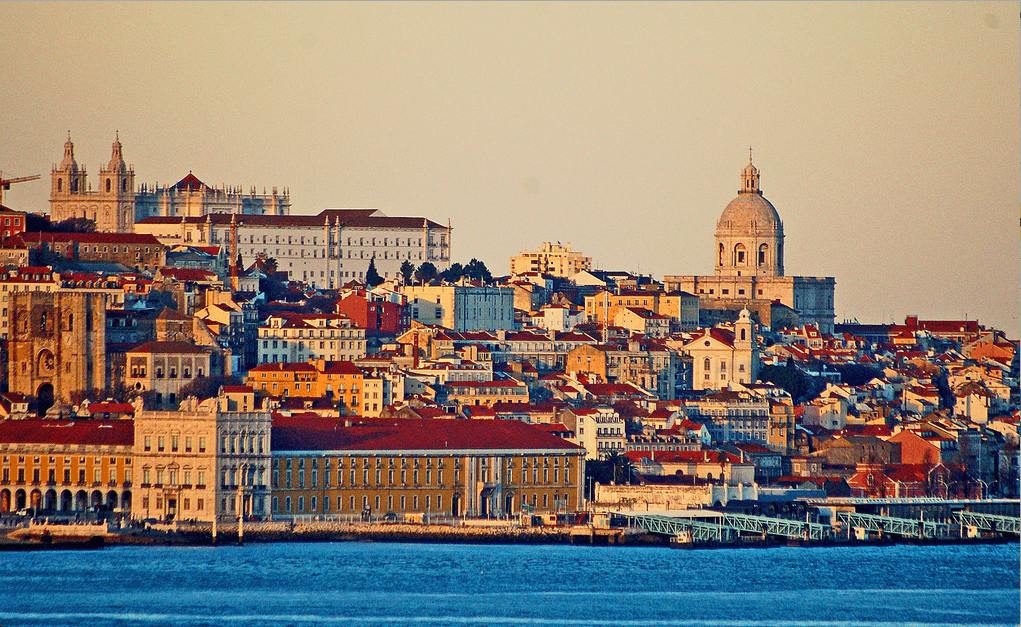
Lisbon is built on seven hills, so getting around Lisbon can be a workout. Many slopes and few really flat areas is one of Lisbon's trademarks. This is also a city of enchanting contrasts: The elegant squares, broad avenues, monumental buildings and rectangular layout of the lower areas quickly gives way to the hilly, narrow, winding, unpredictable and cramped streets of districts such as Alfama and Bairro Alto. The elegant dining rooms and smart rooftop bars of expensive hotels seems like a different world compared to the excellent restaurants disguised behind an inconspicuous façade in a modest Bairro Alto street. Quality patisseries and restaurants thrive side by side with late night bars and noisy discos. The old, tiny squeaky trams (one of the city's trademarks) are no less of a contrast to the efficient metro network.
The Portuguese capital is often perceived as less frantic than other million cities, and traffic and barkers are less aggressive than in many other tourist destinations.
History
According to legend, Lisbon was founded by the mythical Greek hero Odysseus, during his travels home from Troy. However, most historians believe that the city was founded around 1200 BC by Phoenician settlers, utilizing the calm and fresh waters of Tagus river and the proximity to the sea. The Phoenician name of the city is Alis-Ubo, meaning "safe harbour". Eventually it became part of the Carthaginian Empire. After the Punic Wars, it became the main trading hub of the Roman province Lusitania, under the name Felicitas Julia Olisipo, later Olisipona. During the decline and fall of the western Roman Empire, the Iberian peninsula was invaded by Vandal and Visigothic tribes.
In 711, Lisbon was captured by Muslim forces. During this period, the Castle of São Jorge was expanded. Much of the Moorish heritage is preserved in the nearby Alfama, the oldest standing district of the city. In 1147, a Crusader army en route to the Holy Land helped King Afonso I conquer Lisbon and return it to Christian rule. After the completion of the Portuguese Reconquista some hundred years later, Lisbon was made the capital of Portugal.
Se
Individual listings can be found in Lisbon's district articles
Lisbon is a city on the water—the River Tagus (Rio Tejo)—built on seven hills that are traversed by trams. This has led to comparisons with San Francisco. To provide access from the southern suburbs, Lisbon has two spectacular bridges. The 25th of April Bridge (Ponte 25 de Abril) combines the design of the San Francisco–Oakland Bay Bridge with the color of the Golden Gate Bridge, and it's often mistaken for the latter. The Vasco da Gama Bridge (Ponte Vasco da Gama), Europe's longest, was built in the 1990s for Expo '98. One of Lisbon's great landmarks, Cristo Rei, a 28 m (92 ft) statue of Christ the King on an 82 m (269 ft) pedestal, isn't even in Lisbon itself, but across the river in Almada, big enough to be easily seen from the capital.
Alfama
Built on the hills east of the Baixa, Alfama survived the Great 1755 Earthquake largely intact. Climbing the narrow ancient lanes provides an excellent workout. You can spare your legs by taking the little historic yellow trams that serve the neighborhood. Major sights include Lisbon Cathedral and St. George's Castle.
Bairro Alto
The Bairro Alto, or "Upper District" (dare we say "High Neighbourhood"), has become Lisbon's youthful, trendy quarter. The district includes the Chiado neighbourhood, known for its numerous historic landmarks and theatres. Among the district's many sights are the São Bento Palace (where the Portuguese parliament meets), the Museu Nacional de Arte Antiga (a museum of antique art), and the Lisbon Botanical Gardens.
Baixa
Lisbon's "downtown" was rebuilt in a grid street pattern following the destruction of a 1755 earthquake. The magnificent Praça do Comércio lies on the river, has a tall equestrian statue and is surrounded by lovely yellow buildings. The Baixa has several other noteworthy squares: Praça dos Restauradores, Praça Dom Pedro IV, and Praça da Figueira. The Santa Justa Lift connects the Baixa with Chiado.
Belém
Lisbon's western district is packed with famous monuments, especially along the riverbank. These include the Torre de Belém, the Monument to the Discoveries, and Jerónimos Monastery. Museums include the Navy Museum, the Museu Colecção Berardo, and the National Coach Museum.
Gjøre
Individual listings can be found in Lisbon's district articles
Go out at night to the central Bairro Alto, or 'High Neighbourhood'. Just up the hill from Chiado, this is the place to go out in town. In the early evening, go to a fado-themed restaurant near the Praca Camoes, and head upwards as the evening goes on. If you're in Lisbon on the night preceding a Feriado or public holiday, you have to check this out. Tiny little streets which are empty in the daytime become crammed walkways which are difficult to get through. For more of a clubbing or disco experience, try the Docas district along the marina overlooking the Ponte 25 de Abril.
Stages
The Lisbon stage events calendar is a full one all year round. The city presents good quality productions in ballet, modern dance, chamber music, opera and theatre. The Teatro Nacional de São Carlos is a magnificent opera house in the La Scala tradition.
On a light note, there's also "Teatro de Revista", a kind of social/political satire theatre that was born in Lisbon. English-language productions are staged. It's one of the local culture favourite live entertainment shows to see when you visit the city but you can only find it in the Parque Mayer. Due to high demand, you should buy tickets in advance. To do so for any of the shows, ABEP "Agência de Bilhetes para Espétaculos Públicos" (Ticket Agency) is the place to contact.
Recurring events
Moda Lisboa, Rua do Arsenal, 25, ☏ +351 21 321 30 00, modalisboa@modalisboa.pt. March. Lisbon Fashion Week. (updated Nov 2017)
English Comedy Showcase (at Selva Comedy Cafe). Every Tue. Featuring Portuguese and international acts doing their sets in English. A great way to get a deep cultural insight into life in Lisbon through laughter. Usually free entry and donation based. (updated Feb 2026)
Peixe em Lisboa. April. A food festival, with focus on fish dishes. (updated Jan 2021)
Dias da Música em Belém. End of April. A music festival held in Belém in western Lisbon. (updated Jan 2021)
Spise
Individual listings can be found in Lisbon's district articles
Portuguese dining rituals tend to follow the Mediterranean siesta body clock. Most restaurants are very small, family-run and generally inexpensive. Some of them have a sheet on the door with the pratos do dia (dishes of the day) written on it – these dishes are usually cheaper and fresher than the rest of menu there, and unless you're looking for something specific, they're the right choice. During the dinner the waiter will probably bring you some unrequested starter dishes (called couvert); as those are not free, don't feel obliged to touch them and they will not be charged on your bill (but check it!).
Traditional Portuguese restaurants are in Bairro Alto, scattered abundantly through its quirky narrow streets, and for Portuguese traditional cuisine at its finest, head to the area of Chiado. Tour groups primarily feel at home in Alfama. Tourist traps with laminated menus and meal deals are mostly concentrated in the Baixa area; one exception to this is the Rua das Portas de Santo Antão, a 'seafood strip' northeast from and parallel to Praça dos Restauradores. If you feel like eating with the local people, try the Castelo neighborhood, the smaller family run places serve a fixed daily menu and are not expensive, getting up there by foot will open an appetite, or else go in the elétrico. For a familiar taste at one of the many chain eateries, head to Doca de Santo Amaro (train/tram 15 station Alcantara-Mar) and Parque das Nações (metro Oriental). All the culinary and clubbing kudos is right now concentrated in Doca de Jardim de Tabaco (piece of river waterfront right under Castelo de Sao Jorge). Quality dishes for a high price are in well-to-do Lapa. The Pastel De Nata is one of Portugal's most well known foods, with this delightful custard egg tart best found in Belem.
Drikke
Individual listings can be found in Lisbon's district articles
Lisbon is known for its lively nightlife. For going out, stroll around the old neighborhood of Bairro Alto for an after-dinner caipirinha or ginjinha and people-watching. Its small streets, full of people, are packed with a high variety of bars. On weeknights bars close at 02:00, weekends at 03:00. The party continues in a night-club after that. Just follow the hordes of people down the hill - people have been doing that for hundreds of years.
Alcântara, Santos, Parque das Nações, and the castle area are all neighborhoods with a thriving nightlife. The whole area near the river/Atlantic, known as the docas, is a huge hub for nightlife, as Lisbon has never lost its ties to the sea.
Fado (fate) is a type of folk music which developed in Lisbon during the 19th century. The music is often melancholic, capturing the nostalgic feeling of "Saudade". In 2011 fado was added to UNESCO's list of Intangible Cultural Heritages. It's usually sung by a woman in a black dress, accompanied by mandolin and guitar. However, it is not uncommon with male singers or additional instruments. There are plenty of fado bars around Lisbon, offering foods and drinks. They are especially common in the Bairro Alto and Alfama districts, and in Alfama you can also find a Fado museum. Beware that you'll pay more than in normal restaurants, and the food and drink quality may not be up to the price, you're paying for the music experience.
Komme seg rundt
By public transport
Lisbon has a very efficient public transport network that covers the entire city in addition to the surrounding areas. It consists of a bus and tram network operated by Carris, the separately-run Lisbon Metro underground rail, as well as commuter trains and ferries which connect Lisbon to its neighbouring suburbs. Additionally, Carris operates three unique funiculars and one public elevator that function as parts of the public transportation system.
Fares and tickets
Most public transport in Lisbon uses an integrated ticketing system, allowing the same smartcard to be used across metro, buses, trams, suburban trains and many ferries. However, coverage and pricing depend on the operator and the type of ticket loaded onto the card, so it is important to understand the differences before travelling.
The best and, in many cases, the sole way to pay for city transport is by buying the rechargeable yellow "Navegante" smartcard. It's valid on the metro, trams (electricos), urban trains, most buses and ferries. The exception is buses not run by Carris—other bus companies have their own tickets. The card can be purchased for €0.50 (this price doesn't include any trips), and remains valid for a year.
The Navegante card can be charged in two different modes.
Day pass costs €7 for metro, buses and trams within 24 hours from the time of purchase (May 2025). A pass for €11 also includes the suburban rail service to Ajambuda, Estoril, Sintra, and Sado, while a pass for €10 includes the ferry service from Cais do Sodré to Cacilhas.
Zapping or top up. You fill up the card as you need at the ticket office or machine and every journey will be deducted from your balance. A ride with the bus, metro, and tram costs €1.66 (May 2025).
Sikkerhet
Lisbon is generally safe, but use common sense precautions, especially at train stations and on public transport.
Some areas are best avoided late at night because of the risk of mugging: Bairro Alto, the alleys, Cais do Sodre. Some night clubs in Lisboa have a poor reputation.
Crime
The most common crime against tourists is pickpocketing and theft from rental cars or on public transport. The metro carriages can become crowded and opportune for pickpockets but simple precautions are enough to maintain your safety while travelling on them.
Violent crimes
There are some instances of violent crimes (e.g. robberies) and some drug related crimes in places such as Bairro Alto and Santos, especially at night. Chances are you'll be approached at least a few times by certain types offering 'hash' or 'chocolate', especially in the downtown area on and around Rua Augusta. If you are of fair complexion or obviously a tourist you are more likely to be approached. Also, due to soaring house prices, the Baixa area is not inhabited by a lot of people - as soon as the shops and offices close at night, the area sometimes becomes fair ground for muggers - caution is needed in back streets, and walking alone is not advised unless you know the area well.
It's also encouraged to be wary of the Intendente-Martim Moniz area. Intendente is a well known area for prostitution and drug trafficking, and even though the situation has changed in the past couple of years (police now regularly patrol the area), it is still problematic. Martim Moniz is also notorious, at night the area occupied by shifty crowds that more often than not will cause some trouble. During the day, however, Martim-Moniz is quite safe and pleasant.
Praktisk å vite
- Valuta
- euro (EUR)
- Språk
- portugisisk (Portugal) og mirandesisk
- Stikkontakt og strøm
- Typene C og F, 230 V og 50 Hz
- Trafikk
- Høyrekjøring
- Nødnumre
- Alle nødsituasjoner112
- Landskode for telefon
- +351
- Tidssoner
- Atlantic/Azores, Atlantic/Madeira og Europe/Lisbon
Offisielle reiseråd
Sitert fra hver myndighet slik de har publisert det, med datoen de sist endret rådet. Vi legger ikke til noen vurdering selv.
Storbritannias utenriksdepartement (FCDO)
- Ingen områder som det fraråder reiser til
Les hele rådetThis travel advice also covers Madeira, Porto Santo and the Azores.
Wildfires in Portugal
There is a high risk of wildfires during the summer season from April to October. For advice, visit the wildfires section on the Safety and security page.
USAs utenriksdepartement
Nivå 1 av 4: Vanlige forholdsregler
Les hele rådetExercise normal precaution in Portugal.
• Portugal is generally a safe destination for travelers. Travelers should remain vigilant against petty theft, particularly in crowded tourist areas and on public transportation.
• Review our travel guidance for Portugal to learn how to prepare for a safe trip.
Innreise og visum
Reglene for innreise avhenger av passet ditt og kan endres uten varsel. Sjekk de offisielle sidene før du bestiller.
Kilder